
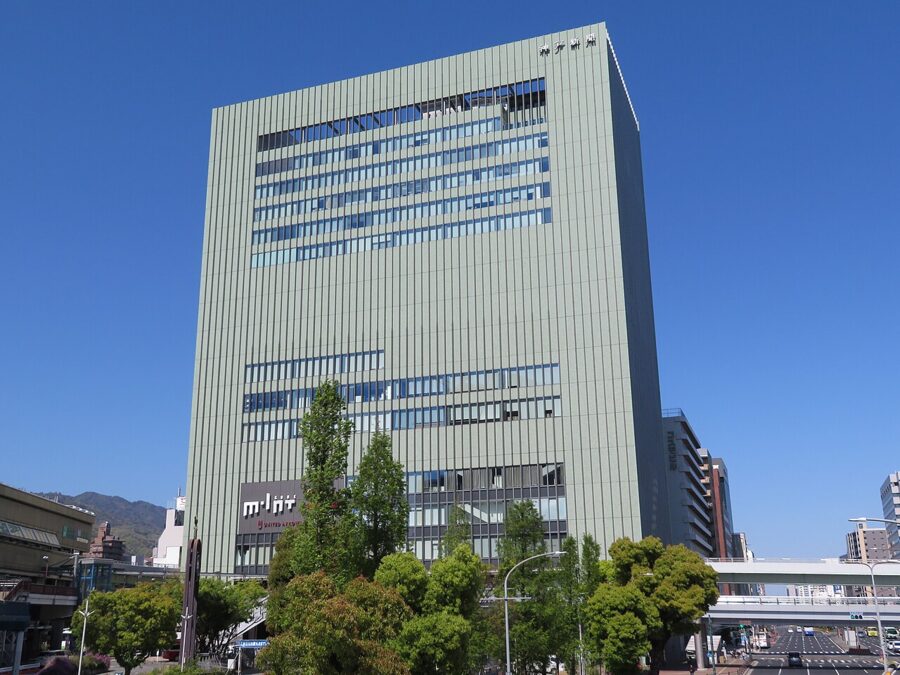

Count the ticket gates and Sannomiya turns out to be six stations belonging to five companies, all packed around one road junction at the foot of the Rokko mountains. JR calls its station 三ノ宮, with a katakana “no” in the middle. Hankyu and Hanshin call theirs Kobe-Sannomiya (神戸三宮). The subway has two stations under two different names, and the Port Liner to the airport has its own raised platform beside the JR tracks.
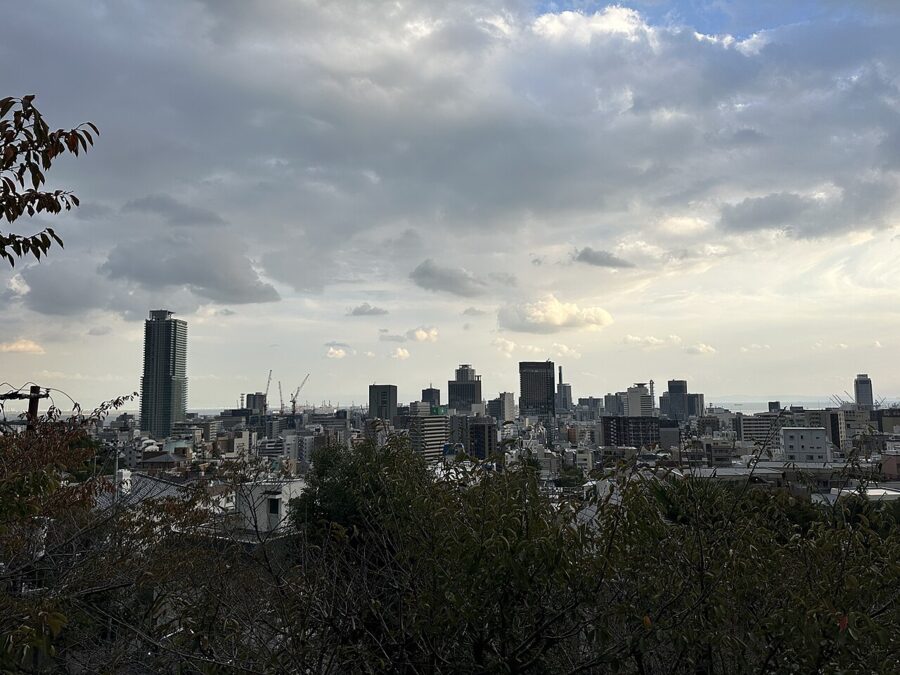
None of this is hard once you know which gate your ticket wants, and that is most of what a visitor needs from Sannomiya. Everything else in central Kobe is a walk from here: the shrine the city is named after, ten minutes north; Chinatown, a short way west past Motomachi; the waterfront to the south, at the end of a road built over an old riverbed. Kobe is a long, thin city pinned between the mountains and the sea, and Sannomiya is the point where the pin goes in.
I’d argue it is also the most useful base in Kansai that nobody thinks of as a base. Osaka is 21 minutes away on the JR, Kansai Airport about 65 minutes by bus, and the Shinkansen one subway stop north. And when the day is over you are in a city that eats well, drinks cheaply under its railway arches and goes to bed earlier than Osaka does.

Contents
The station knot, and which gate is yours
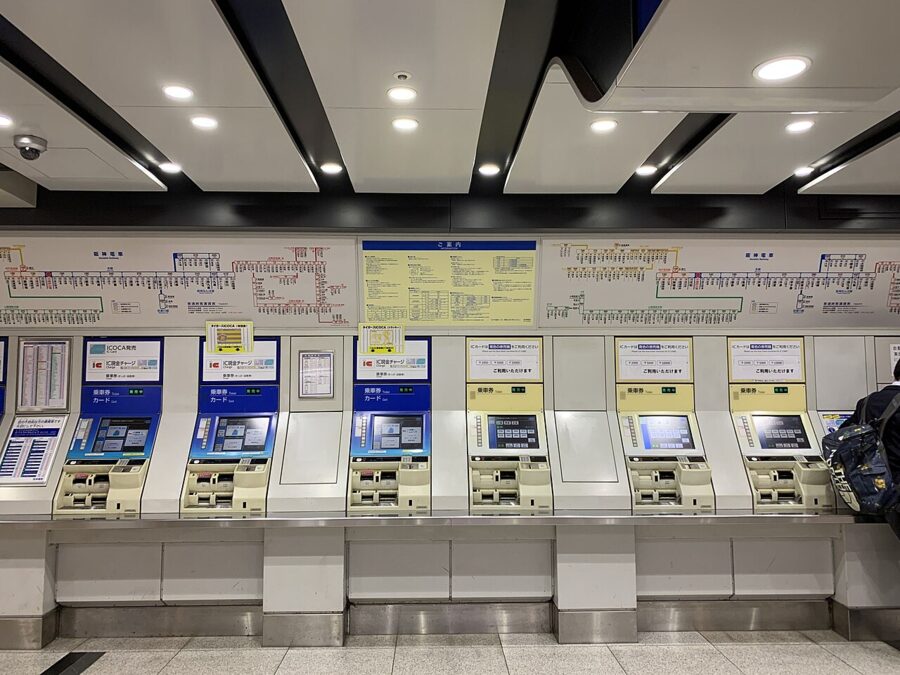
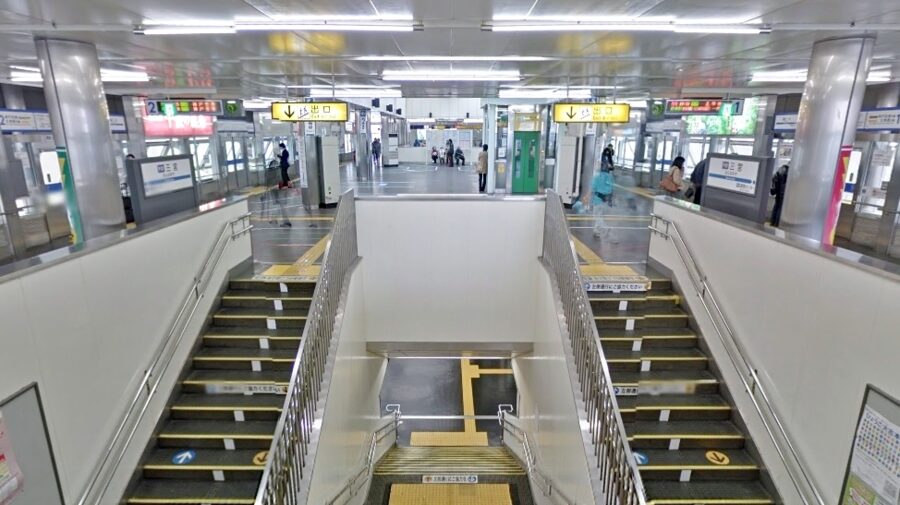
The six stations sit within a few minutes’ walk of the main crossing, linked by passages above and below it, including the Sanchika underground mall. Signs are in English, and an IC card works everywhere: an ICOCA, a Suica or any other national IC card pays the fare on all five operators. You only need to think about paper tickets if you are holding a rail pass.

JR Sannomiya (三ノ宮): the fast line along the coast
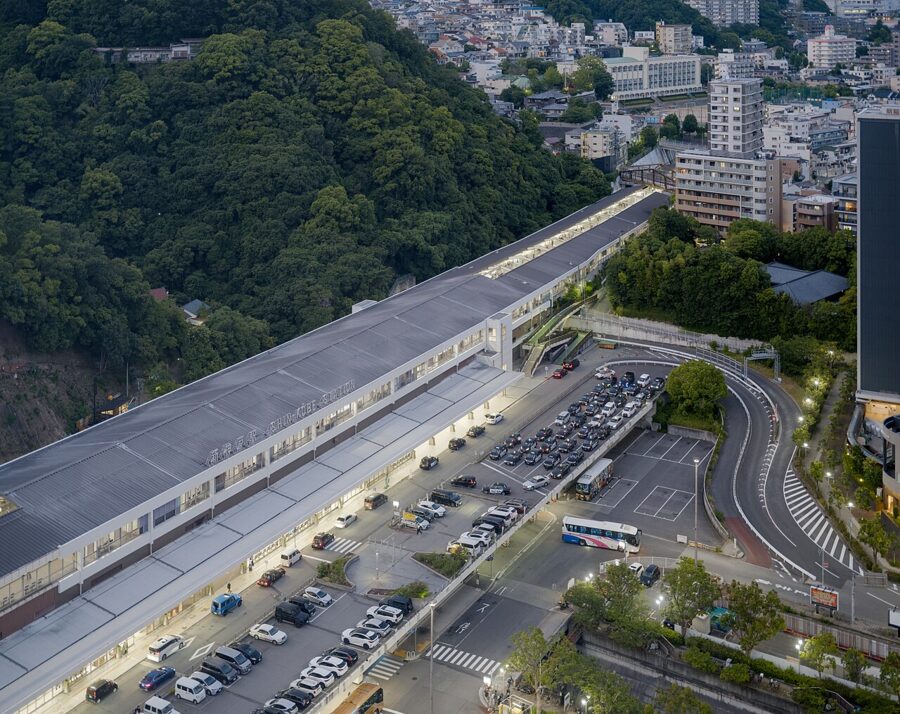
JR Sannomiya is the busiest of the six and the one most visitors arrive at, because it sits on the JR Kobe Line between Osaka and Himeji and every Special Rapid Service stops here. It is also the only one of the six where a Japan Rail Pass or a JR West pass is valid. The West Gate is the one for Center Gai, Ikuta Shrine and the Kobe beef restaurants; the East Gate is the side for Mint Kobe and the Port Liner.
The station is about to change more than any other. JR West held the groundbreaking for a new station building in March 2024: a tower of 30 floors, about 155 meters high, with shops on the lower floors, offices in the middle and a hotel of around 250 rooms on top. It is due in fiscal 2029. Until then the station works inside a building site, so expect detours and follow the signs rather than an old map.
Hankyu and Hanshin Kobe-Sannomiya: the cheap way to Osaka
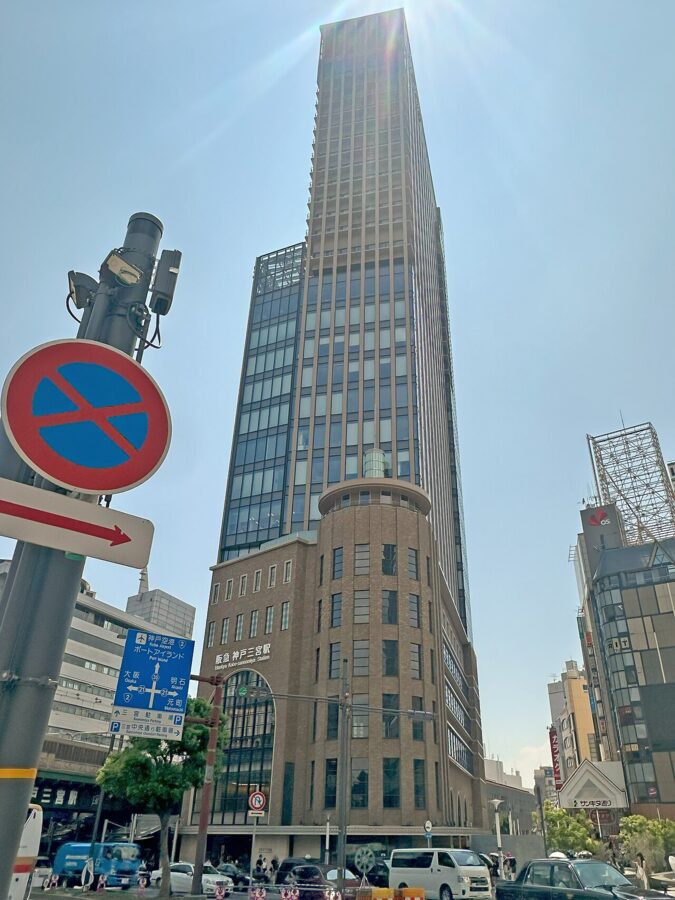
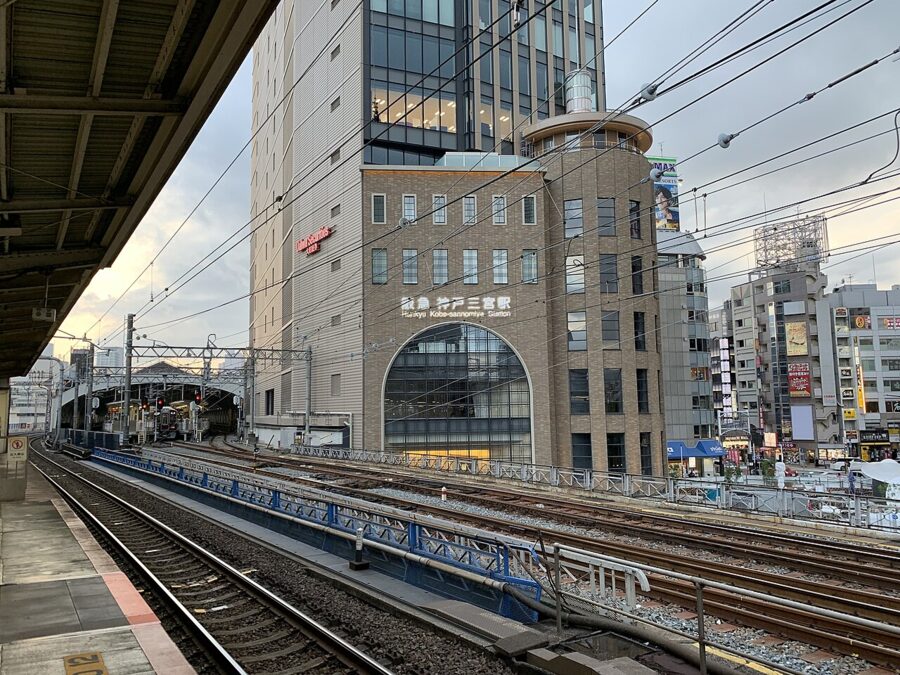
The two private railways both renamed their Sannomiya stations Kobe-Sannomiya in 2013, which helps out-of-town riders and confuses everyone else. Hankyu’s station is inside the Kobe Sannomiya Hankyu Building on the north side of the crossing. Hanshin’s is underground on the south side, beneath the Kobe Hankyu department store, which traded as Sogo until 2019, so older maps disagree.
Both run to Osaka-Umeda for ¥330, against JR’s ¥420, and both are slower. Hankyu runs inland along the Rokko foothills; Hanshin runs along the coast and stops more often. Hanshin’s trump card is through-running: its trains continue west to Motomachi and beyond on the Sanyo Electric Railway, and Kintetsu trains from Nara come all the way to Kobe-Sannomiya by way of Osaka-Namba. If you are staying in Namba, that is a one-seat ride.

The subway: two lines, two station names
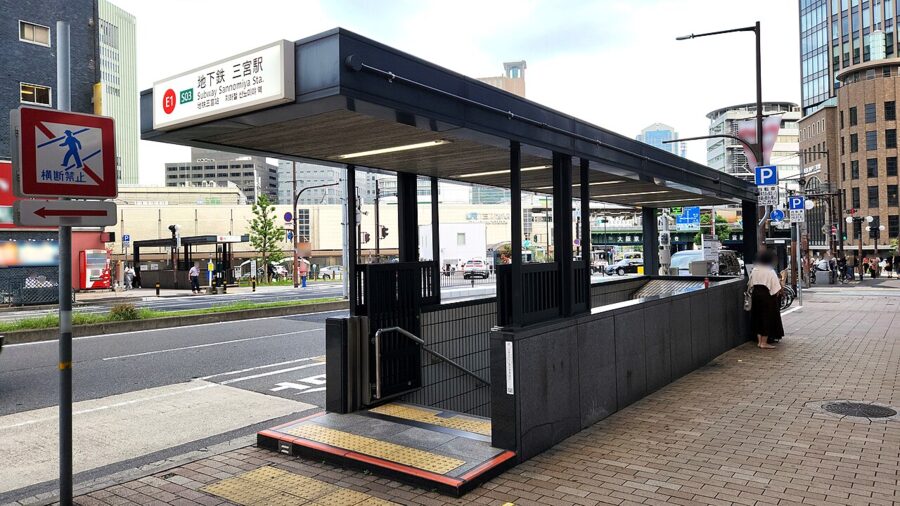
The Kobe Municipal Subway’s Seishin-Yamate Line stops at Sannomiya (station S03), under the main crossing. It is the line for Shin-Kobe and the Shinkansen, one stop and 2 minutes north for ¥210, and for Arima by way of Tanigami. The Kaigan Line is a separate, smaller subway that starts at Sannomiya-Hanadokeimae, a few minutes south toward City Hall, and runs under the old foreign settlement to Harborland.
Since April 2026 the subway’s one-day pass has been a QR code bought online, ¥980 for all lines. With the shortest ride at ¥210, it pays only on a day of hopping on and off.

Port Liner: Port Island and Kobe Airport
The Port Liner is a driverless line on a viaduct, run by Kobe New Transit, and its Sannomiya terminus stands just east of the JR station. It crosses to Port Island and then out to Kobe Airport in about 18 minutes, for ¥340. Not every train goes to the airport, as some turn back on Port Island, so check the destination on the platform display.

The bus terminals, and the one being built
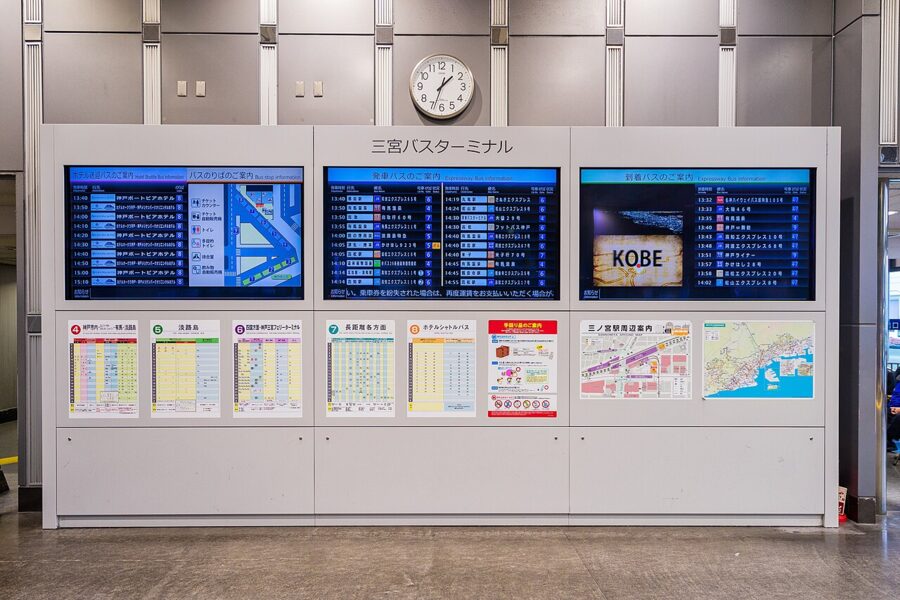
Buses are Sannomiya’s weak point. About 1,700 medium and long-distance buses a day leave from six separate boarding areas scattered around the stations, run by different companies, and finding the right one is the only part of Sannomiya that genuinely tests a first-time visitor. The city-owned Sannomiya Bus Terminal is on the ground floor of Mint Kobe; other operators have their own stops nearby.
The fix is under construction across the road. The national government and Kobe City are building a new terminal on the Kumoi-dori 5-chome block, and in December 2025 they named it, together with the existing terminal, Basta Kobe Sannomiya. Phase one has five boarding bays and four waiting bays, inside a tower that will also hold shops, offices, a hotel and the new Sannomiya Library, with fiscal 2027 as the target. Until it opens, look up your bus company’s stop before you go, and allow ten minutes to find it.

| Where you are going | Station | Note |
|---|---|---|
| Osaka (Umeda), fastest | JR Sannomiya | Special Rapid, 21 min, ¥420 |
| Osaka (Umeda), cheapest | Hankyu or Hanshin Kobe-Sannomiya | ¥330; 27–31 min |
| Namba and Nara | Hanshin Kobe-Sannomiya | Through trains via Osaka-Namba |
| Shinkansen at Shin-Kobe | Subway Sannomiya (Seishin-Yamate Line) | One stop, 2 min, ¥210 |
| Kobe Airport | Port Liner Sannomiya | About 18 min, ¥340 |
| Harborland | Subway Sannomiya-Hanadokeimae (Kaigan Line) | Three stops; or walk via Meriken Park |
| Kansai Airport | Limousine bus | About 65 min, ¥2,200 |
What Sannomiya is to Kobe
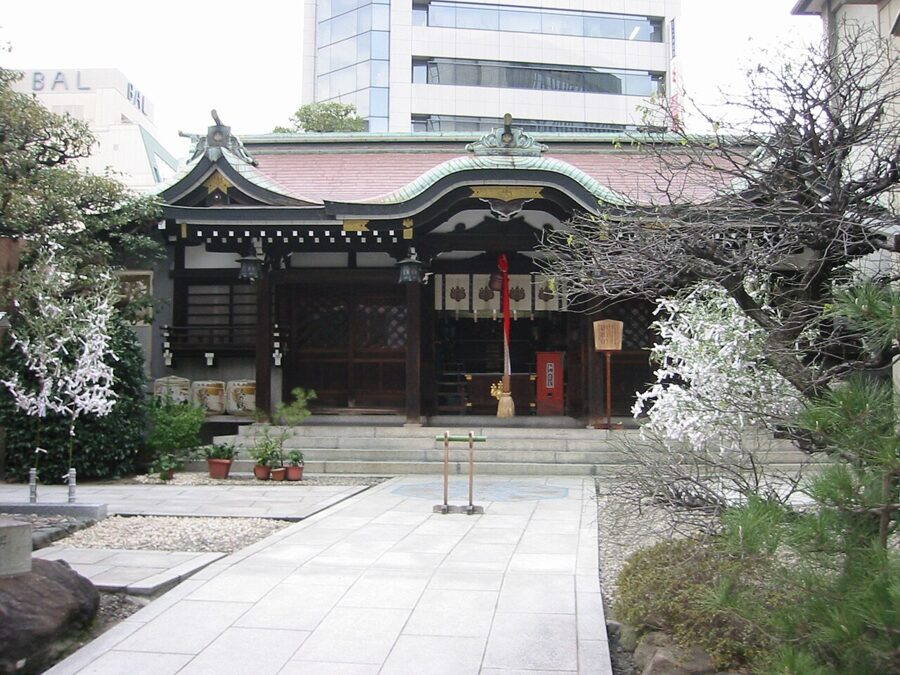
The name comes from a shrine you can easily walk past. Sannomiya Shrine (三宮神社) is the third of eight small shrines numbered around Ikuta Shrine, and it stands today on a busy corner at the edge of the old foreign settlement. In February 1868, weeks after the port opened, troops from Okayama domain clashed with foreign soldiers in front of it. The Kobe Incident was the new Meiji government’s first diplomatic crisis, and a stone marker and an old cannon in the shrine grounds still mark the spot.

For its first half century Sannomiya was not the center at all. The original JR Sannomiya station of 1874 stood where Motomachi station is now, and the city’s commercial heart was Shinkaichi, further west. The railways moved the center. JR moved Sannomiya station east to its present site in 1931, Hanshin brought its line underground into Sannomiya in 1933, and Hankyu arrived in 1936 with a terminal building that became the symbol of the place.
The war finished the job. Shinkaichi was burned out in 1945 and partly taken over by occupation camps, while Sannomiya recovered first, starting with black markets under the JR viaduct. Sannomiya Center Gai opened as a shopping street in autumn 1946. When City Hall moved here in 1957, the shift was official.
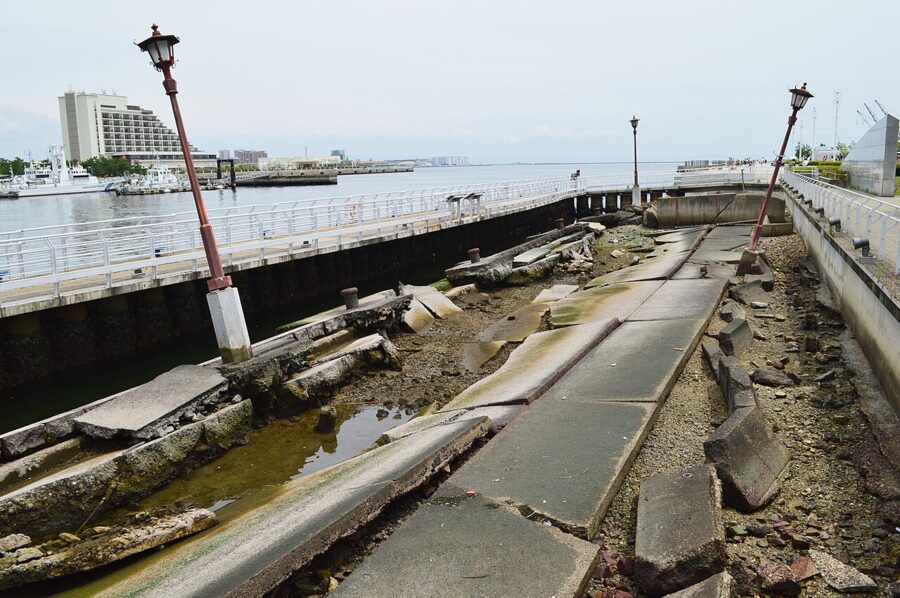
At 05:46 on 17 January 1995 the Great Hanshin-Awaji Earthquake killed 6,434 people. In Chuo Ward, which takes in Sannomiya, 243 died and more than 6,000 buildings fully collapsed. The Kobe Shimbun Kaikan and the Hankyu building at the station both came down, and the sixth floor of City Hall’s Building 2 was crushed by the floors above it; the building was cut down to five stories afterward.
What you see around the stations today is mostly the rebuild. Mint Kobe replaced the Shimbun Kaikan in 2006. The Hankyu building stood as a temporary structure for twenty years before the new tower opened in 2021, with the station and a shopping floor at the bottom and the remm plus hotel at the top. The 400-meter underground passage between Sannomiya and Motomachi opened in 2001 and was only given a name, Sanpochika, in 2021.
The next round is already underway. Kobe City’s plan for the center sets out to make the six stations work like one: the new JR station building, a pedestrian deck over the main crossing, and a “Sannomiya Cross Square” in front of the stations that takes road space from cars and gives it to people. The east side of the crossing is already down from as many as ten traffic lanes to six while the work goes on. Come back in 2030 and expect a different front door.
The streets on foot
The four directions from Sannomiya are four different towns. West is shopping and Chinatown; south is the grid of the old foreign settlement and then the water. North is uphill: the shrine, then the Kitano slope with its Western houses. East is offices, and you can skip it.
Center Gai and the arcades
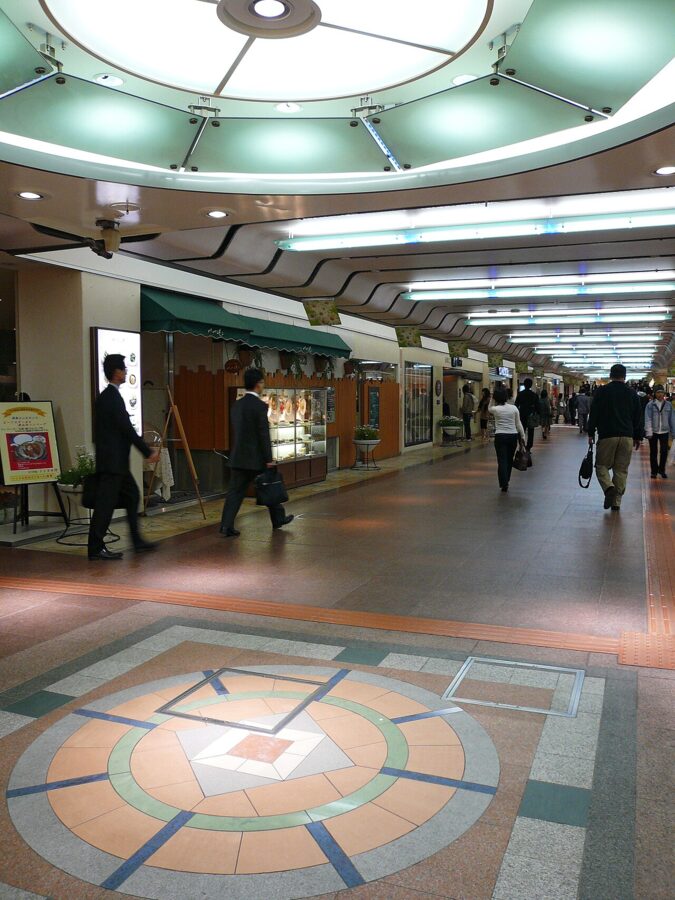
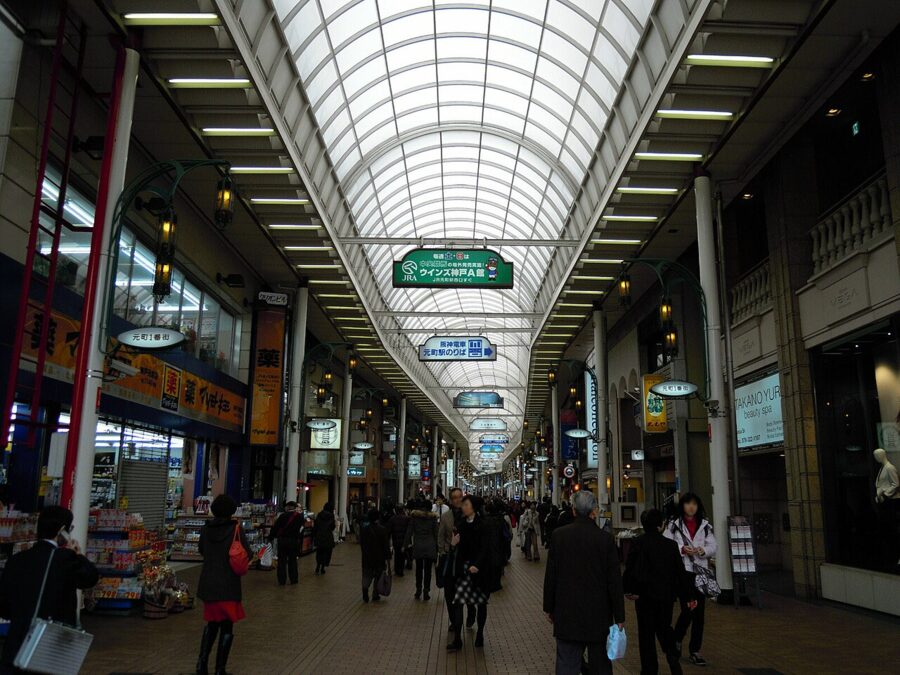
Sannomiya Center Gai (三宮センター街) is the covered shopping street that runs west from Flower Road to Koikawa-suji, two minutes from the stations. It is a chain-store street with a roof and nothing special as shopping, but it is the dry route to Motomachi when it rains and the place locals arrange to meet. On its south side, the 1970s Sannomiya Center Plaza complex adds floors of restaurants and small shops.

Two parallel routes do the same job. Underground, Sanchika runs beneath the station area with about 120 shops in nine blocks, and the Sanpochika passage carries on to Motomachi. Under the JR tracks, Piazza Kobe stretches about 400 meters from Sannomiya to Motomachi with more than 160 small shops, the plainest and cheapest of the three. On a hot or wet day you can get from JR Sannomiya to Motomachi without seeing the sky.

West: Motomachi, Nankinmachi and the Old Settlement
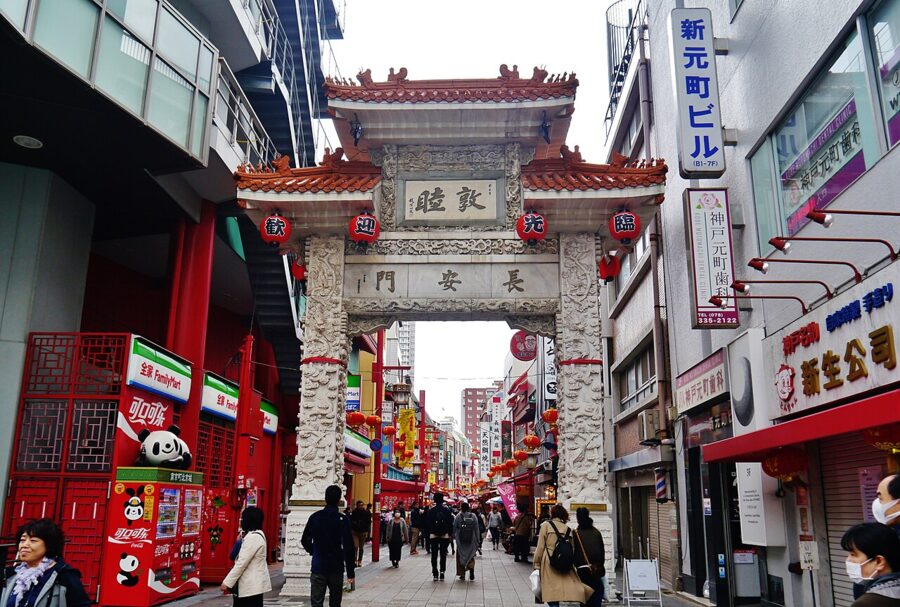
Center Gai becomes the Motomachi shopping street (元町商店街) at Koikawa-suji and carries on west, older and slower, with shops that have been there for a century next to new cafes. The name was given in 1874 and means the original town. South of it, through the gate on Motomachi-dori, is Nankinmachi (南京町), Kobe’s Chinatown.

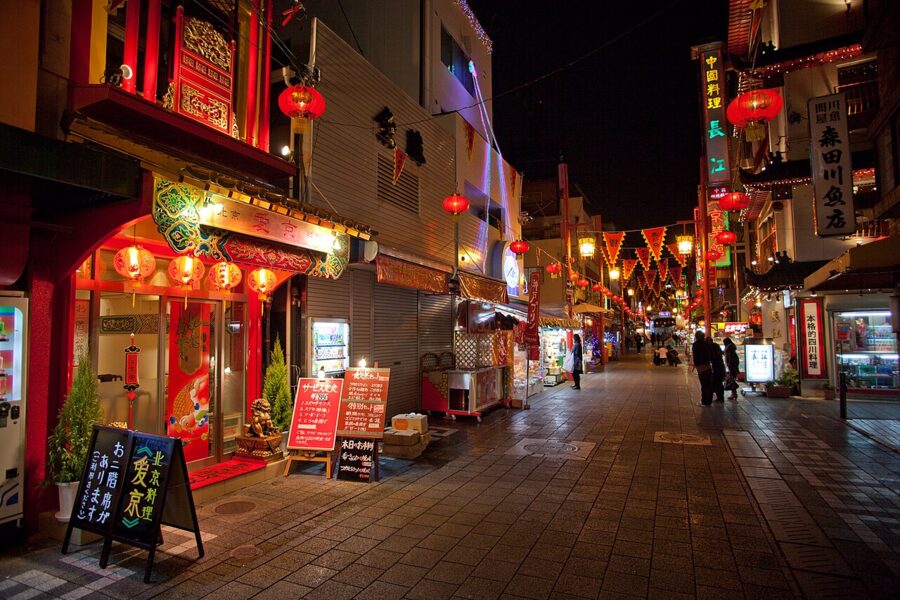
Nankinmachi is small, two short streets in a cross, and at weekends it is packed with people eating standing up. It grew from the Chinese merchants who came when the port opened in 1868 and were not allowed to live in the foreign settlement. Go for the snacks rather than the sit-down restaurants, which lean on tourist set menus.

The one queue worth joining is at Roushouki (老祥記), which has made butaman, small pork buns, since 1915 and calls itself Nankinmachi’s original butaman shop. It opens 10:00–18:30 or until it sells out, closes on irregular days, and warns that weekend waits run from 30 minutes to an hour. The shop’s own advice is to come on a weekday between 10:00 and 11:00 or just after 17:25. It reopened after a renovation on 11 November 2026.

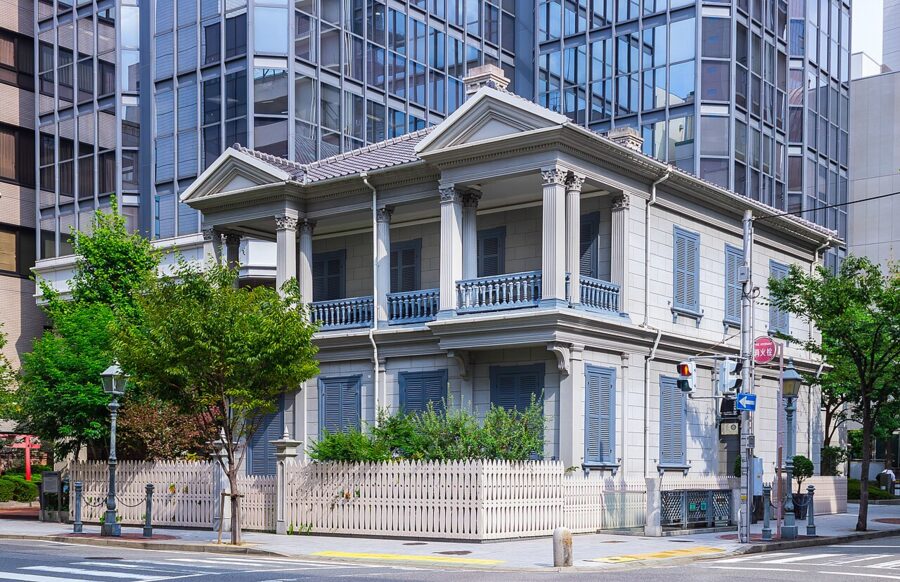
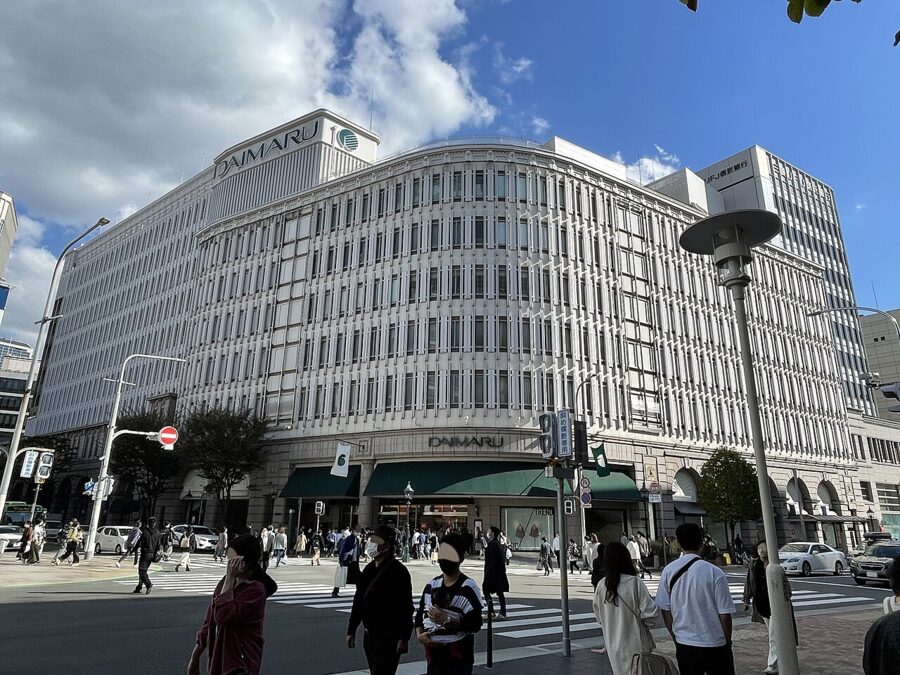
South of Center Gai and east of Nankinmachi is the Old Settlement (旧居留地), the grid laid out for foreign merchants after 1868. It is now the expensive end of Kobe: stone office buildings from the 1920s and 1930s with designer shops on their ground floors. The Daimaru Kobe store anchors it, with colonnades and gas lamps around the building, and the Kobe City Museum occupies the former Yokohama Specie Bank, a 1935 building with a columned front that opened as a museum in 1982.


Under the JR tracks past Motomachi
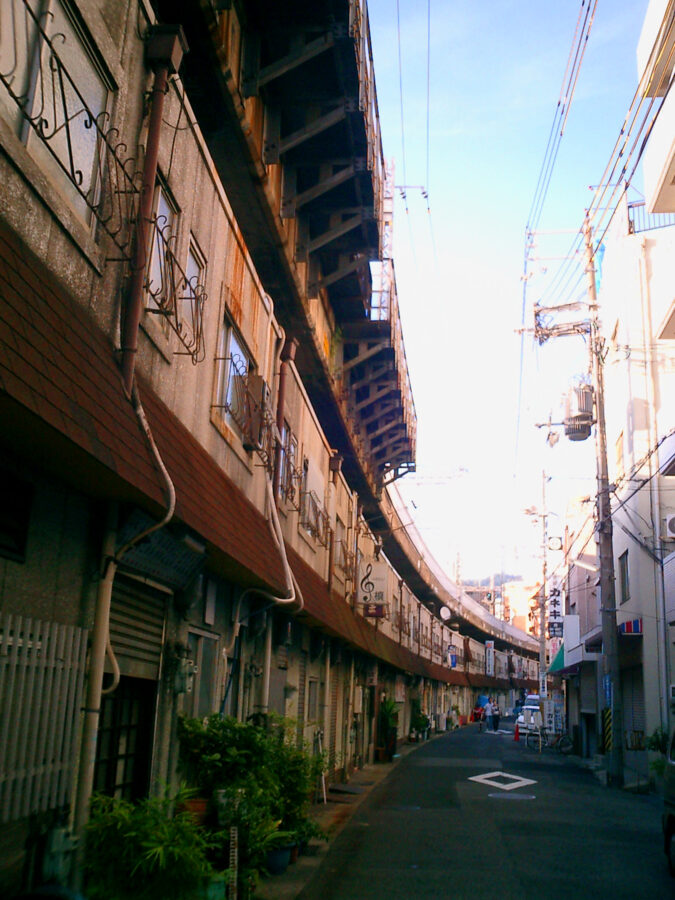
West of Motomachi station the JR tracks continue on their viaduct toward Kobe station, and the arches beneath them were Motoko Town (モトコー), a long, dim strip of secondhand dealers and small stalls descended from the postwar markets. JR West began refurbishing the viaduct in 2018 for earthquake and fire safety; two blocks reopened with new shops in October 2022, further sections closed at the end of March 2026, and Kobe City expects a draft plan for the area in winter 2026. Do not walk it expecting the old Motoko.

South: Flower Road, City Hall and the water
Flower Road (フラワーロード) runs south from the JR station toward the port along the line of the old Ikuta River, which was diverted in 1871 and left a dry riverbed that became a road. It is wide and planted down the middle, and it is the simplest route to the water: straight down past City Hall and the Higashi Yuenchi park.
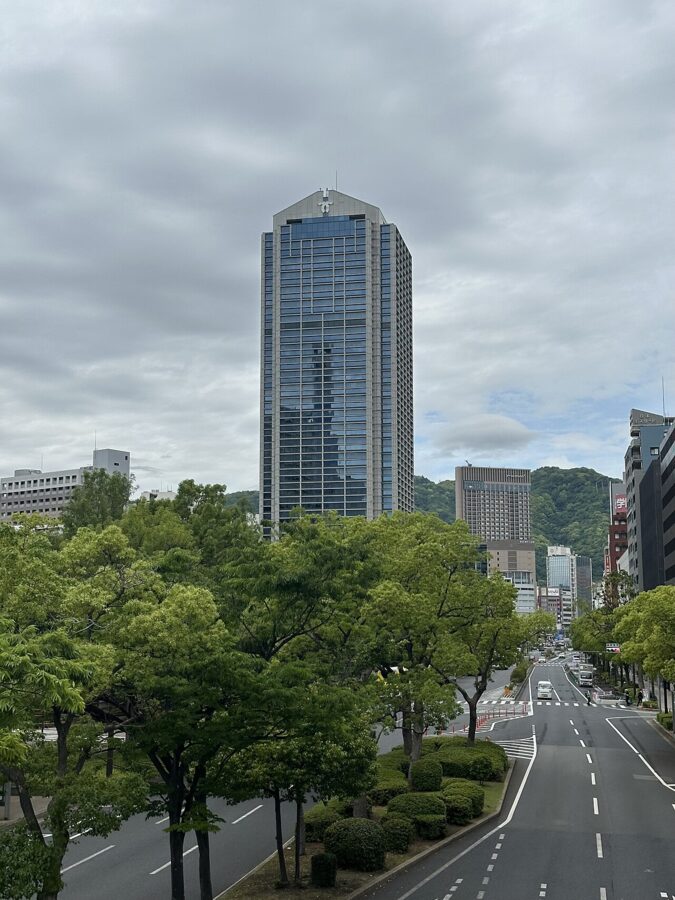

Go up City Hall first. The observation lobby on the 24th floor of Building 1 is free and open until 22:00, from 09:00 on weekdays and 10:00 at weekends and on holidays. It closes over the New Year, 29 December to 3 January, and for one maintenance day a year. Kobe City is studying other uses for the floor, so check before you plan an evening around it.
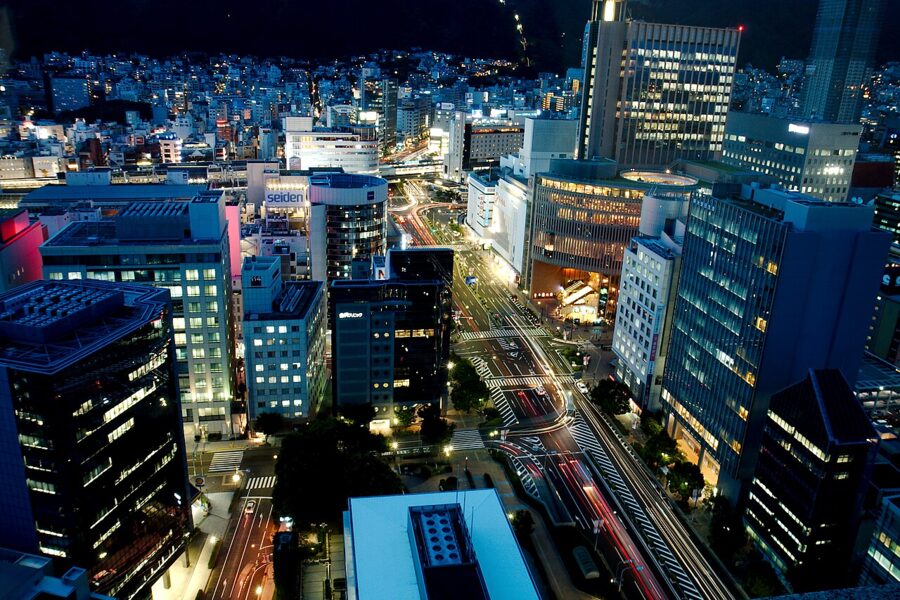

Higashi Yuenchi, the park beside City Hall, was the foreign settlement’s recreation ground and now holds the city’s monument to the earthquake dead and the recovery. It is also one of the three sites of the Kobe Luminarie, the light festival first held in December 1995. The next one runs from 29 January to 7 February 2027 across Meriken Park, Higashi Yuenchi and the Old Settlement, and only part of the Meriken Park site needs a ticket.
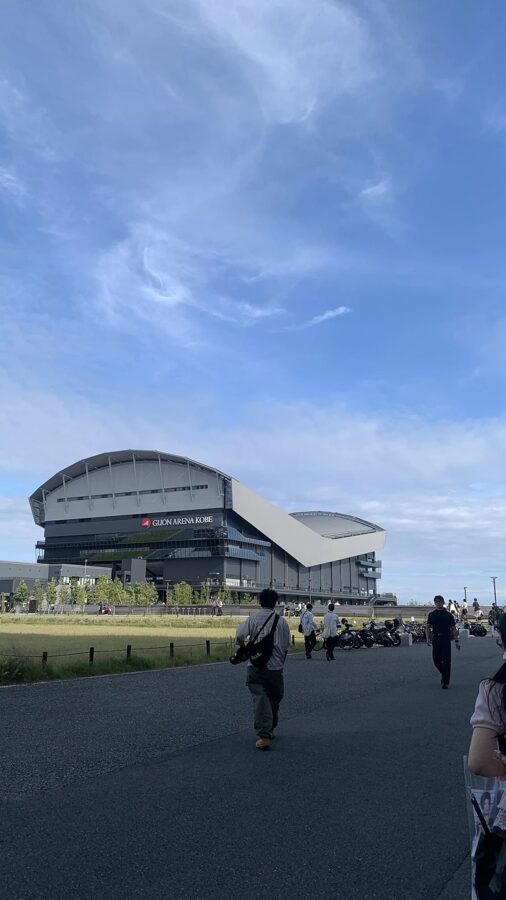
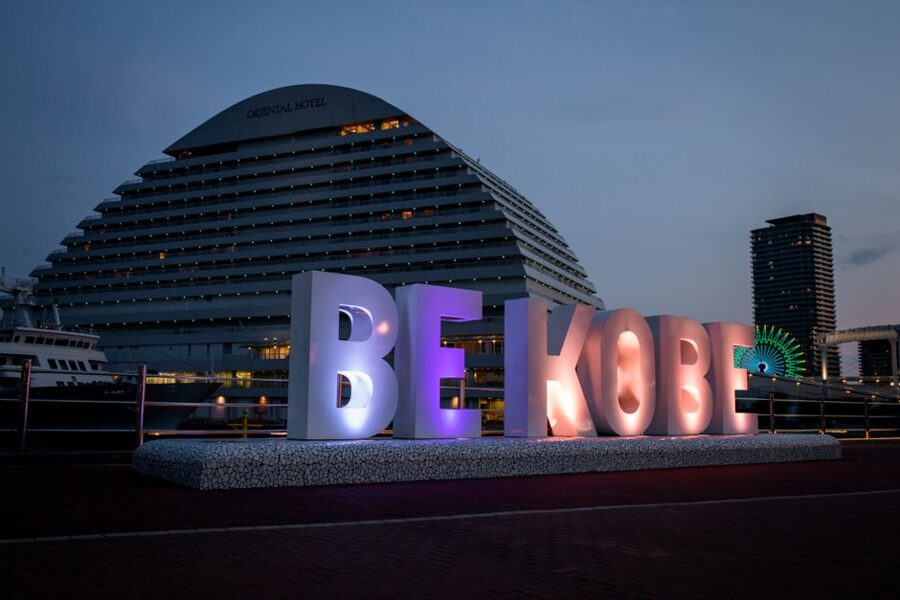
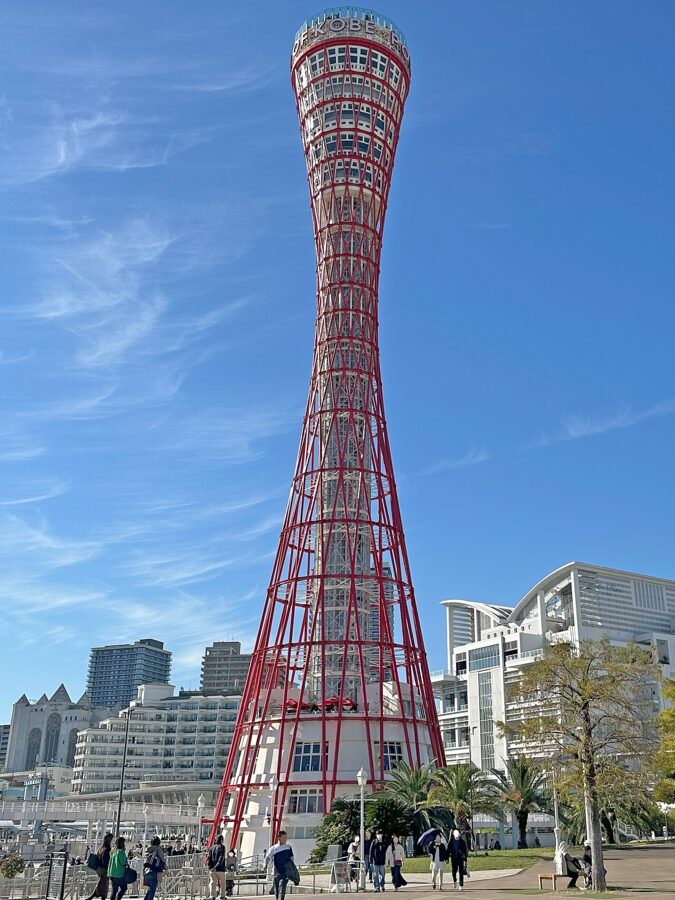
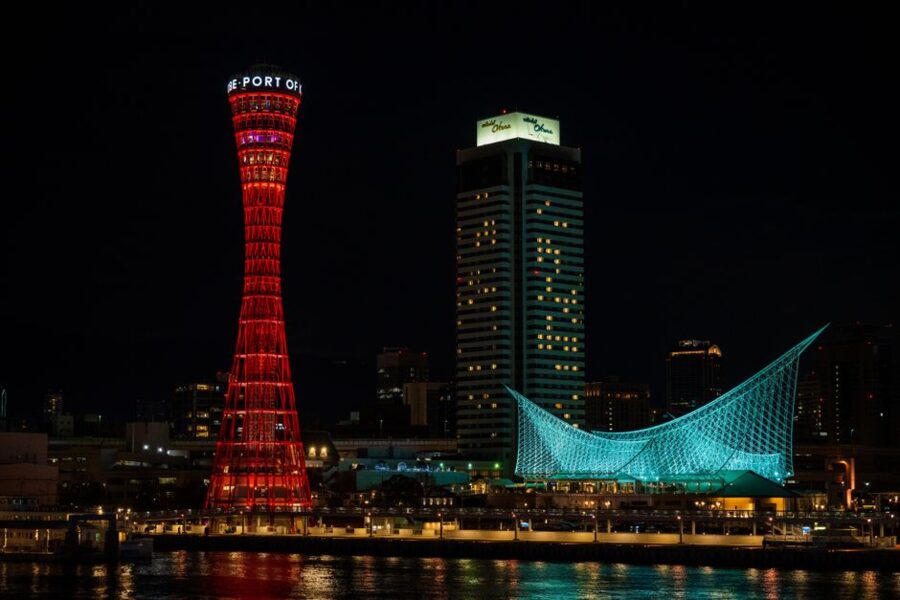
Meriken Park is the end of the walk, and the red Kobe Port Tower is its landmark. The tower reopened on 26 April 2024 after a two-and-a-half-year closure for earthquake strengthening, now with an open-air rooftop deck: ¥1,200 for the observation floors and the deck, ¥1,000 without the deck, open 09:00–23:00 with timed tickets. Across the water, the Shinko waterfront has filled in since April 2025, when GLION ARENA KOBE opened there with the TOTTEI park and food hall around it.
North: Ikuta Shrine and the Kitano slope
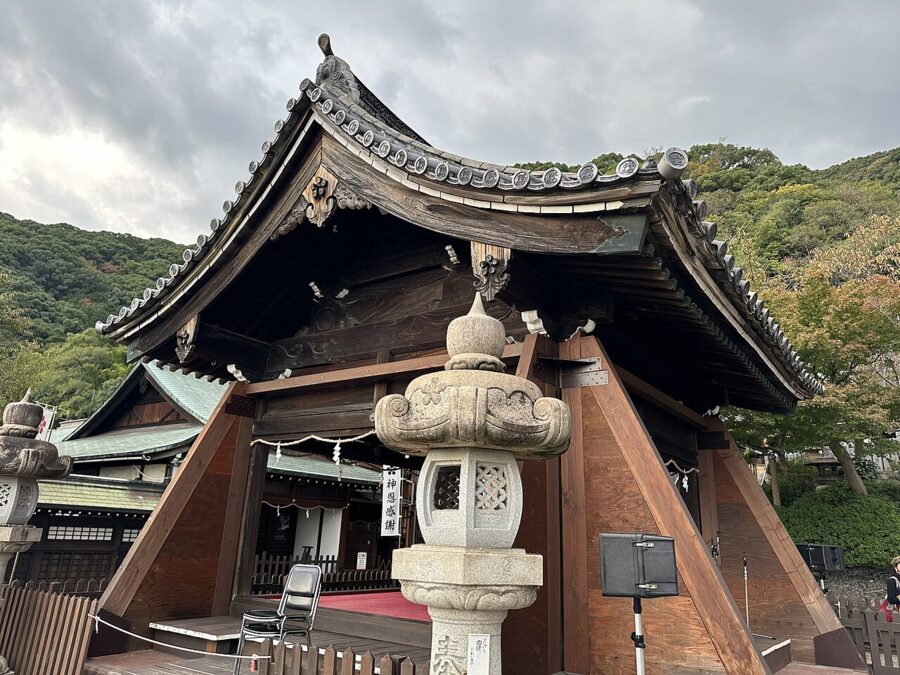
Head uphill from the West Gate on Ikuta Road, and in ten minutes you are at the gate of Ikuta Shrine (生田神社). This is the shrine that named the city: in 806 it was given 44 households to support it, called kanbe, and the word wore down over the centuries to Kobe. The shrine traces its founding to the Nihon Shoki’s account of Empress Jingu, and it has been rebuilt after a flood in 1938, the air raid of 17 March 1945 and the 1995 earthquake.
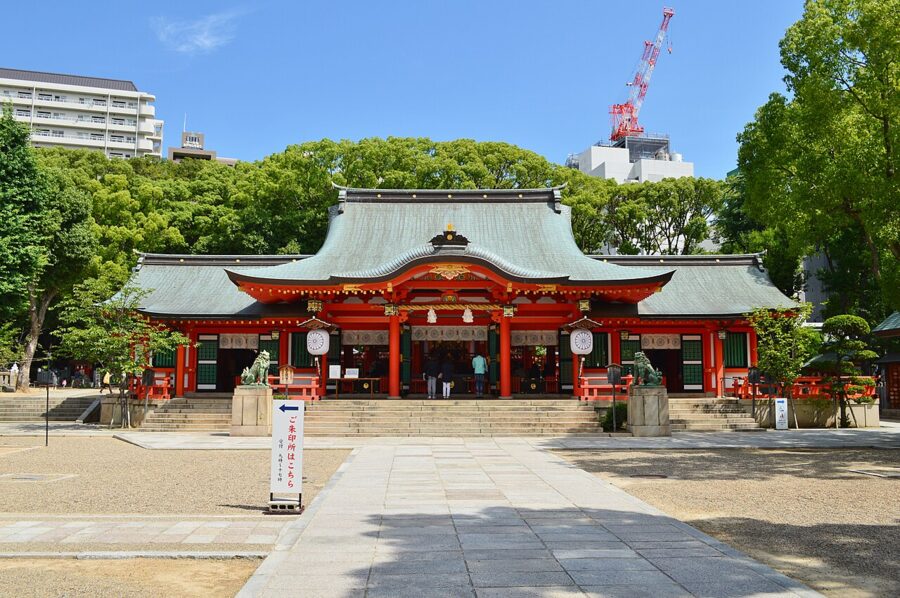
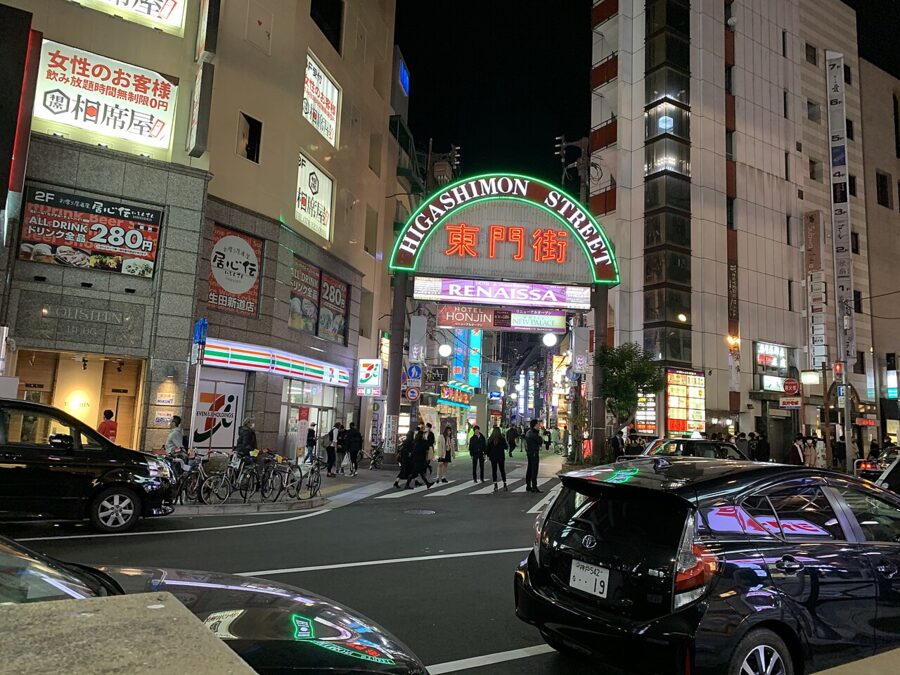
Behind the main hall is the Ikuta no Mori, a strip of old forest that survived in the middle of the entertainment district. In 1184 it was the headquarters of the Taira general Tomomori in the battle of Ichinotani. Now it is the quietest ten minutes in Sannomiya, with the bars of Higashimon-gai just outside the wall.
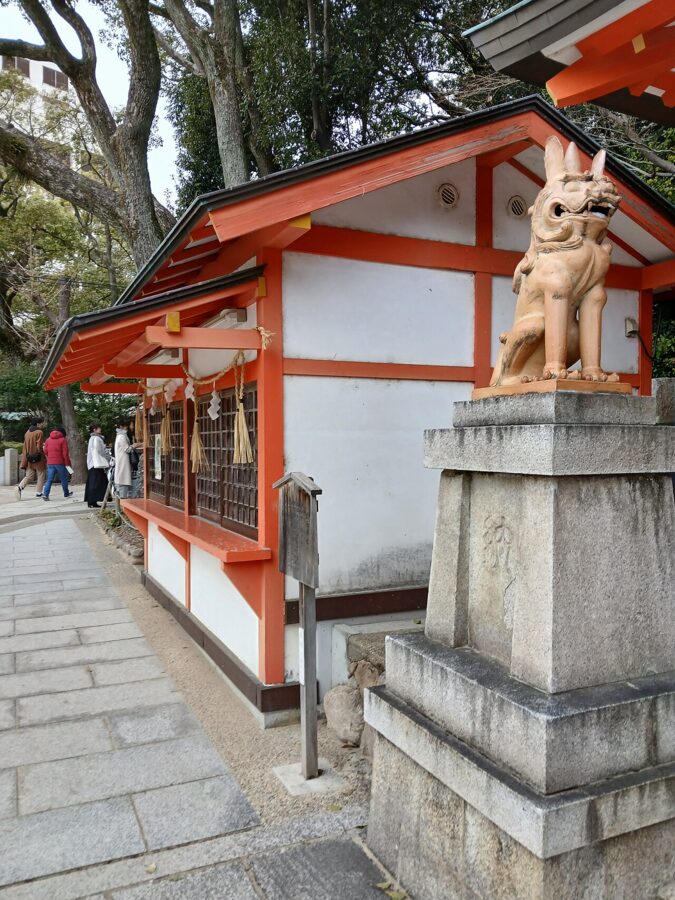

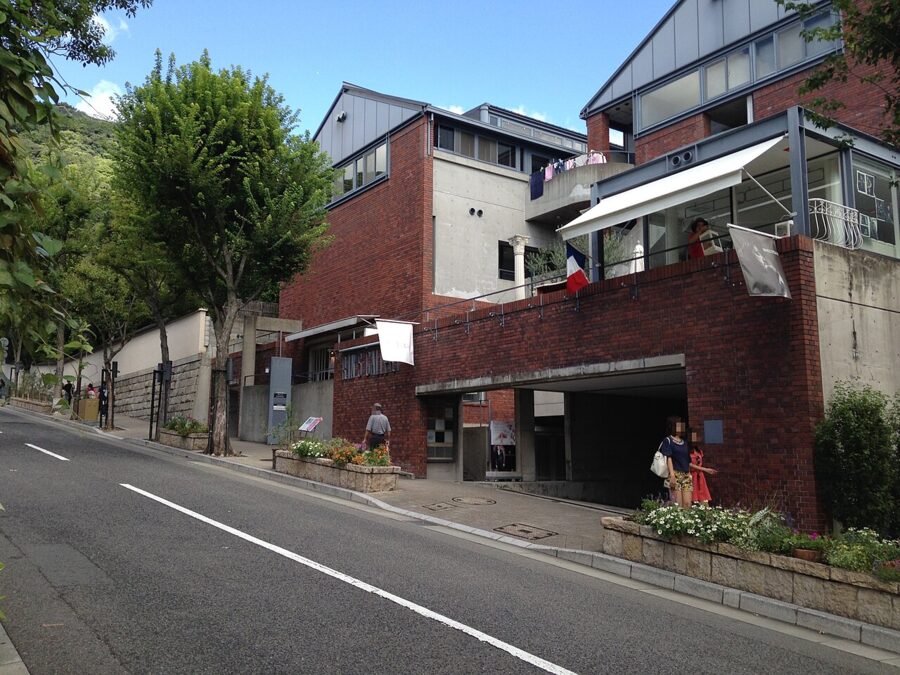
Beyond the shrine the streets tilt. Kitanozaka (北野坂), the main road up, climbs from the entertainment streets past restaurants and cafes to Kitano-cho, where the foreign merchants built their houses on the slope after the port opened. Tor Road, a few blocks west, makes the same climb. Either way it is about 15 minutes on foot from the stations to the top, where the merchants’ houses are worth a morning of their own.

Eating and drinking
Kobe eats better than its size suggests and charges less than Osaka for the same quality, with one exception. That exception is beef, and it is the reason so many visitors eat badly here: they pay Kobe beef prices for something that isn’t Kobe beef, or pay a premium for the name at a counter built for tour groups.
Kobe beef without being fleeced
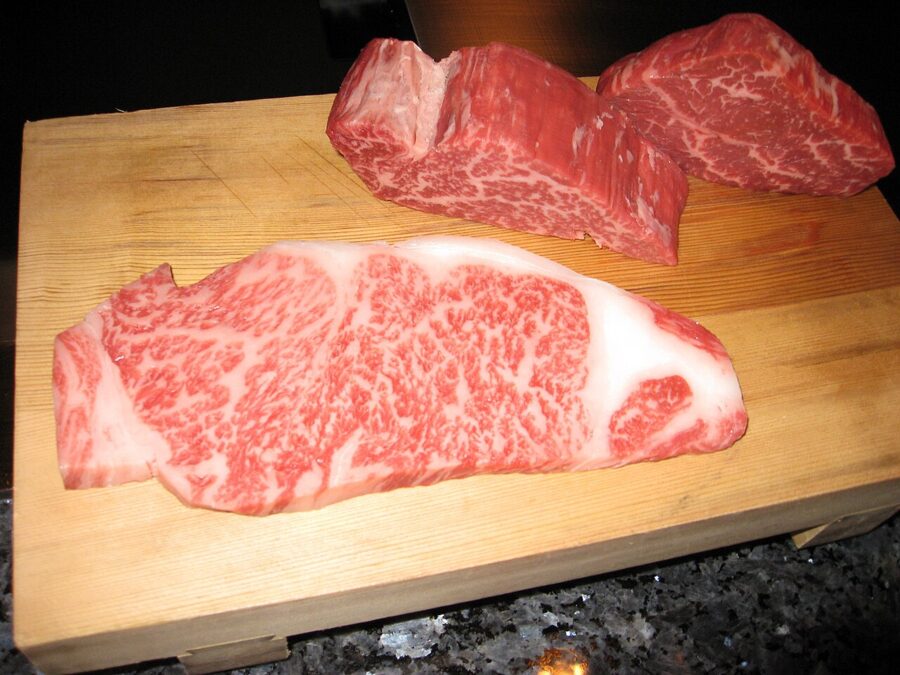
Kobe beef is a brand with rules, not a description. It must come from Tajima cattle raised in Hyogo and meet a marbling grade, and the Kobe Beef Marketing and Distribution Promotion Association registers the shops and restaurants allowed to sell it. A registered restaurant keeps a small bronze statue of the cow on display, and the association says each animal can be traced through the Tajima cattle pedigree system. No statue, no claim: “Kobe-style”, “wagyu” or “Kuroge wagyu” on a sign mean something else, often good, never Kobe.
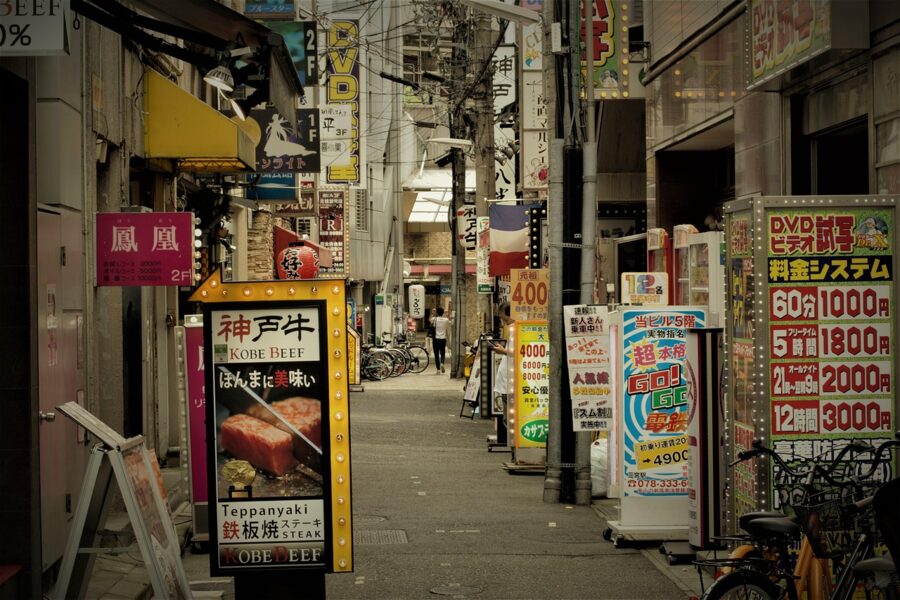
The old names are the ones to trust. Mouriya (モーリヤ) has sold Kobe beef from its main restaurant on Shimoyamate-dori since 1885, five minutes from the JR West Gate and directly by the subway’s West 1 exit. Its menu starts Kobe beef at ¥6,940 for a top-round dinner set and ¥8,020 for 120g at lunch, tax included, and an A5 sirloin runs past ¥30,000. The same menu lists Mouriya’s own selected A5 beef, with a lunch sirloin from ¥9,820, and that is the better meal for the money unless the Kobe name itself is what you came for.

Kobe Plaisir, run by JA Zen-Noh Hyogo, the farmers’ cooperative, is the other straightforward choice: five minutes from the stations on the ground floor of Hotel The b Kobe, serving lunch 11:30–15:00 and dinner from 17:00, closed on Mondays. Having the co-op’s own name on the door removes most of the guesswork.
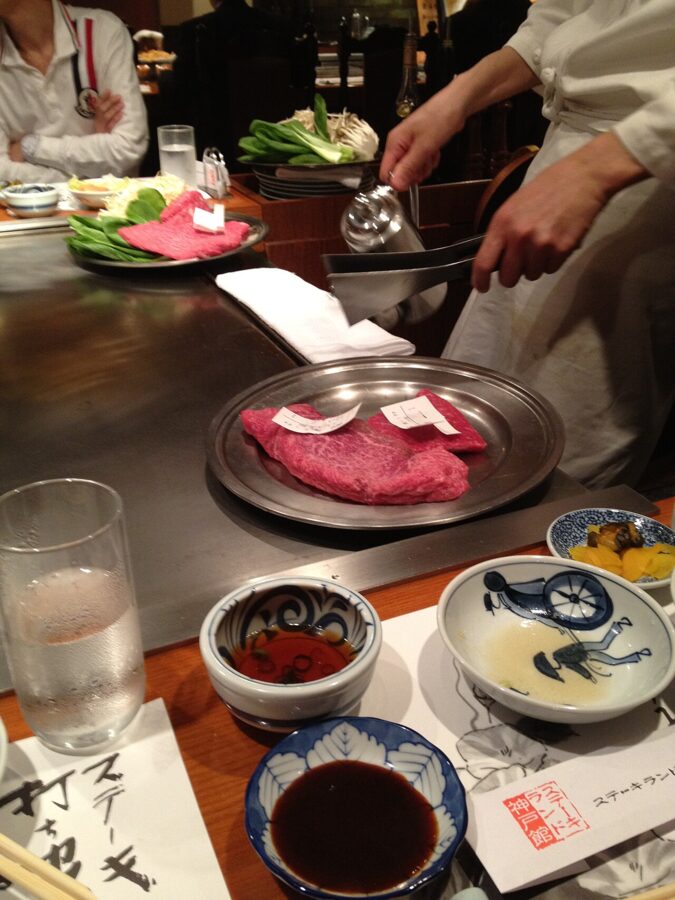

Avoid the tout with a laminated menu near the station, and the very cheap “Kobe beef” lunch: when the cheapest Kobe beef at Mouriya costs ¥6,940, a ¥3,000 plate sold under the Kobe name deserves a question about exactly what it is.
The izakaya under the tracks
The cheapest good evening in Sannomiya is under the JR viaduct. The arches between Sannomiya and Motomachi, and the lanes on both sides, are lined with standing bars, yakitori counters and small izakaya where a drink and two plates cost less than a beer in a hotel bar. The trains rumbling overhead are part of the deal.
Many have Japanese-only menus, which is fine: point at what the person next to you is eating, order a highball or a draft beer, and pay when you leave. North of the Hankyu station, the Sankita streets and Higashimon-gai are the next tier up, with more seats and more noise, and they are where Sannomiya goes after the standing bars close.

Bakeries and coffee
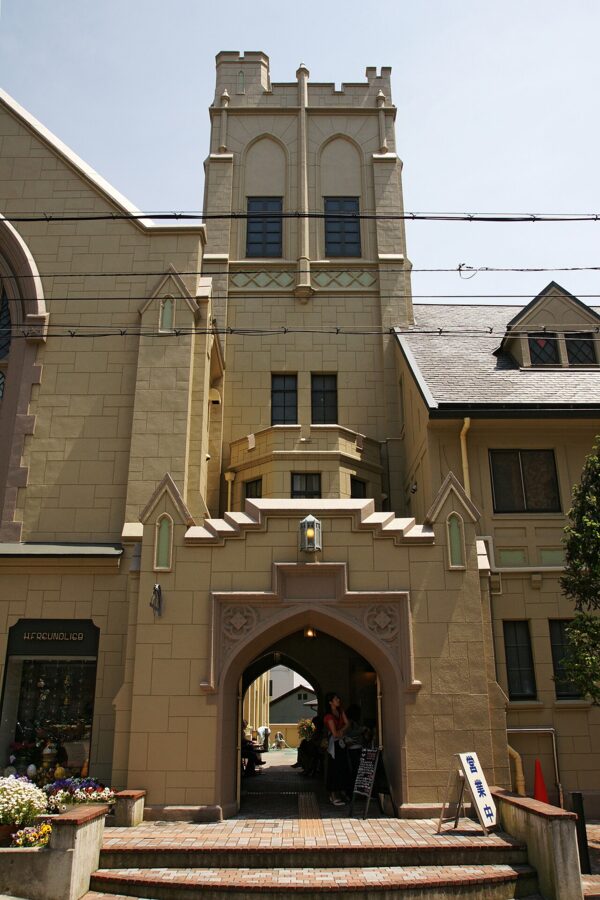
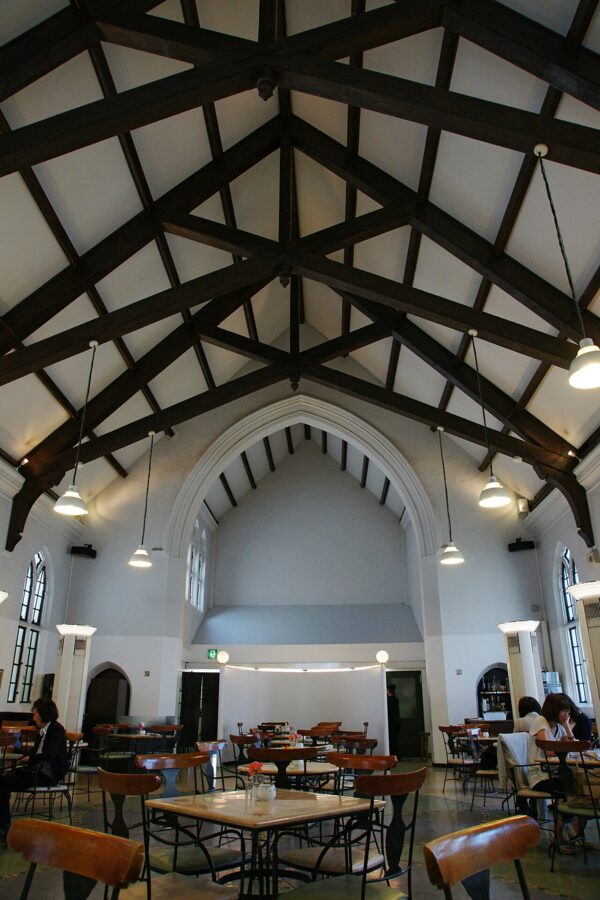
Kobe took to European bread early and still takes it seriously. Freundlieb, founded in Kobe a century ago by a German baker, now works out of the former Kobe Union Church in Ikuta-cho, a church by the American architect William Merrell Vories. The shop on the ground floor opens 10:00–17:30 and the cafe upstairs, in the old church hall, until 17:00 (last order 16:30). It closes on Wednesdays, or the following day when a Wednesday is a holiday.


For bread to carry, Isuzu Bakery, which marked its 80th year in 2026, has a shop on Ikuta Road on the way up to the shrine. For coffee, Nishimura Coffee (にしむら珈琲店) has been roasting in Kobe for more than seventy years. The main shop on Nakayamate-dori opens 08:30–22:00, and the Kitanozaka branch, in its ivy-covered building, is the one to stop at on the way up to Kitano.

Short trips that start at the station
Everything below is within an hour of Sannomiya, most of it much less, and none of it needs a guided tour.
Kitano Ijinkan: the merchants’ houses
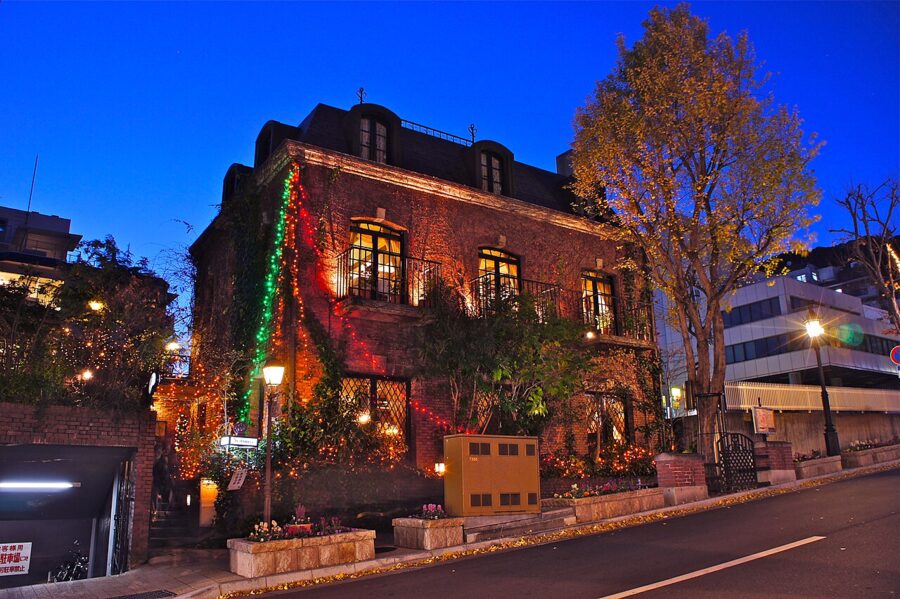
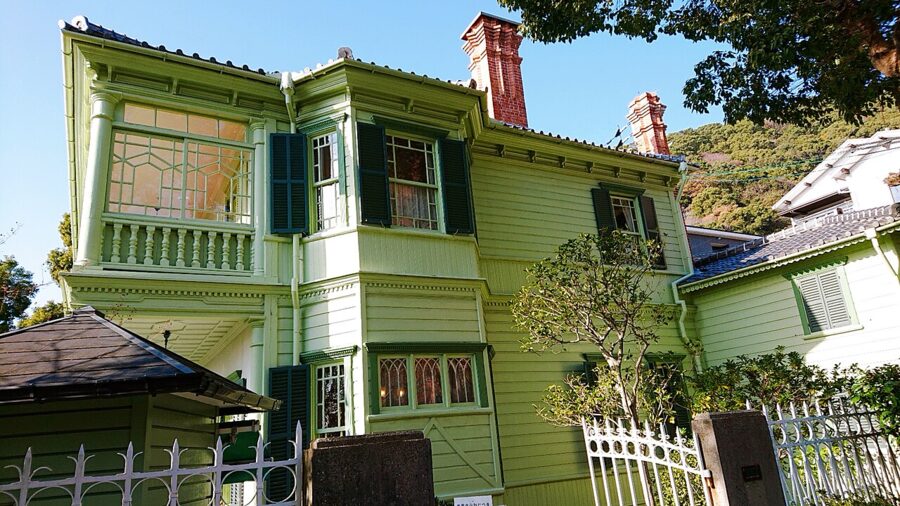
The Kitano Ijinkan (北野異人館) are the Western houses built by foreign merchants on the slope above the port in the Meiji and Taisho years. Several open as paid museums, others as cafes and shops, and one now holds a Starbucks. You do not need to go inside more than one or two; the streets between them, and the view back down over Sannomiya, are most of the point.
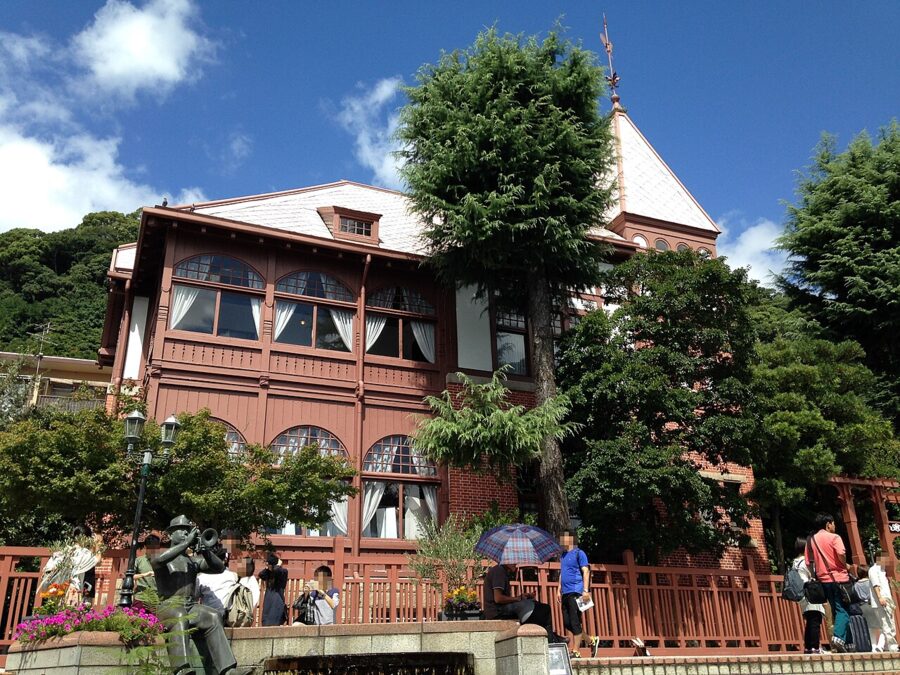

If you pick one, make it the Weathercock House (風見鶏の館), built for the German trader Gottfried Thomas, with its weathervane rooster on the spire. It opens 09:00–17:00 (last entry 16:45) and closes on the third Tuesday of each month. Admission is ¥500, or ¥800 with the Moegi House next door; high-school students and younger go free. Kitano Tenmangu, the shrine just behind it, costs nothing and has the best view over Sannomiya from the top of the slope.


Nunobiki Falls and the ropeway from Shin-Kobe
The best short trip from Sannomiya starts behind a Shinkansen station. From Shin-Kobe, one subway stop north, a path leads from the ground floor of the station up into the forest, over a brick bridge, to the Nunobiki Falls (布引の滝). There are four falls, and the tallest, Ondaki, drops 43 meters. They count as one of Japan’s three great sacred waterfalls, with Kegon and Nachi, and the biggest is about fifteen minutes on foot from a train platform.
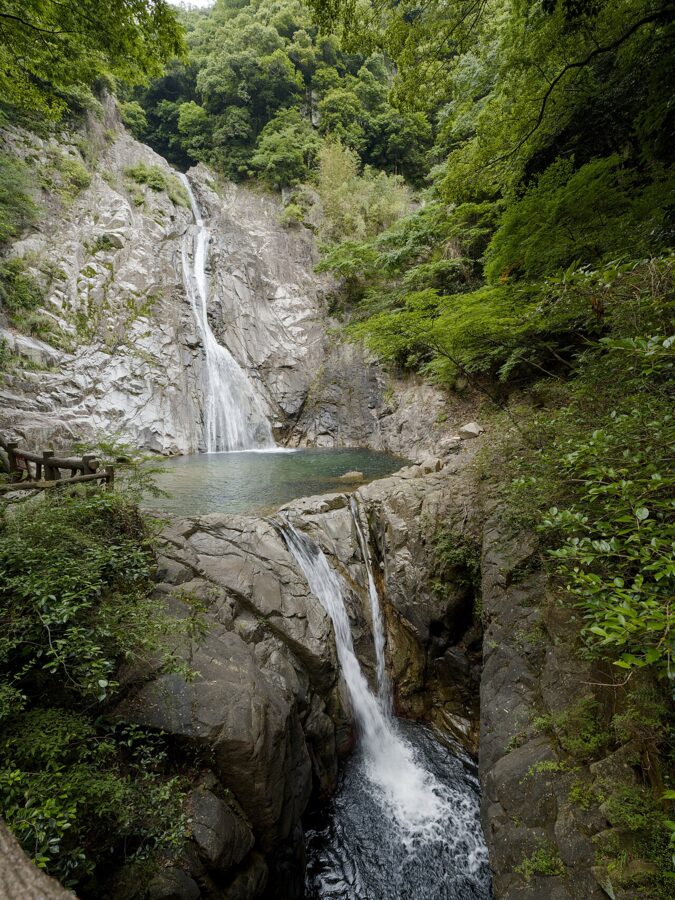

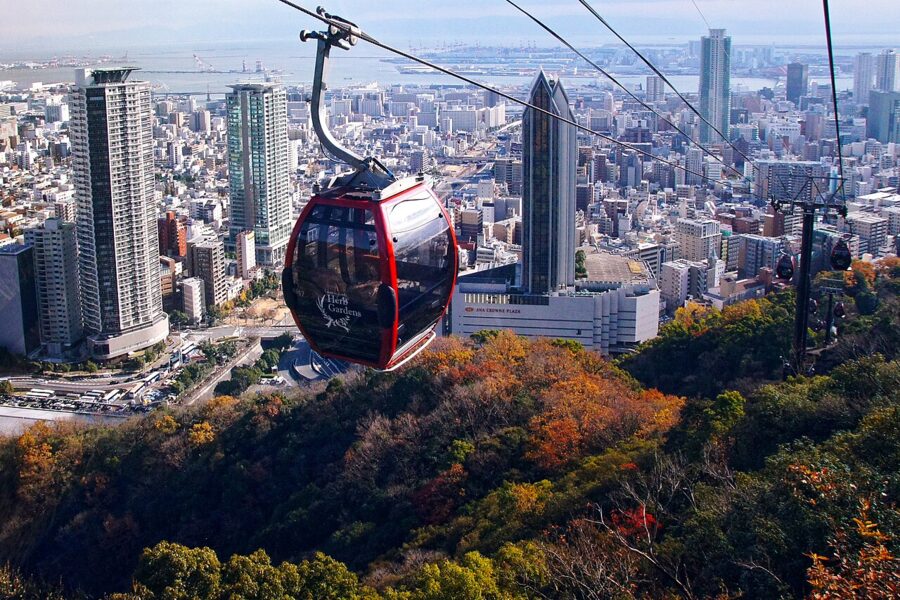
From Shin-Kobe the Kobe Nunobiki Ropeway climbs for about ten minutes to the Nunobiki Herb Gardens. Its lower station is on the west side of Shin-Kobe Station, next to the ANA Crowne Plaza hotel. Fares changed on 1 April 2026; the round trip with garden entry costs ¥2,500 for an adult outside the Christmas season, which runs from 7 November to late December with its own tickets and evening hours.
Ride up and walk down. The hiking path from the gardens drops back past the falls to Shin-Kobe, all of it downhill, and saves you the climb. Note the maintenance closure planned from 23 January to 12 February 2027.

Harborland and Meriken Park
Harborland is the shopping and entertainment waterfront west of Meriken Park, built on old railway freight yards, with the umie mall, a Ferris wheel and the brick warehouses of the old port. It is three stops from Sannomiya-Hanadokeimae on the Kaigan Line, or a flat walk through the Old Settlement and Meriken Park, which is the better way to arrive.
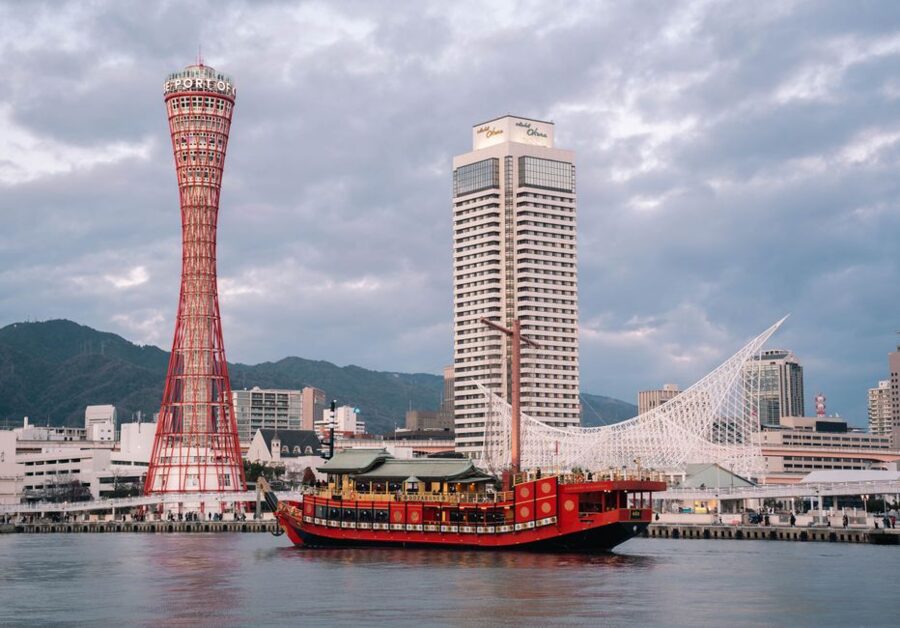
Go at dusk, when the tower turns red and the museum roof blue, then walk back along the water and up Flower Road to the stations. It is the classic Kobe evening, and it costs nothing unless you go up the tower.

Mount Rokko and Arima Onsen
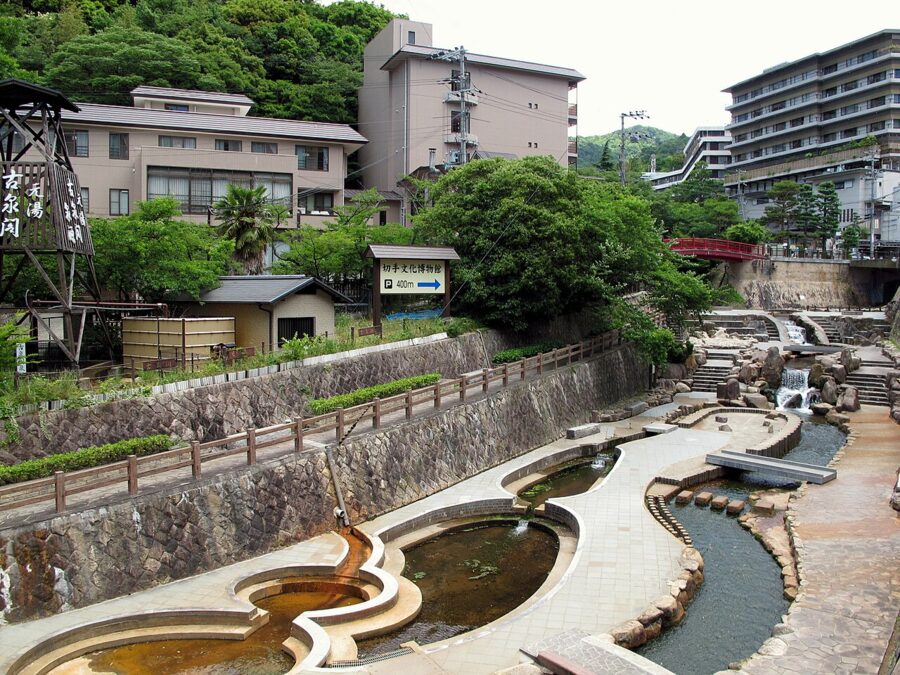
Mount Rokko is the ridge behind the city, 931 meters at its top, and Arima Onsen, one of Japan’s oldest hot-spring towns, is on its far side. Together they make a good day, up one way and down the other.
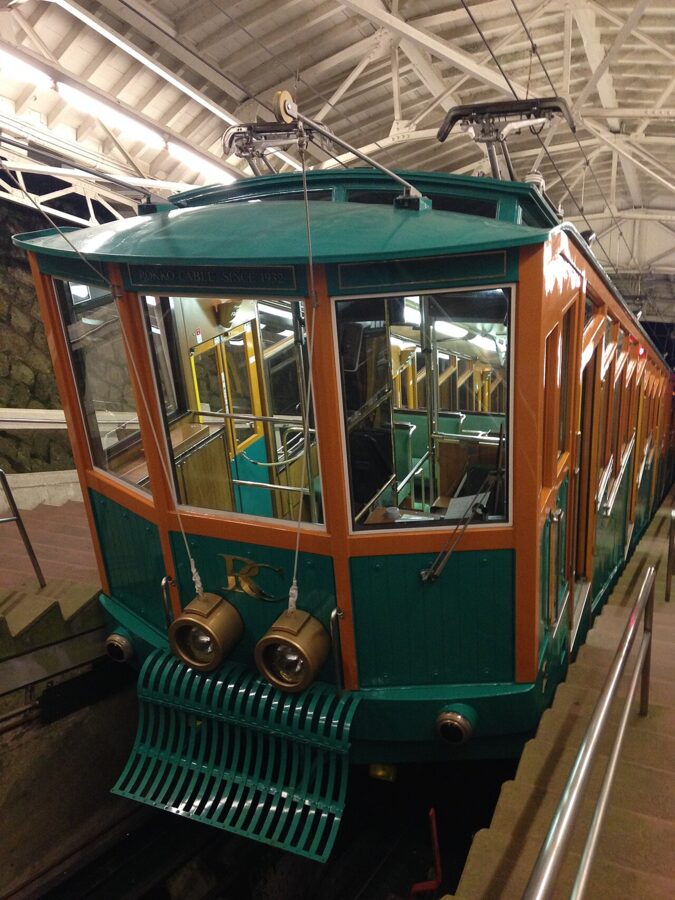
For Rokko, take the Hankyu to Rokko station, then Kobe City Bus route 16 to Rokko Cable Shita, about 14 minutes with buses roughly every eight minutes in the daytime. The Rokko Cable funicular takes about ten minutes to climb 1.7 km, ¥800 one way or ¥1,550 return. It was shut for renovation from January to April 2026 and has run normally since 11 April.

From the top of Rokko, the Rokko-Arima Ropeway drops down the north face to Arima. Its fares went up in March 2025 to ¥1,400 one way, and it is running normally this autumn. The cable company also sells a ¥2,450 one-way ticket that covers the route over the mountain to Arima.
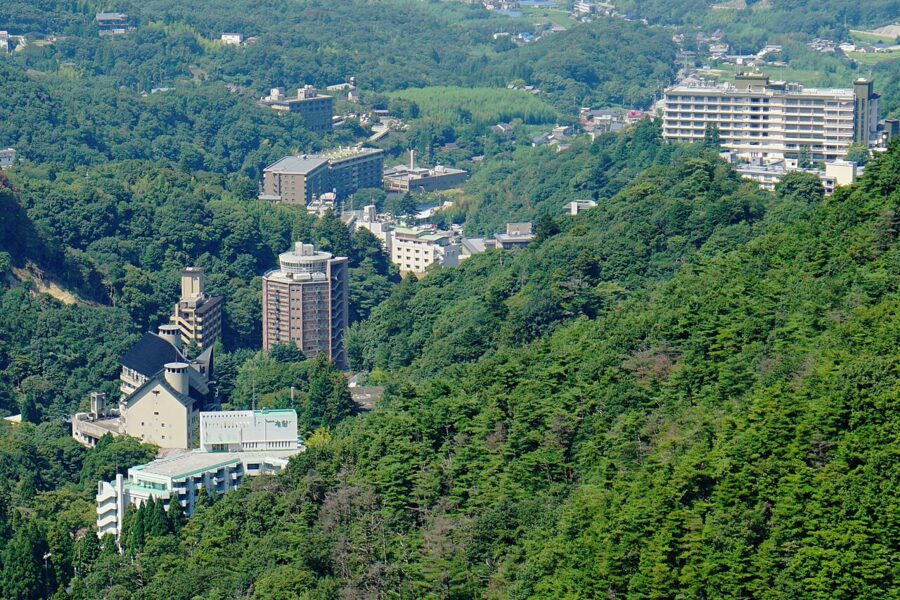

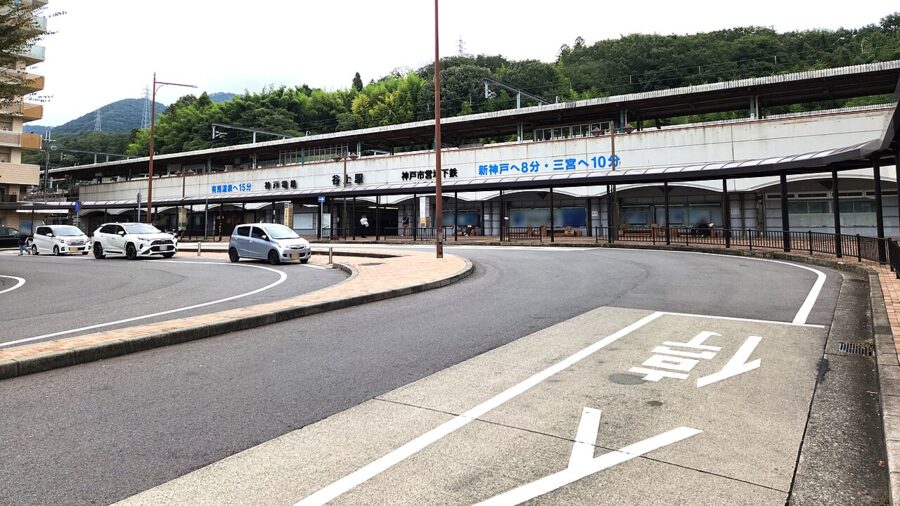
For Arima alone there are two direct options from Sannomiya. By rail, take the subway’s Seishin-Yamate Line north to Tanigami, change to the Kobe Electric Railway, and change again at Arima-guchi: about 36 minutes and ¥720. By bus, JR’s Arima Express runs from Shin-Kobe and the Sannomiya Bus Terminal, 30 minutes from Sannomiya to Arima Onsen without a change, ¥780, with reserved seats. I’d book the bus for the way out, since seats are limited, and take the train back whenever you are ready.


Getting there and getting on
From Osaka
Three railways, one choice. If you have a JR pass or you are at Osaka Station, take the JR. If you want the cheapest fare or a particular stop in Kobe, take a private line. All fares below are adult, one way, the same on an IC card or a ticket, and the times are for the fastest scheduled train.
| Line | From | To | Fastest train | Time | Fare |
|---|---|---|---|---|---|
| JR Kobe Line | Osaka | Sannomiya | Special Rapid Service | 21 min | ¥420 |
| Hankyu Kobe Line | Osaka-umeda | Kobe-Sannomiya | Limited Express | 27–28 min | ¥330 |
| Hanshin Main Line | Osaka-Umeda | Kobe-Sannomiya | Direct Limited Express | 31 min | ¥330 |
Pick the Hanshin for Motomachi and Nankinmachi, because it carries on to Motomachi and the JR only saves time as far as Sannomiya. Pick the Hankyu if you are staying north of the tracks or heading up to Kitano, since its station opens on the uphill side. From Namba or Nara, the Hanshin and Kintetsu through trains save a change at Umeda.
From Kansai Airport
There are three ways in from Kansai Airport, and rail is the worst of them. The limousine bus runs to Kobe-Sannomiya in about 65 minutes nonstop, or 75 by way of Rokko Island, for ¥2,200 one way. The first bus leaves Terminal 1 at 06:20 and the last leaves Terminal 2 at 22:47 and Terminal 1 at 23:00, arriving after midnight; through most of the day buses come every 10 to 20 minutes.
The more interesting route is by sea. The Kobe-Kansai Airport Bay Shuttle is a high-speed boat that crosses Osaka Bay to Kobe Airport in about 31 minutes, 16 times a day in each direction. A free bus takes you from Terminal 1 (stop 12 on the first floor) to the pier, and the boat ticket covers it. At Kobe Airport you change to the Port Liner for Sannomiya.
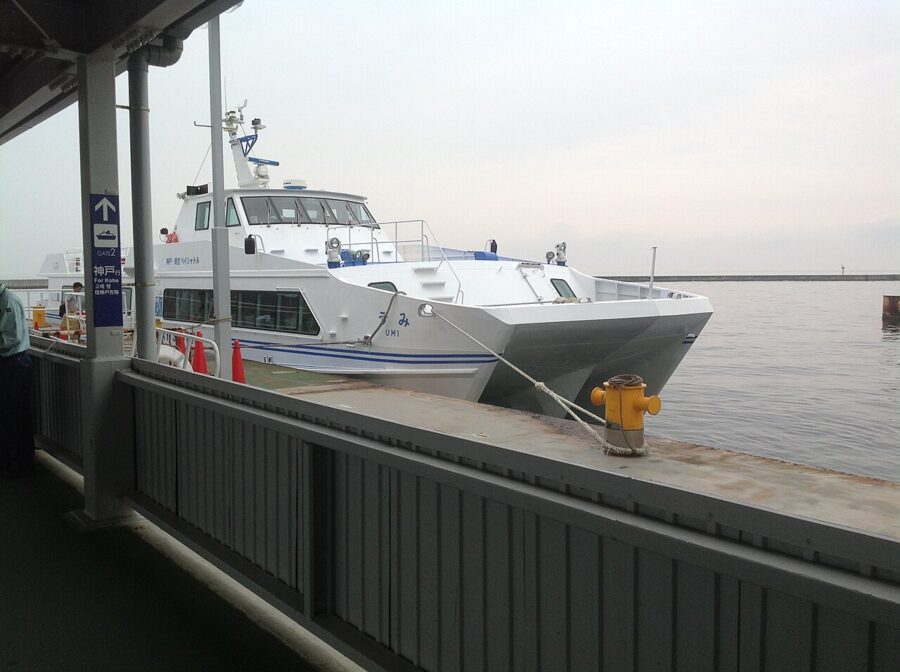

The boat costs ¥1,880 one way. The trick is the Port Liner set ticket, sold at the Kansai Airport ticket counter: it also costs ¥1,880 for an adult and includes the Port Liner to Sannomiya, which would otherwise add ¥340. Going the other way, the set ticket is sold at the Port Liner information desk at Sannomiya, cash only. The first boat leaves Kobe Airport at 05:30 and the last at 22:45; from Kansai the first is at 06:20 and the last at 00:00.
By rail you need at least one change, at Osaka Station or Shin-Osaka, and you pay more in time than the bus costs in yen. Take the bus with a big suitcase, and the boat if you have time and fine weather.
From Kobe Airport
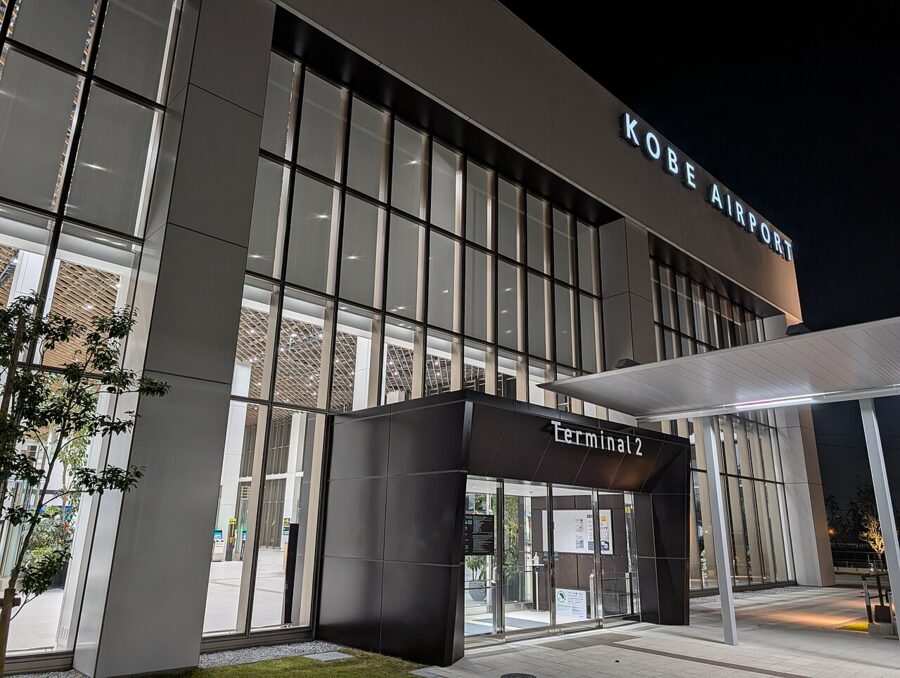
Kobe Airport, on its own island south of Port Island, is mostly domestic. International charter flights began in 2025 from a new Terminal 2, and for winter 2026/27 Kobe City lists routes to Seoul and Cheongju in South Korea and to Taipei, Taichung and Kaohsiung in Taiwan, all subject to approval; regular international flights are planned for around 2030. Whichever terminal you land at, the Port Liner reaches Sannomiya in about 18 minutes for ¥340.

Shin-Kobe for the Shinkansen
Shin-Kobe is Kobe’s stop on the Sanyo Shinkansen, served by the Nozomi as well as the slower trains. It is not in Sannomiya: it sits against the mountains north of the center. Take the Seishin-Yamate Line one stop, 2 minutes and ¥210.
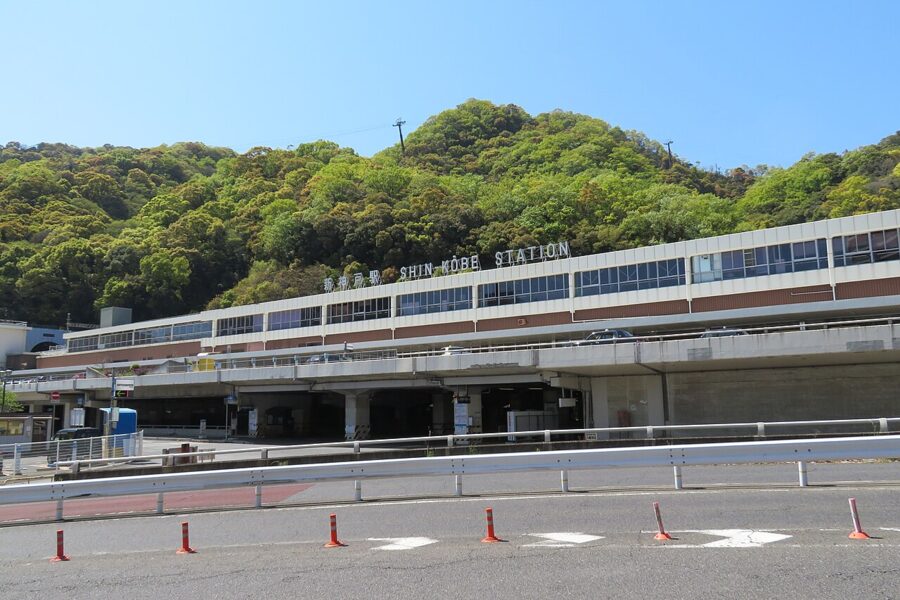

With a JR pass, it is tempting to ride the Shinkansen between Shin-Kobe and Shin-Osaka. Don’t bother. The Special Rapid from Sannomiya to Osaka Station is close to it door to door, runs far more often, and puts you in the middle of Osaka instead of on its northern edge.
Where to stay around the stations
Sannomiya has hotels at every price near the stations; the right one depends on the trip.
One night between trains. remm plus Kobe Sannomiya fills the upper floors of the Kobe Sannomiya Hankyu Building, connected directly to Hankyu’s east gate, with 209 rooms. Kobe Sannomiya Tokyu REI Hotel is two minutes from JR Sannomiya. Both are compact city hotels built for sleeping, and you can be on a platform within minutes of checking out.

A few days in Kobe. Stay in the Old Settlement, between the stations and the harbor, where the streets go quiet at night and everything is within walking distance. THE ORIENT, the hotel known as the Oriental Hotel until its 2024 change of name, is on Kyomachi, seven minutes from Sannomiya, with harbor-view and city-view rooms. Hotel Monterey Kobe is the other choice close to the stations.
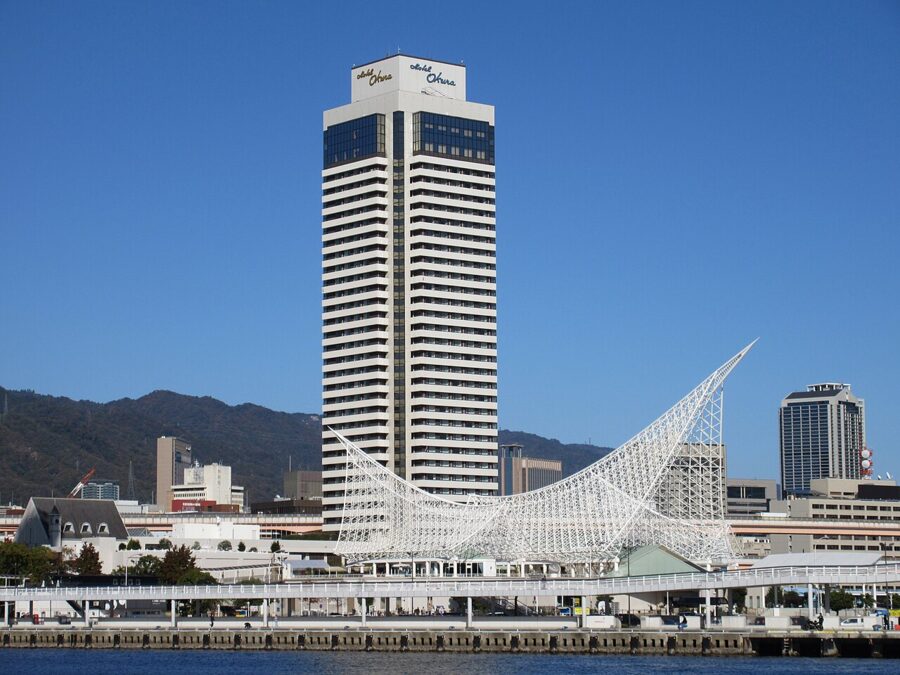
Harbor views. Hotel Okura Kobe and the Kobe Meriken Park Oriental Hotel stand on the water at Meriken Park, a ten-minute walk from Motomachi station. You pay for the view, and you get it.

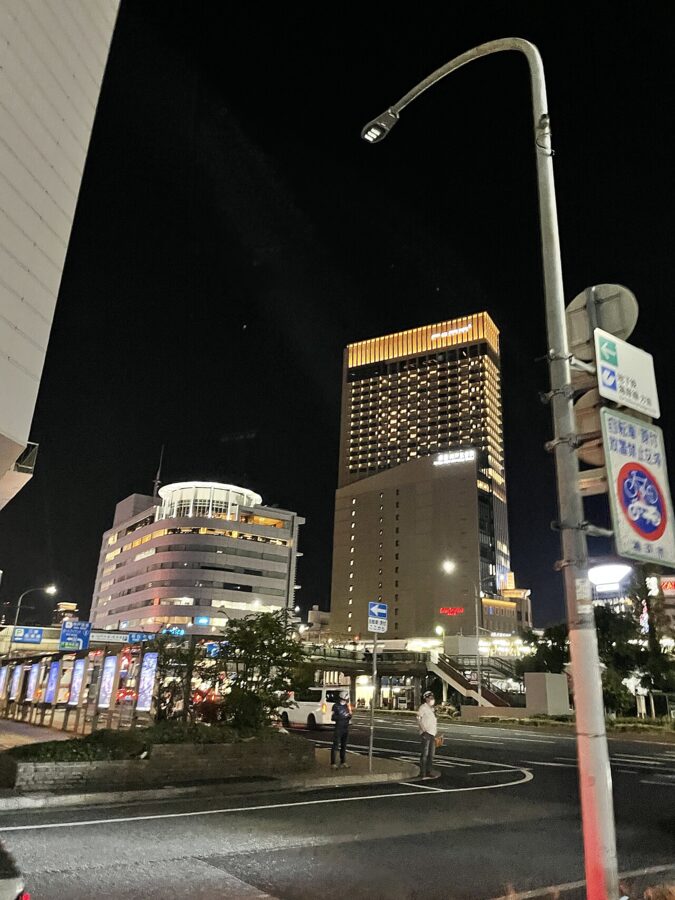
Shinkansen first. ANA Crowne Plaza Hotel Kobe is directly connected to Shin-Kobe Station, one subway stop from Sannomiya, with a restaurant on its 36th floor. It is the right choice if you arrive late on one Shinkansen and leave early on another, and the ropeway to the herb gardens starts beside it.

My pick for a first visit is the Old Settlement: close to the trains, close to Nankinmachi, an easy walk to the water, and nothing outside the window at night but old stone. Whatever you book, the way out is the same. Walk back to the crossing, find the gate your ticket wants, and the six stations will put you on a train to anywhere in Kansai.