
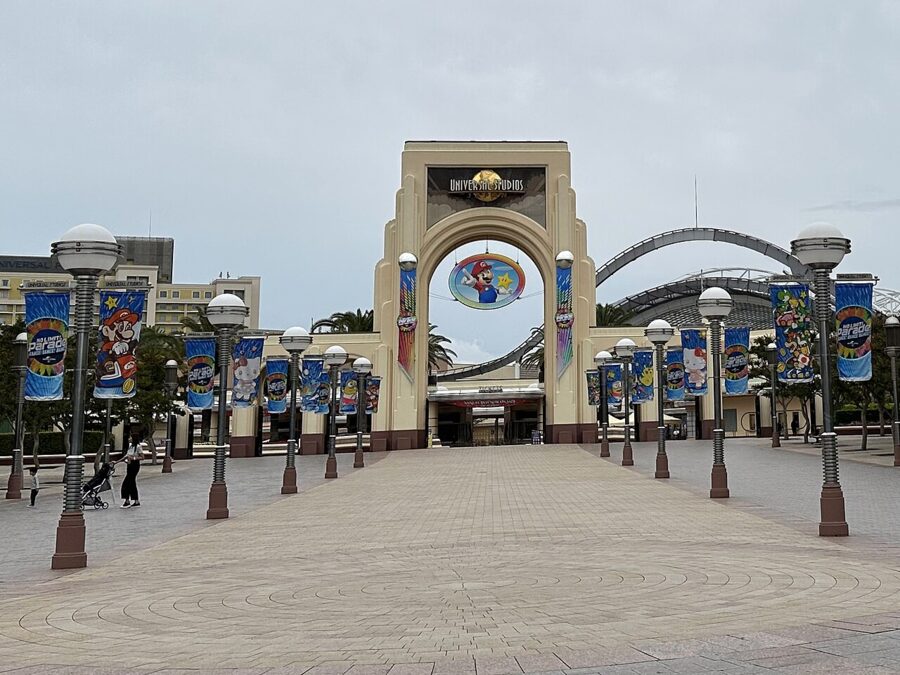

An adult day ticket for Universal Studios Japan costs ¥11,900 on Saturday, December 26, 2026. On Thursday, January 7, 2027, the same ticket is ¥8,400, and the park is quieter for exactly the reason it is cheaper. Everything else about a day here follows from that calendar: whether you need a timed ticket to reach Mario, which Express Pass is still on sale, and how long you will stand behind a rope at 14:00.
USJ, as everyone in Kansai calls it, is one of the busiest theme parks on earth. The Themed Entertainment Association put it at about 16 million visitors in 2024, third in the world after the Magic Kingdom in Florida and Disneyland in California. You can still have a very good day here without spending ¥40,000 on queue-jumping. You just need to plan it the way the locals do, with the app installed, the date chosen on price and the first two hours spoken for.

Contents
The park in short
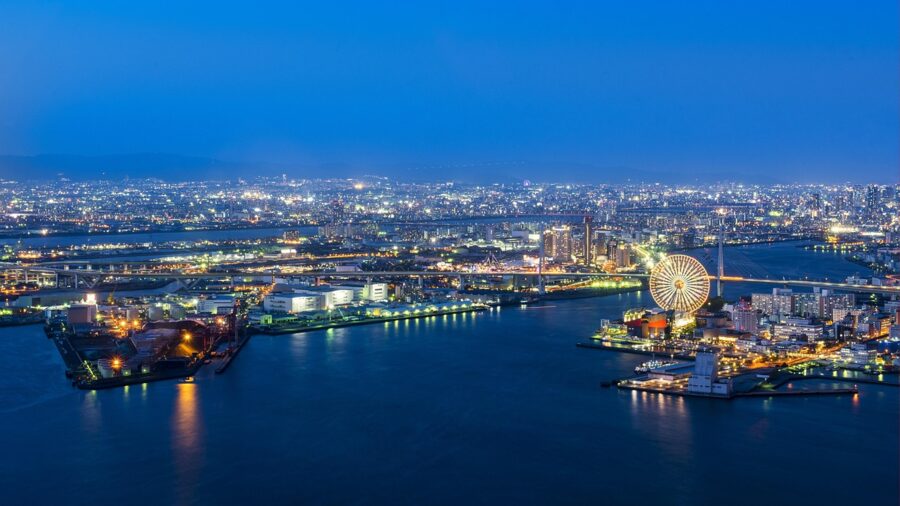
Universal Studios Japan opened on March 31, 2001, on old shipyard and steelworks land in Konohana ward, on the Osaka bay front. It sits across the mouth of the Aji River from Tempozan and the aquarium, which is why one of the ways in is a ten-minute boat ride. The whole Universal City district around the station, hotels and CityWalk included, exists because of it.
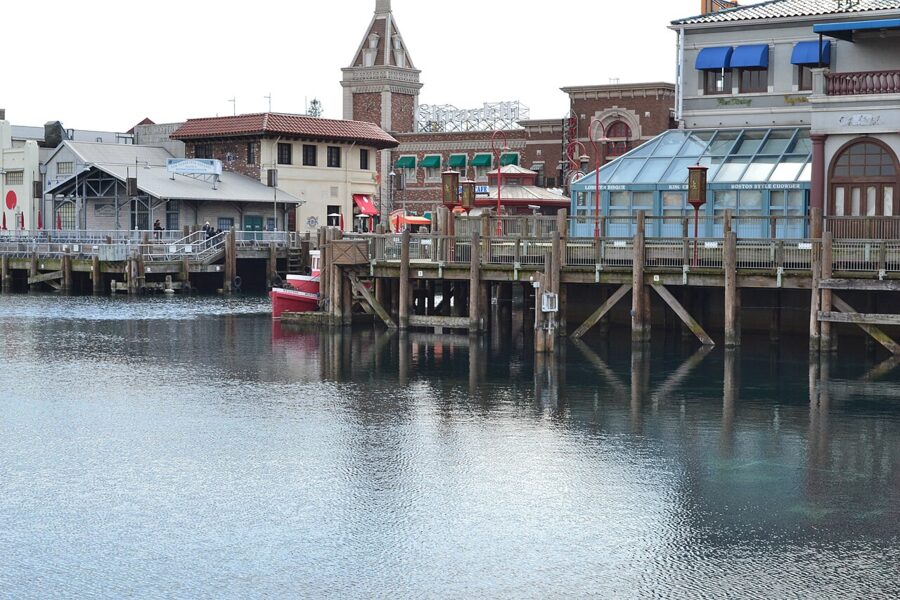
The park is a ring of themed areas around a central lagoon: Hollywood and New York near the gate, San Francisco on the water, Jurassic Park and Amity Village (the JAWS town) at the back, Minion Park and Universal Wonderland on one side, and the two big draws, The Wizarding World of Harry Potter and Super Nintendo World, in the far corners. WaterWorld has its own arena by the lagoon.
It changes faster than most visitors realize. Donkey Kong Country opened as an extension of Super Nintendo World on December 11, 2024, with the Mine Cart Madness coaster. Minion Park grew in July 2025 and gained Illumination’s Villain-Con Minion Blast. Losses since 2024 include The Amazing Adventures of Spider-Man (closed January 22, 2024), the night parade (ended September 1, 2025) and the whole of Sesame Street Fun World inside Universal Wonderland, which closed on May 10, 2026.
The two old 4-D films, Shrek’s 4-D Adventure and Sesame Street 4-D Movie Magic, have been closed indefinitely since January 8, 2026. Playing with Curious George has its last day on February 28, 2027.

Two things are on the horizon but not yet bookable. In January 2026 the park and The Pokemon Company announced a Pokemon project that will open at USJ first, details to come. And in September 2026 the operator confirmed talks with the city about leasing municipal land next door at Sakurajima 2-chome.
The park turned 25 in 2026, and the anniversary program, “Discover U!!!”, runs through the winter. The holiday event is on from November 13, 2026 to January 17, 2027, and Universal Cool Japan 2027 starts on December 2, 2026, with Sailor Moon in the 4-D cinema until April 5, 2027.
Crowds by season and weekday
Since dates are priced by expected demand, the ticket calendar is the best crowd forecast you can get. For the dates on sale in late November 2026, adult day tickets run from ¥8,400 to ¥11,900. Weekdays in early December sit at ¥9,400, Fridays and Saturdays at ¥10,900–11,900, and every day from December 25 to 30 at ¥11,900. The cheapest days of all are a handful of January weekdays, at ¥8,400–8,900.
The pattern through the year is the Japanese holiday calendar. Spring break in late March, Golden Week from late April into early May, the summer school holidays from late July through August, the Halloween season weekends in the fall and the last week of December are all heavy. The three-day weekend around Labor Thanksgiving Day (November 23) was busy enough in 2026 that the English-language store stopped selling tickets for Sunday, November 22. If your dates are flexible, a Tuesday to Thursday outside school holidays is the easy win.
Rain helps more than people think. The rainy season in June keeps day-trippers away, most of the queues are covered and the big indoor rides do not care about the weather. Heat is the bigger problem: in July and August the park now pushes its entertainment into the evening, and the operator certified 58 indoor spaces as official cool spots in 2025.
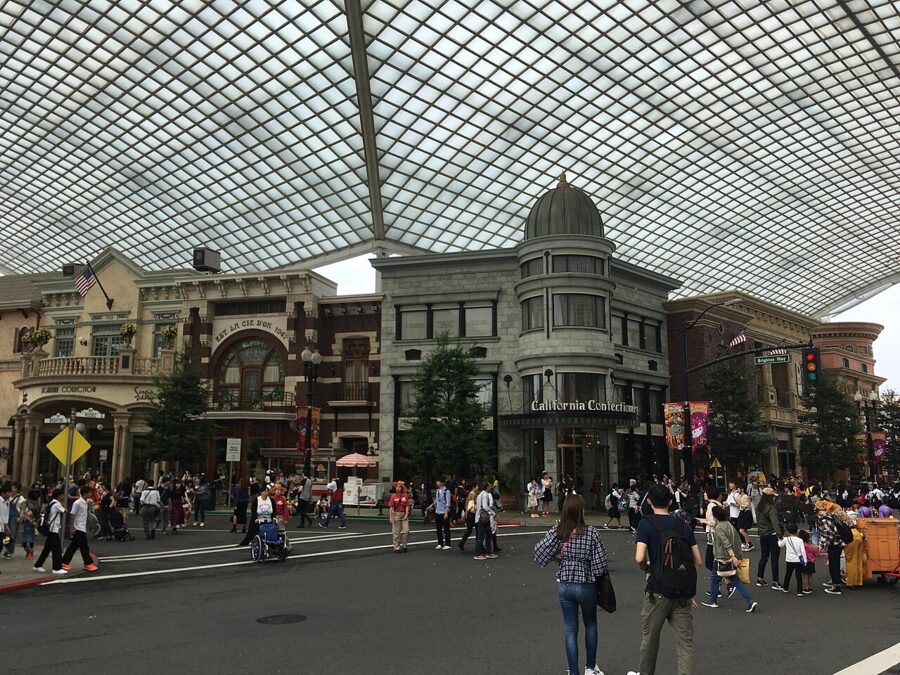

Tickets now: what a day costs
The basic ticket is the 1 Day Studio Pass. It is dated, it covers entry and every standard attraction, and it does not allow re-entry once you leave, even to fetch something from a locker outside the gate. Only annual passes allow re-entry. The date can be changed after purchase under conditions set out on the official site, but tickets cannot be canceled.
Prices depend on the date, and since visits from September 1, 2026, the park can also revise a date’s price after it goes on sale as demand builds. In practice that means the same Saturday can cost more in December than it did in October. Buy as soon as your date is fixed.
| Ticket | What it covers | Adult price (dates on sale in late November 2026) |
|---|---|---|
| 1 Day Studio Pass | Opening to closing on one date | ¥8,400–11,900 |
| Twilight Pass | Entry from 15:00 | from ¥5,900 (Japanese store), from ¥6,200 (English store) |
| 1.5 Day Studio Pass | From 15:00 on day one, then all of day two | from ¥13,600 |
| 2 Day Studio Pass | Two consecutive full days | from ¥16,000 |
Children aged 4 to 11 pay the child price, and 12-year-olds still in elementary school count as children. Adults are 12 to 64, seniors 65 and over, and children aged 3 and under get in free. On the cheapest dates a child pays ¥5,500 and a senior ¥7,600; on a ¥9,400 adult day those become ¥5,800 and ¥8,500; at the ¥11,900 peak, ¥7,400 and ¥10,700.
Two discounts are worth knowing about. Residents of Kansai who can prove it can buy the Kansai NO LIMIT! Pass, which takes ¥1,000 off an adult ticket and ¥2,000 off for ages 12 to 17. And the Japanese-language store has a limited-period Holiday Kids Free Pass (November 13 to December 30, 2026) that lets one child in free with each adult; read its conditions before you build a trip around it.
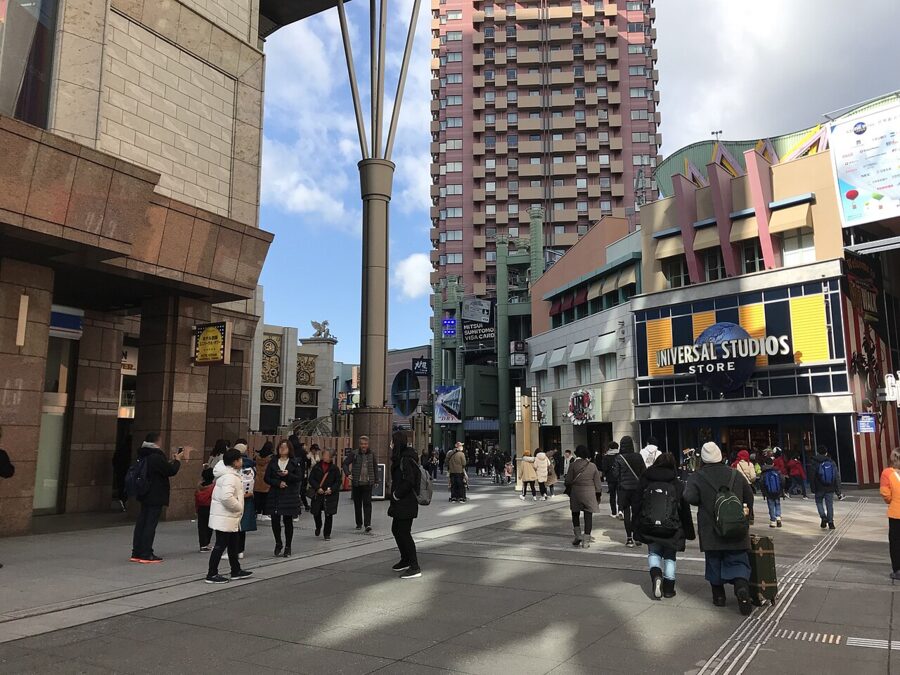

Where to buy
There are two official web stores and they are not the same shop. The Japanese-language USJ Web Ticket Store is run by the park. The English-language store linked from the park’s English site, usjticketing.com, is operated by JTRWeb, an authorized reseller, and its prices can differ slightly: in November 2026 the Twilight Pass started at ¥5,900 on the Japanese store and ¥6,200 on the English one, while day tickets matched. If you can manage a Japanese checkout, compare the two before you pay.
Travel agencies on the park’s list sell tickets too, including packages with guaranteed timed entry to Super Nintendo World. What you must not do is buy a ticket second-hand. Resale is banned, the park voids the QR codes of tickets it identifies as resold, and a voided ticket gets you as far as the turnstile.
Guests at the park’s partner hotels can also buy tickets at the hotel on their check-in day and the day after.
Express Passes and timed entry
The Universal Express Pass is a separate ticket, bought on top of a Studio Pass, that lets you use a shorter Express lane at a fixed list of attractions. Every version is different, and the name tells you how many rides it covers: Express 3, 4, 5, 7 or 8, plus Premium versions that cover everything. Prices are the same for all ages and vary by date, from ¥9,000 for the cheapest version to ¥99,000 and up for Express Pass Premium Unlimited.
Some rides on each pass have a printed time; you turn up at that time, not before. The rest you can use whenever they are running. Each person needs their own pass, shown as the full ticket screen rather than a cropped QR code. If a ride on your pass is closed on the day, you use the others instead, and the park keeps selling passes at the normal price through scheduled maintenance closures, so check the closure list before you choose one.
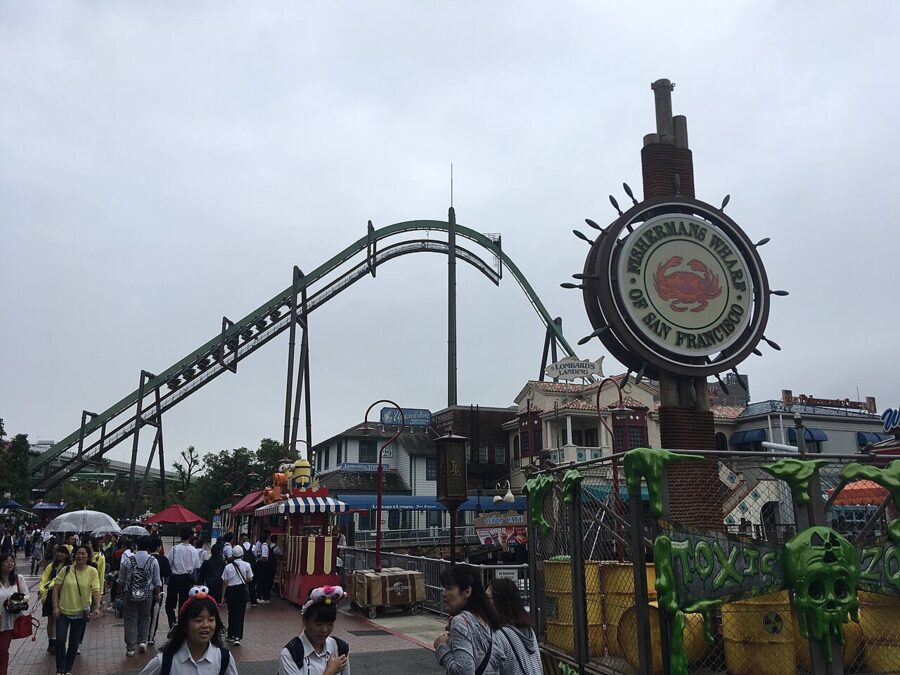

Which Express Pass is worth it
Most of the passes include guaranteed timed entry to Super Nintendo World, and that, not the shorter lanes, is what you are really buying on a busy day. These were on sale in late November 2026:
- Express Pass 4: Flying Dinosaur & Mine Cart (Mario Kart, Mine Cart Madness, Harry Potter and the Forbidden Journey, The Flying Dinosaur), from ¥18,800. January 2027 dates were selling at ¥14,800–22,800.
- Express Pass 5: Race & Adventure (Mario Kart, Yoshi’s Adventure, Flight of the Hippogriff, Despicable Me: Minion Mayhem, Villain-Con Minion Blast), from ¥12,200. Every ride on it takes children from 107 cm with an adult, which makes it the family pass.
- Express Pass 3: Classic & Show (JAWS, Forbidden Journey or Jurassic Park, Universal Monsters Live: Rock and Roll Show), from ¥9,000. Cheap because there is no Nintendo in it.
- Express Pass Premium, every attraction, from ¥41,000, and Premium Unlimited from ¥99,000. In early January 2027 Premium was selling at ¥49,000–58,000 a head.
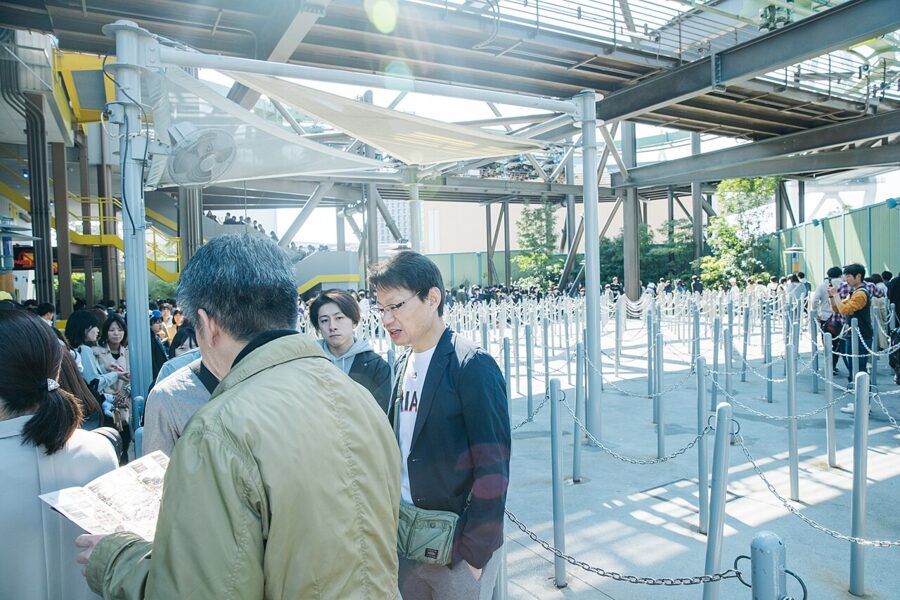

My view: if Nintendo matters to anyone in your group and your date is a weekend or holiday, buy the cheapest pass that includes Super Nintendo World timed entry and the one or two rides you care most about. Skip the 7s and 8s unless money is no object. On a quiet weekday with no timed entry in force, early arrival plus single-rider lines will do most of what an Express Pass does for free.
They sell out. By late November 2026 the English store had no Express Pass 4 left for any remaining date of the year, while January was still wide open. Decide on the pass when you buy the ticket, not the night before.
Area timed entry for Super Nintendo World
On busy days you cannot simply walk into Super Nintendo World. The park issues Area Timed Entry Tickets through the official app, and you can only claim one after you have scanned into the park. When the timed slots for the day run out, the app moves on to Standby Entry Tickets, and the park can stop issuing either without notice. Some days nobody needs one at all; you only find out on the day.
The only way to hold a guaranteed slot before you arrive is an “Area Timed Entry Ticket: Advance Booking”, which comes bundled with certain Express Passes or with packages from the park’s partner travel agencies. Even with a slot, a ride inside the area can be closed or have stopped taking guests, so the slot is a door, not a promise.
The same app runs two smaller systems. Yoyakunori (Reserve & Ride) books a ride time on selected attractions so you can eat or shop until then. Attraction Timed Entry Tickets and their standby equivalent do the same for single rides on busy days. Install the app at home, link every ticket in your group to it, and carry a charged battery.
Single rider and child switch
Single-rider lines are the best free tool in the park. They run at Mine Cart Madness, Mario Kart, Harry Potter and the Forbidden Journey, Despicable Me: Minion Mayhem, Hollywood Dream, The Flying Dinosaur, Jurassic Park and JAWS, and at Space Fantasy when it reopens. You ride separately from your group and the line can be closed on any given day, but when it is open the saving on the big coasters is huge.
Child switch lets one adult wait with a child who is too small while the other rides, then swap without queuing again. It works on all the main rides from Mario Kart to The Flying Dinosaur; ask the crew at the entrance.
The areas worth the queue
Heights first, because they decide half the plan for families. Mario Kart: Koopa’s Challenge and Mine Cart Madness need 107 cm. Harry Potter and the Forbidden Journey needs 122 cm. The Flying Dinosaur takes riders from 132 to 198 cm, and both versions of Hollywood Dream need 132 cm.
Most other rides start between 92 and 107 cm. Children under 122 cm must ride with a supervising guest of junior high school age or older, which in practice means a parent.
Super Nintendo World and Donkey Kong Country
This is the reason the park sells out. Mario Kart: Koopa’s Challenge is the headline, a dark ride in which you wear an augmented-reality visor and throw shells at the other karts; it is clever, but it is a shooting game more than a ride. Mine Cart Madness in Donkey Kong Country is the better pure ride, a family coaster whose carts appear to jump broken track. Yoshi’s Adventure is a slow scenic track around the area, fine for small children and a waste of an hour for adults.
The Power-Up Band, sold separately, turns the area into a game of blocks to punch and keys to collect. It is not needed for any ride. Kinopio’s Cafe is the sit-down restaurant here, and it fills early on any day the area itself is busy.
The Wizarding World of Harry Potter
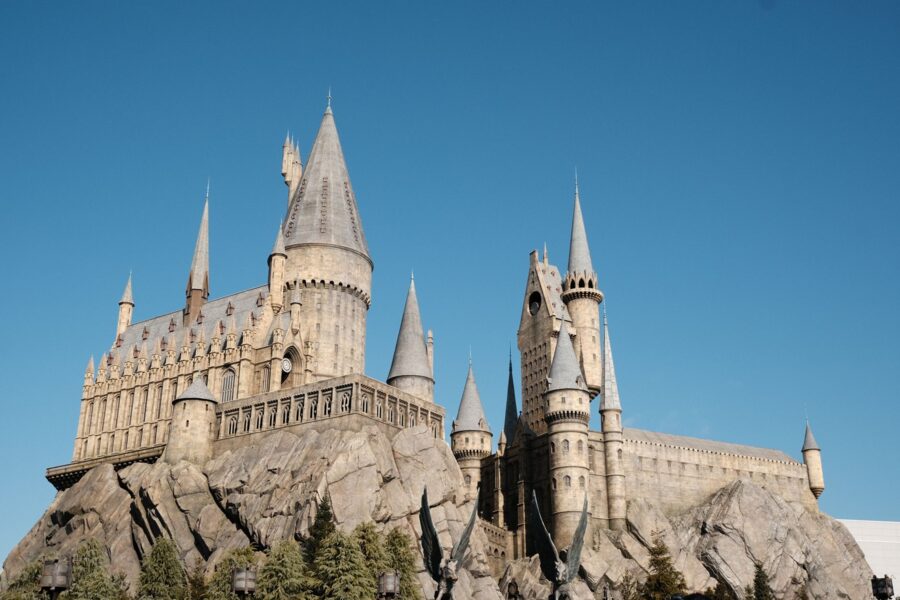
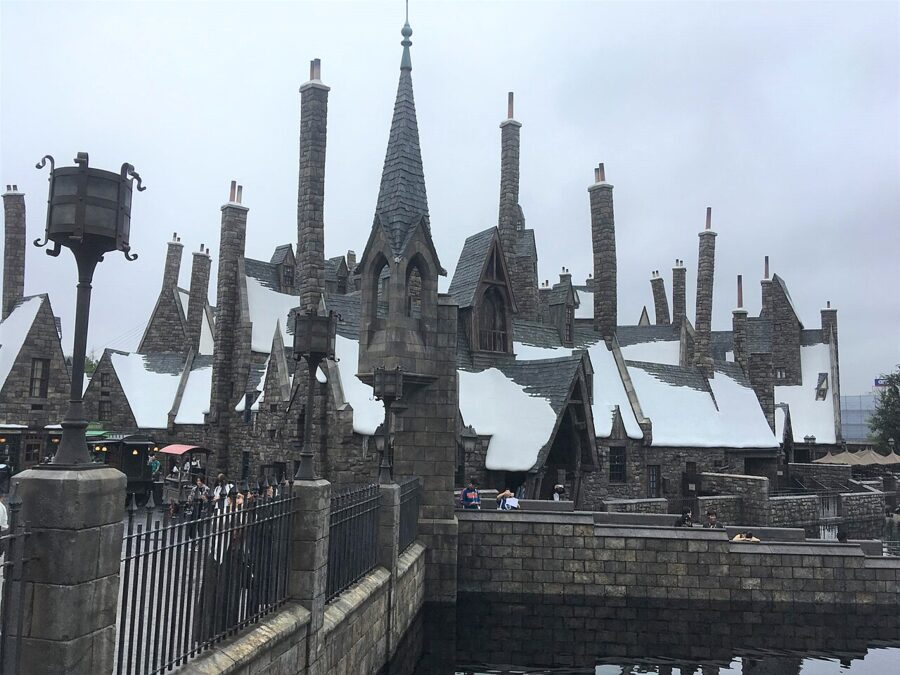
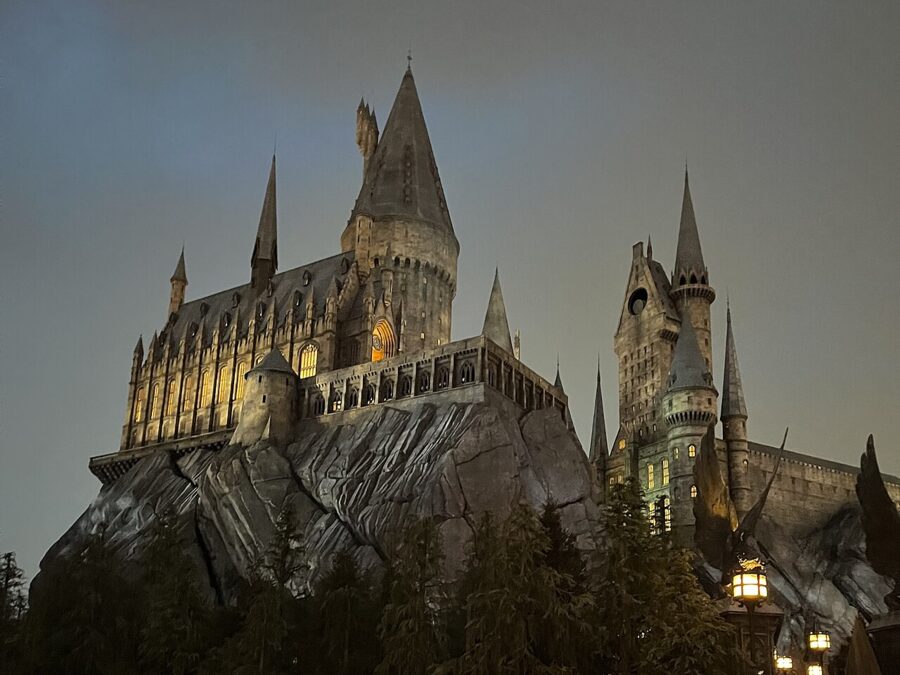
Hogsmeade at USJ is the most convincing piece of set-building in the park: snow on the roofs in August, crooked chimneys, and Hogwarts castle rising behind. Harry Potter and the Forbidden Journey is still the best ride here, a robot-arm dark ride through the castle that holds up well after more than a decade. Flight of the Hippogriff is a short family coaster around Hagrid’s hut, open to riders from 92 cm with an adult.
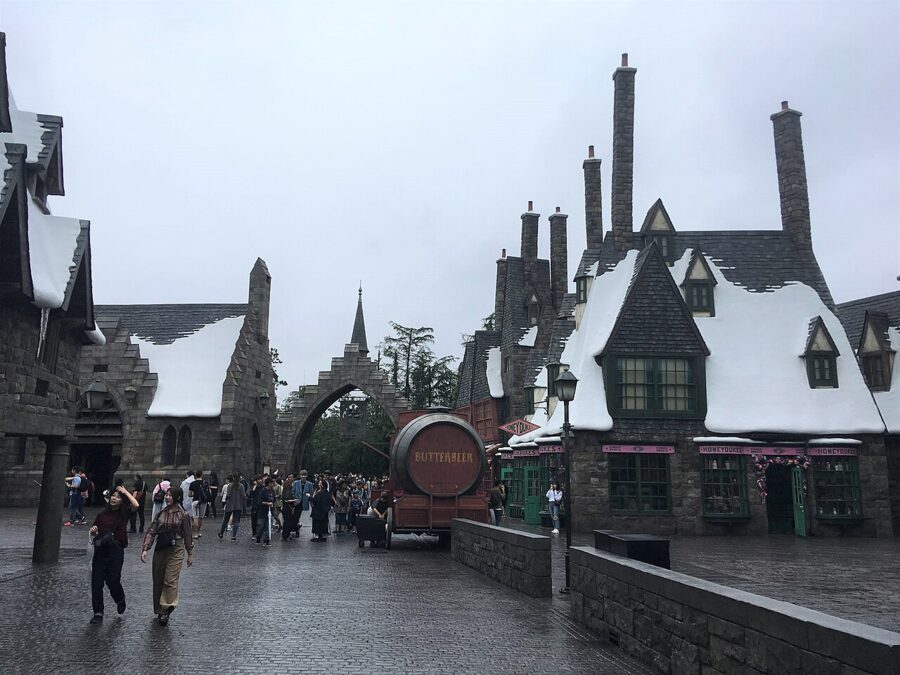

Ollivanders is a short show in a wand shop where a wand chooses one guest from the audience. The Hog’s Head pub serves Butterbeer, which is non-alcoholic and sweet enough that one between two is plenty. Come here first or last; from late morning to mid-afternoon the whole area is at its fullest.

Jurassic Park, Amity Village and WaterWorld
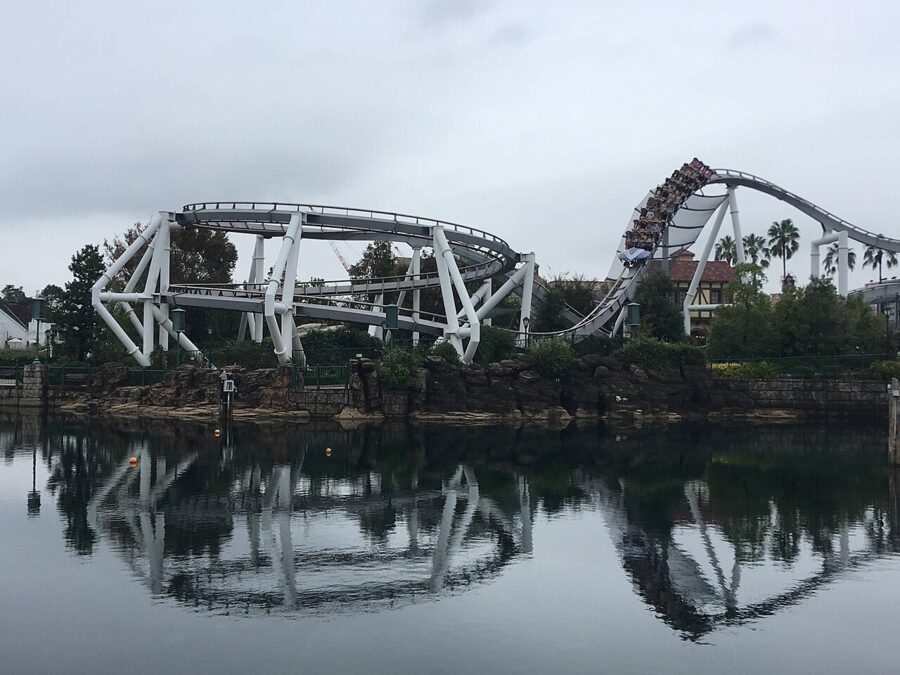
The Flying Dinosaur is the most intense ride in the park and, for adults who like coasters, the best. You hang face down beneath the track for the whole circuit, with no loose items allowed: everything goes in a locker, and every rider goes through a metal detector first. Use the single-rider line. Jurassic Park: The Ride is the classic boat ride with a big final drop; expect to get wet, and note it closes for maintenance from January 9 to 22, 2027.
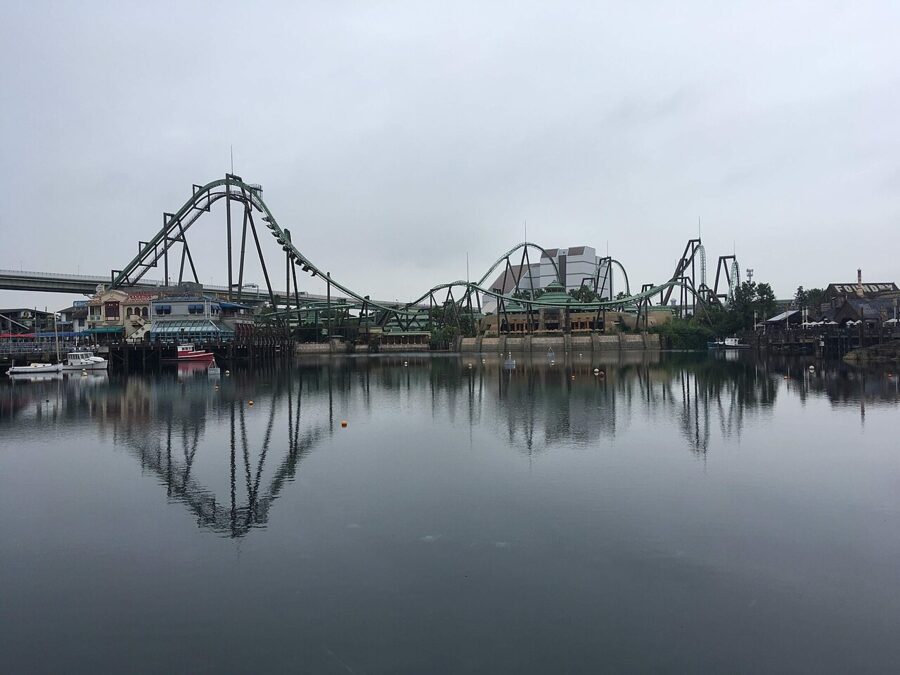

JAWS, in Amity Village, is a boat tour that goes wrong, loudly and with a lot of fire. It is older than most rides here and better than it has any right to be. WaterWorld, the live stunt show in its own arena, is the park’s best show, but it is closed from November 28 to December 25, 2026; check the closures list before counting on it.
Hollywood, New York and Minion Park
Hollywood Dream – The Ride is a high, fast coaster on which you choose a song for your onboard speakers. Hollywood Dream – The Ride: Backdrop runs the same track backwards and is the more frightening of the two. The backwards version closes from January 22 to March 19, 2027, and Space Fantasy – The Ride, the indoor spinning coaster in the same area, is closed for maintenance until January 24, 2027.
In New York, the Detective Conan 4-D Live Show, which opened in March 2024, mixes live actors with a 3D screen and is popular with Japanese visitors; the dialogue is in Japanese. Universal Monsters Live: Rock and Roll Show is a cheerful bit of nonsense with a live band.
Minion Park is where families with mixed ages end up. Despicable Me: Minion Mayhem is a motion-simulator dome (102 cm minimum), Villain-Con Minion Blast is an interactive game ride with no height limit, and Freeze Ray Sliders is a spinning ride from 92 cm.
For small children, and what to skip
Universal Wonderland is the area built for under-sixes. Snoopy’s Flying Ace Adventure, The Flying Snoopy and Hello Kitty’s Cupcake Dream are all gentle, and children from 92 cm can ride most of them with an adult. It lost its Sesame Street section in May 2026, so it is smaller than older guides suggest. Playing with Curious George, a gentle show for small children in Hollywood, runs until February 28, 2027.
Skip Yoshi’s Adventure unless you have small children or the wait is under 30 minutes. Skip the carnival games in Amity Village and by the lagoon, which cost extra and are there to take your money. And do not plan around the 4-D films in Hollywood; both have been closed since January 2026.
A plan for one day
Opening times change with the season and are published on the park’s calendar. In late November 2026 the park opened at 08:30 or 09:00 and closed anywhere between 19:00 and 22:00, and the park warns that admission can start before the scheduled opening time. Aim to be at Universal City Station 60 to 75 minutes before the published opening, with breakfast already eaten.
Without an Express Pass, my order would be this. Scan in and open the app straight away: if Super Nintendo World timed entry is in force, claim a slot before anything else. If the area is open without one, go there first and ride Mine Cart Madness and Mario Kart while the waits are short. Then cross to The Flying Dinosaur on the single-rider line, and walk on to Harry Potter before the late-morning crowds arrive.
Eat early, at 11:00 rather than 12:30. The early afternoon is the time for shows, JAWS and Minion Park, while the heavy rides peak. Leave Hollywood Dream for the last two hours, when the queues ease as families head home, and finish in Hogsmeade if the park is open late: the castle is lit after dark and the crowd is a fraction of noon’s.

Eating in the park and on CityWalk
Outside food cannot be eaten inside the park, though baby food and snacks for small children are allowed after a word with the crew. Drinks in plastic or metal bottles are fine; glass, cans, cartons and open cups are not. Inside, the reliable options are Louie’s N.Y. Pizza Parlor in New York, Mel’s Drive-In in Hollywood and the Discovery Restaurant in Jurassic Park, with Kinopio’s Cafe for the Nintendo crowd.
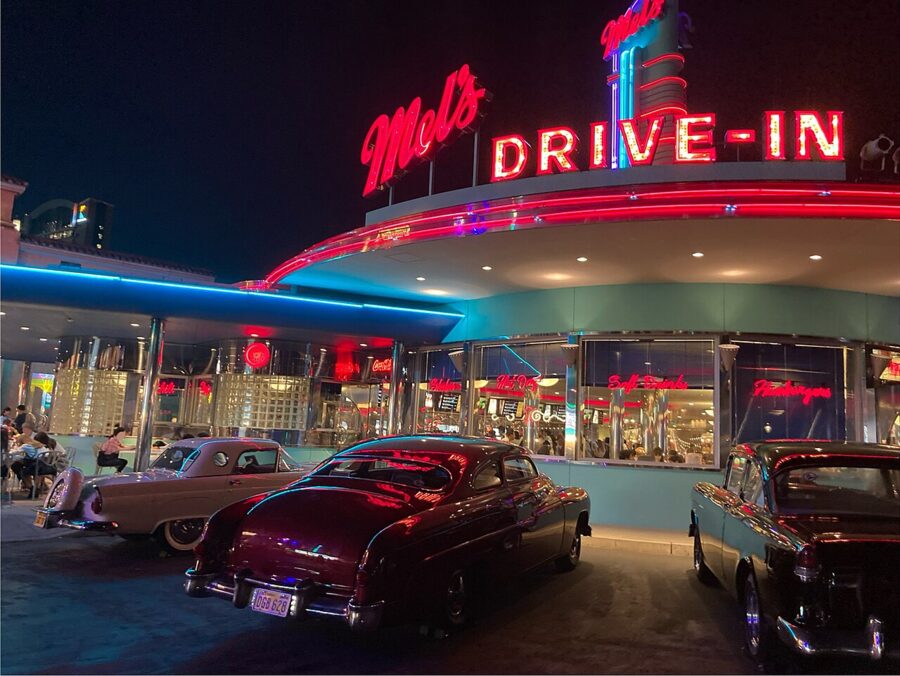
Only two restaurants take Restaurant Priority Seating: Park Side Grille and SAIDO, the Japanese restaurant, both in New York. Bookings open online at 11:00 Japan time one month before your visit and close 24 hours ahead; on the day, the restaurants take bookings at the door from 09:00. It is not a table reservation, but it gets you to the front of the line.
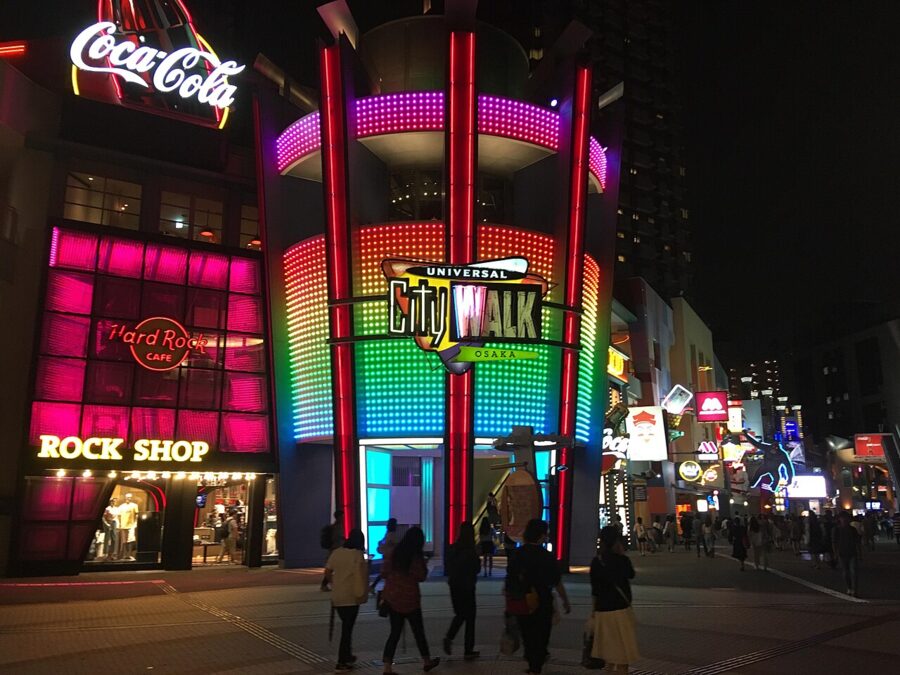
Universal CityWalk Osaka, the strip of shops and restaurants between the station and the gate, has 37 places to eat and is open whether or not you have a ticket. Its best idea is TAKOPA on the fourth floor, where six well-known Osaka takoyaki shops cook side by side. It is a good lunch if you are leaving at midday, and a better dinner than anything in the park.


Rain and heat
In bad weather the outdoor coasters are the first to stop, while the indoor rides, Forbidden Journey, Mario Kart, Minion Mayhem and the shows, carry on. Umbrellas are allowed in the park but have to be left with a non-rider or in a locker on most rides. In July and August the park runs its summer entertainment into the evening and puts on water shows to cool the crowds; drink more than you think, and plan the indoor rides for 13:00–15:00.
Getting there
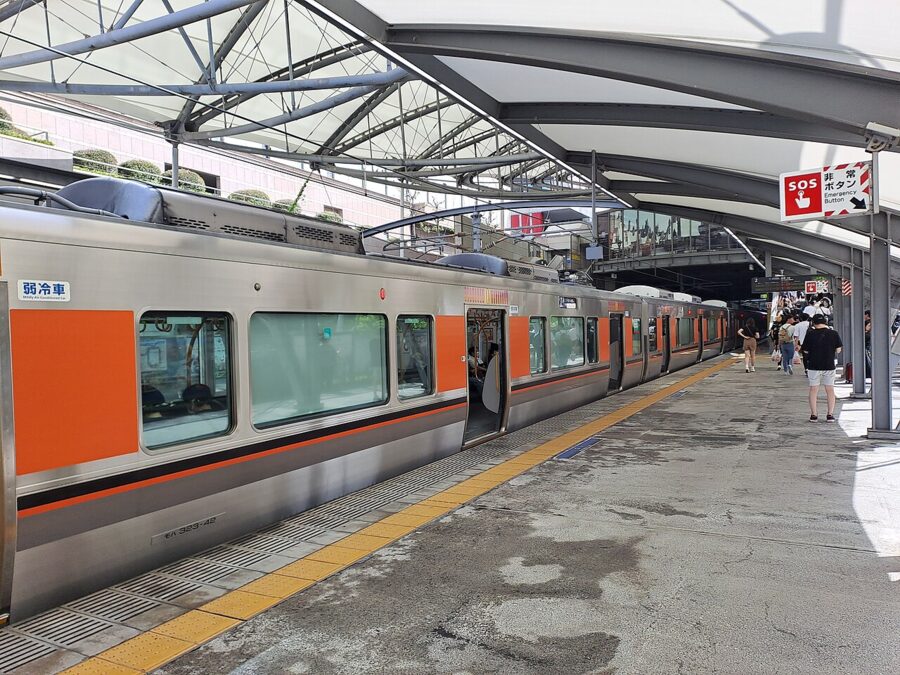
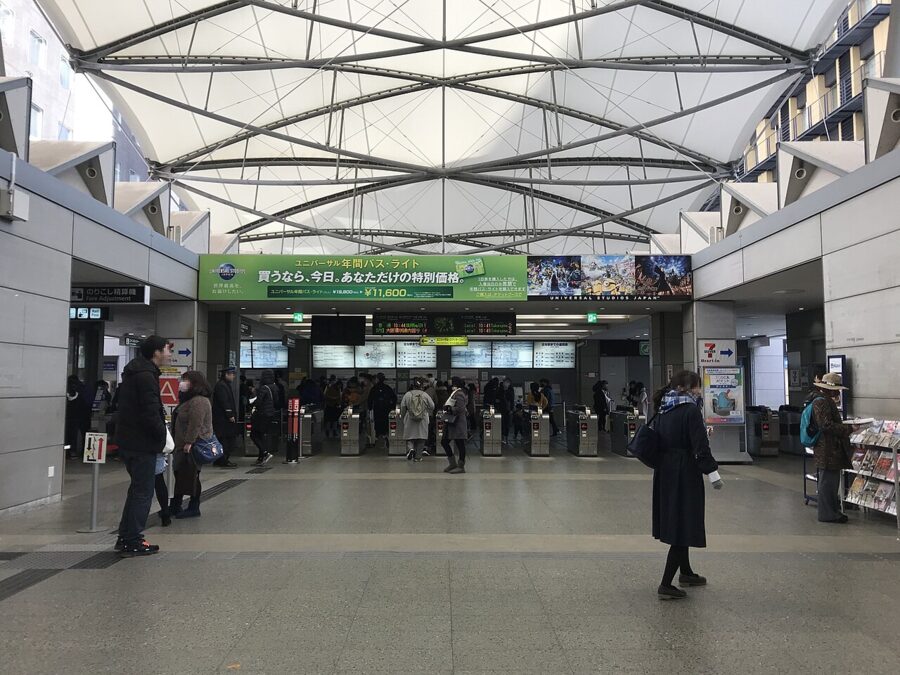
The park’s station is Universal City, on the JR Yumesaki Line, which is JR West’s name for the Sakurajima Line. It runs from Nishikujo on the Osaka Loop Line to Sakurajima, and Universal City is the second-to-last stop. Some trains run through from the Loop Line, so you can ride from Osaka Station without changing; the rest shuttle back and forth from Nishikujo.

From Osaka Station and Nishikujo
From JR Osaka Station (Umeda) the park reckons about 11 minutes: 6 to Nishikujo on the Loop Line and 5 on the Yumesaki Line. In the December 2026 timetable the trip takes 12 to 13 minutes on a through train and around 17 with a change, for ¥200 with an IC card. Take an inner-loop train toward Nishikujo; if it is not signed for Universal City or Sakurajima, change at Nishikujo for the shuttle.
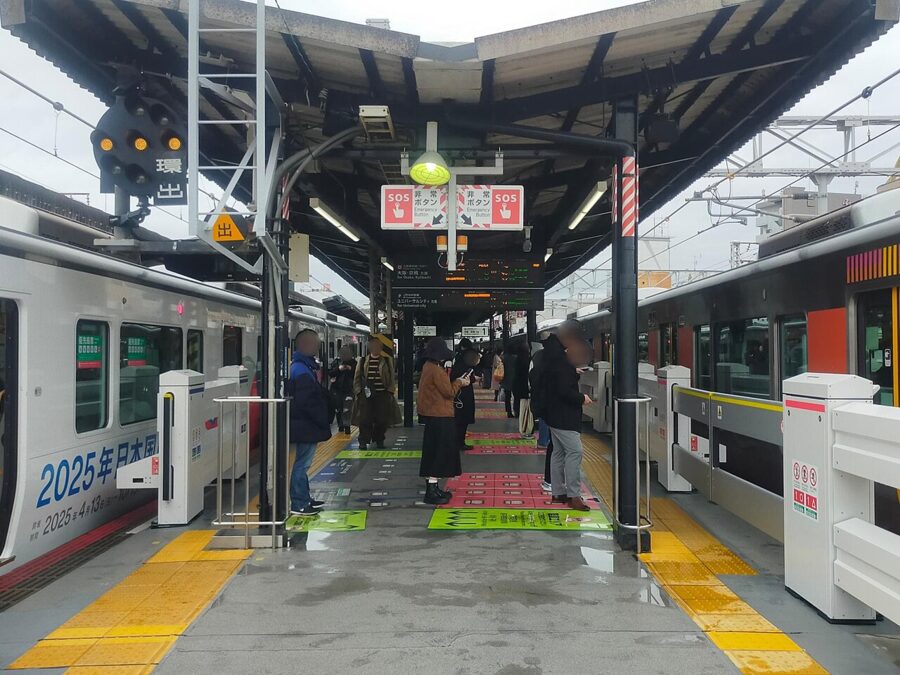

From Shin-Osaka it is about 16 minutes on paper and 23 in practice, with a change at Osaka, for ¥240. Coming back after closing, expect a queue just to get onto the platform at Universal City as the park empties.

From Namba
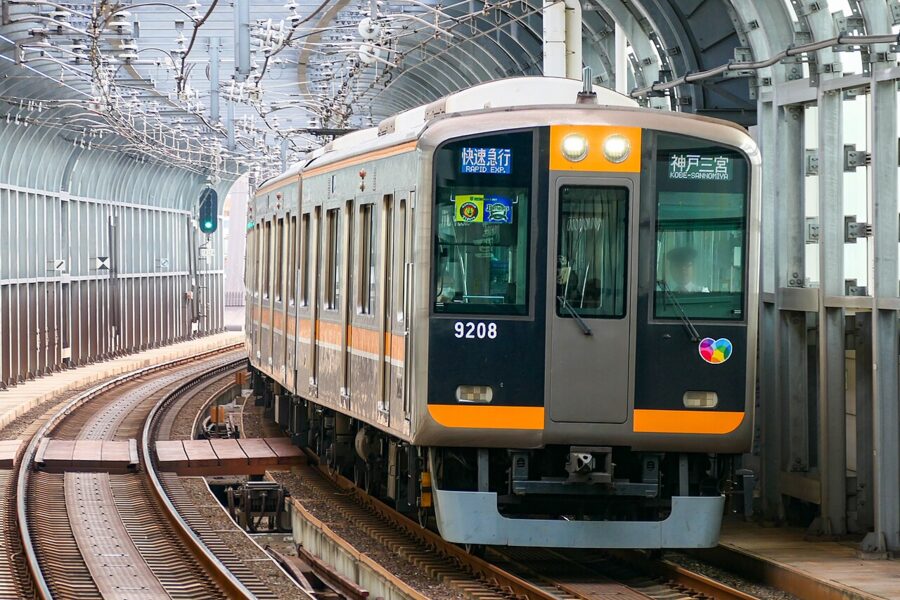
From Namba, take the Hanshin Namba Line from Osaka-Namba to Nishikujo (8 minutes, ¥220) and change to JR for the last 5 minutes (¥180). With the change it takes about 22 minutes and costs ¥400. The transfer at Nishikujo is short and well signed, and it is the quickest way from the Dotonbori side of the city.
From Kyoto, Kobe and Nara
From Kyoto, take the JR Special Rapid Service to Osaka and change for a through train to Universal City: about 48 minutes in all for ¥840. From Kobe, the JR Special Rapid from Sannomiya to Osaka and the same change take about 48 minutes for ¥660. From Nara, the JR Yamatoji Line takes about an hour with two changes, for ¥840.
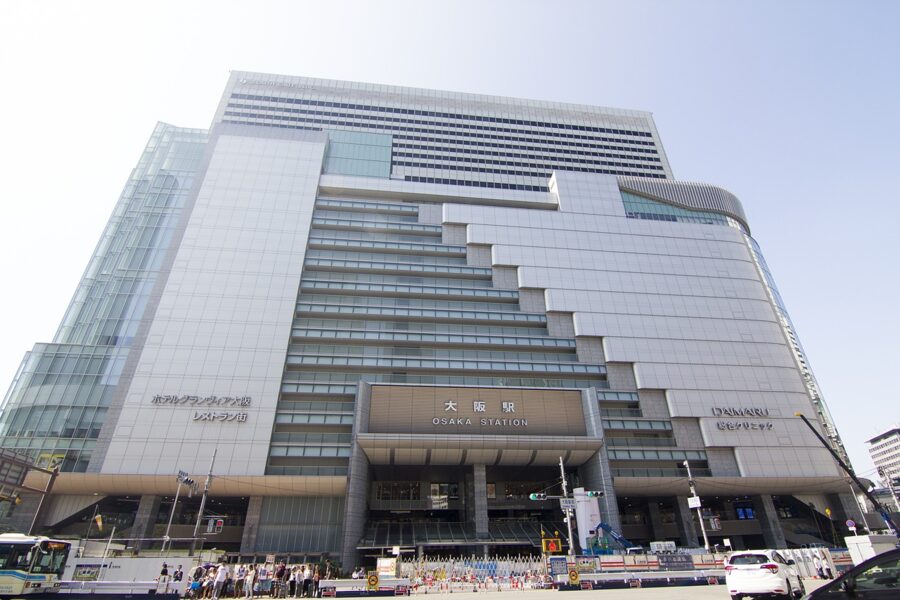
All of these are JR the whole way, so an IC card covers them. For a day trip from Kyoto the hour each way is fine, but if the park is one stop on a longer trip, I would sleep in Osaka the night before. You want to be on the first train, not the first train plus 40 minutes.
From Kansai Airport
Of the ways out of Kansai Airport, two suit the park. The limousine bus runs direct from Terminal 1 to Universal Studios Japan in about 70 minutes for ¥1,800 one way (¥900 for children, ¥3,300 return valid for 14 days). It is the easy option with luggage, but the timing is narrow: the first bus leaves Terminal 1 at 08:20 and the last at 17:10 (16:57 from Terminal 2). Going back, buses leave the park stop from 10:50 to 19:00.
By train, take the JR Kansai Airport Rapid to Nishikujo and change for Universal City: about 65 minutes by the park’s estimate, and ¥1,180. Allow longer in practice for the wait at Nishikujo, and remember that suitcases are not allowed in the park and the large lockers are outside the gate.
By ferry from Tempozan
The Captain Line boat crosses from Kaiyukan West Wharf, beside the aquarium at Tempozan, to Universal City Port in about 10 minutes. An adult ticket is ¥900 one way or ¥1,700 return on normal days, and ¥1,100 or ¥2,100 on the operator’s special-fare days; children of elementary school age pay ¥500 one way. Tickets are sold at the Captain Line counter and include small discounts at the Tempozan ferris wheel and some nearby hotels.
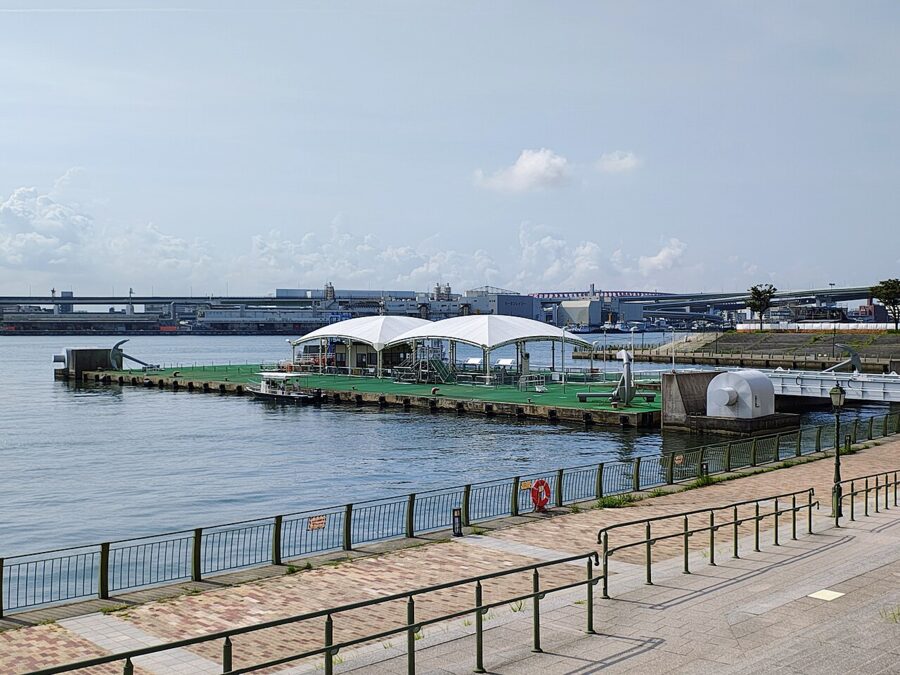
The catch is the timetable. Sailings start between about 09:15 and 10:30, stop for the noon hour, and finish between about 17:00 and 19:00, depending on the day, with no sailings on January 13 and 14, 2027. It does not work for an early start or a late finish. It does work well for an aquarium morning and an afternoon Twilight Pass, or the other way around.
Staying at the gate or in the city
The park has seven official hotels, all within walking distance: The Park Front Hotel, right outside the main gate; The Singulari Hotel & Skyspa, connected to the station; Hotel Universal Port; Hotel Universal Port Vita; Hotel Kintetsu Universal City; Hotel Keihan Universal Tower; and Oriental Hotel Universal City. Their guests can buy park tickets and Express Passes at the hotel and see current ride waits. Perks such as guaranteed timed entry come with specific packages, not with the room.
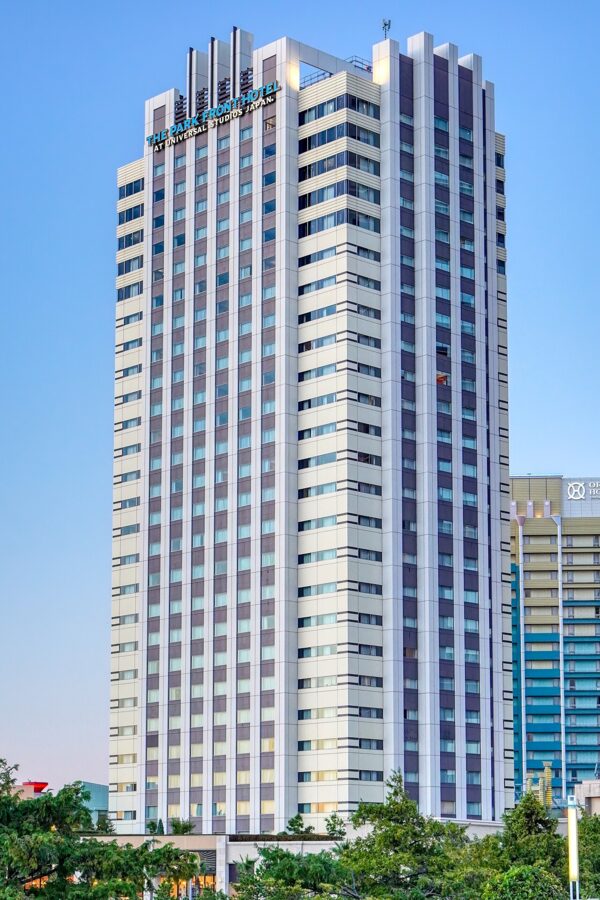

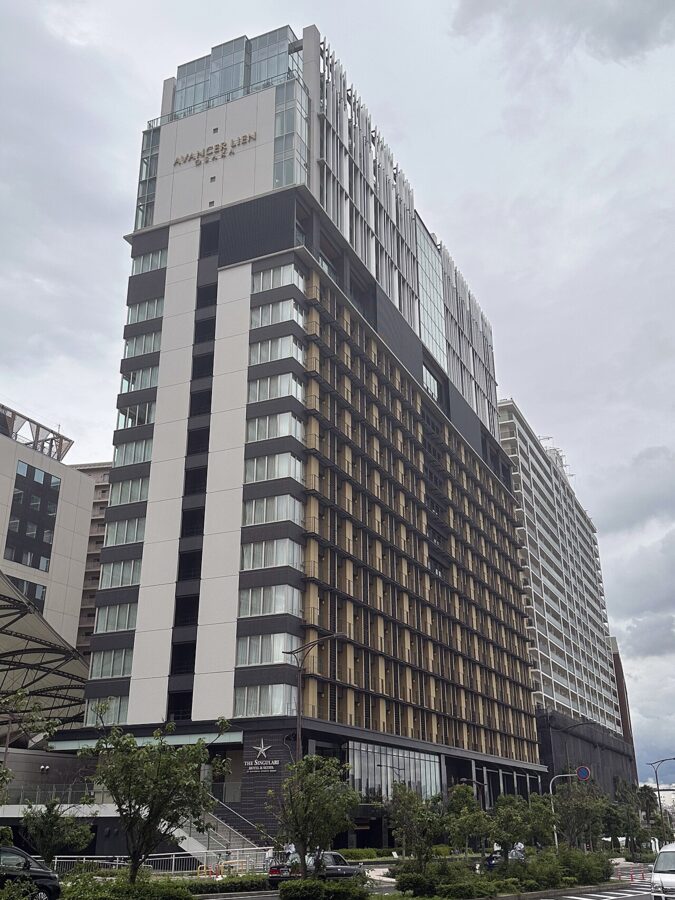

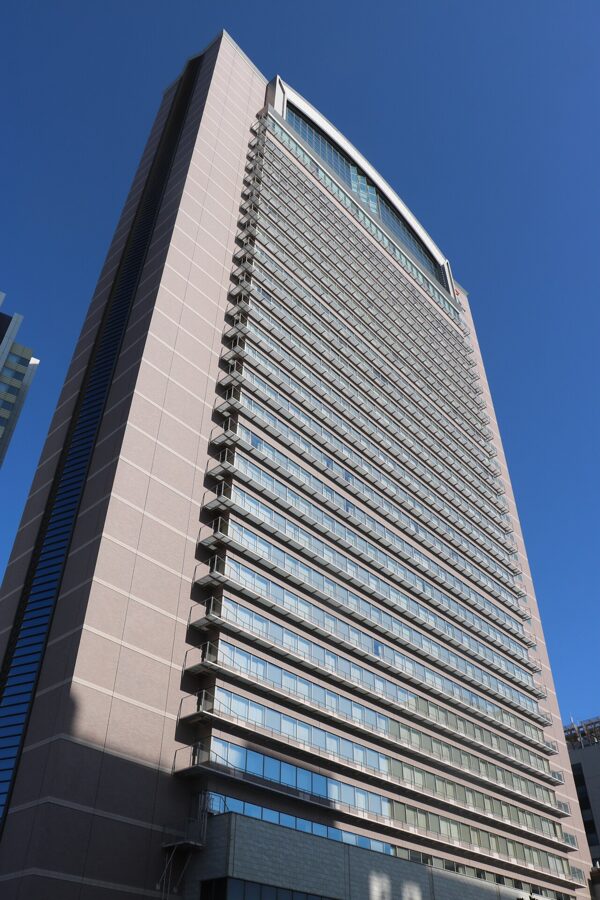

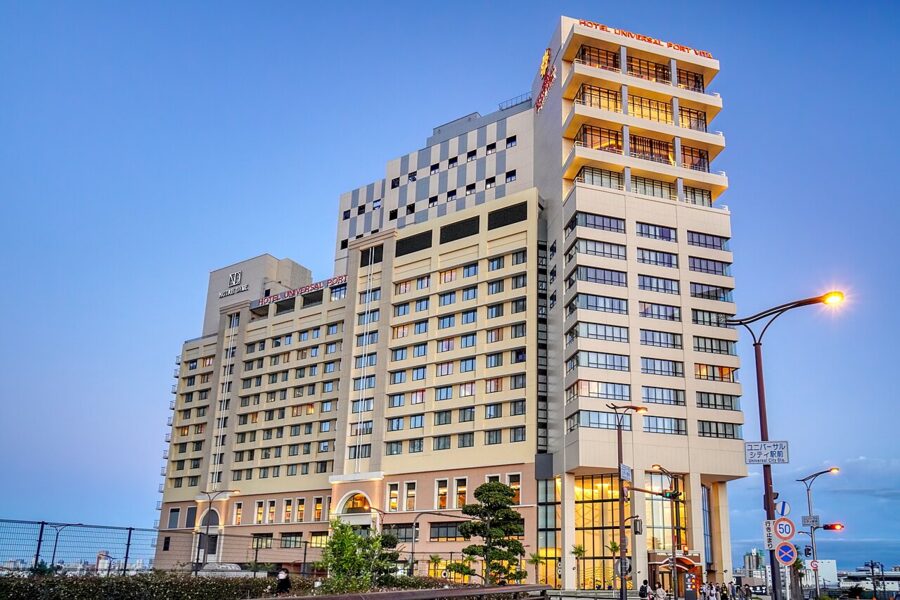

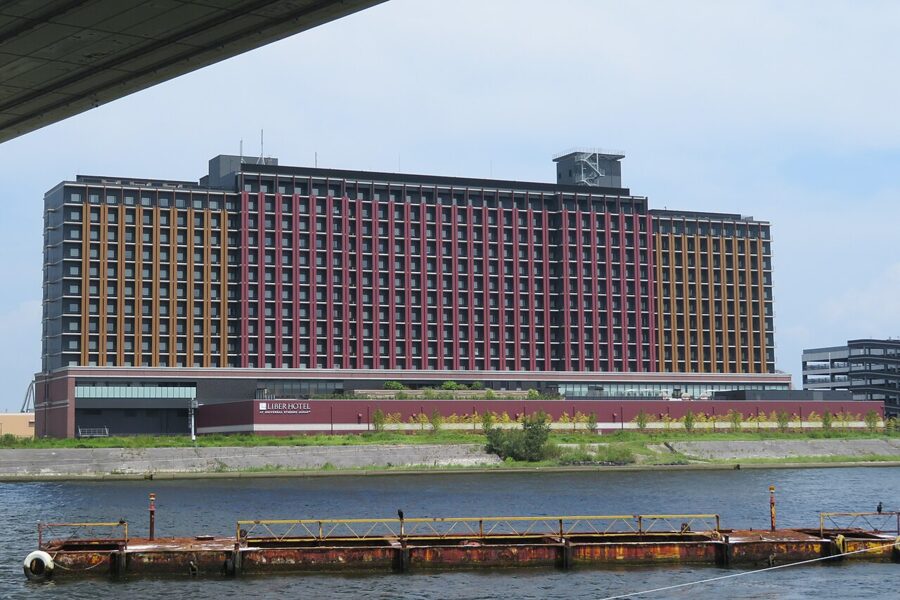
A night at the gate makes sense with children, for a two-day pass or before an early-opening weekend. For everyone else I would stay in Umeda or Namba. Universal City is quiet at night once CityWalk closes, the room rates reflect the address, and a 12-minute train ride is no hardship. Liber Hotel, by Sakurajima Station one stop further on, is the large option if you want to be near the park but not on top of it.

Bags, lockers and the small print
Everyone goes through an X-ray and metal-detector security check before the gate. Take drink bottles out of your bag and carry them; the crew may ask you to taste what is in them.
Bags larger than 380 by 400 by 280 mm cannot go through the X-ray machine and must go in a locker. Suitcases, carts, helmets of any kind, tripods, monopods and extendable selfie sticks are not allowed, though a selfie stick that fits in your hand and stays below your head is fine.
Coin lockers inside and outside the gate cost ¥500 (small), ¥1,000 (large) or ¥2,000 (extra large). The large and extra-large lockers that take suitcases, and the lockers that accept cards and QR payments, are all outside the gate, in front of the security check. The locker area outside the entry arch on the parking side stays open until two hours after closing; items left after that go to Guest Services, at a charge.
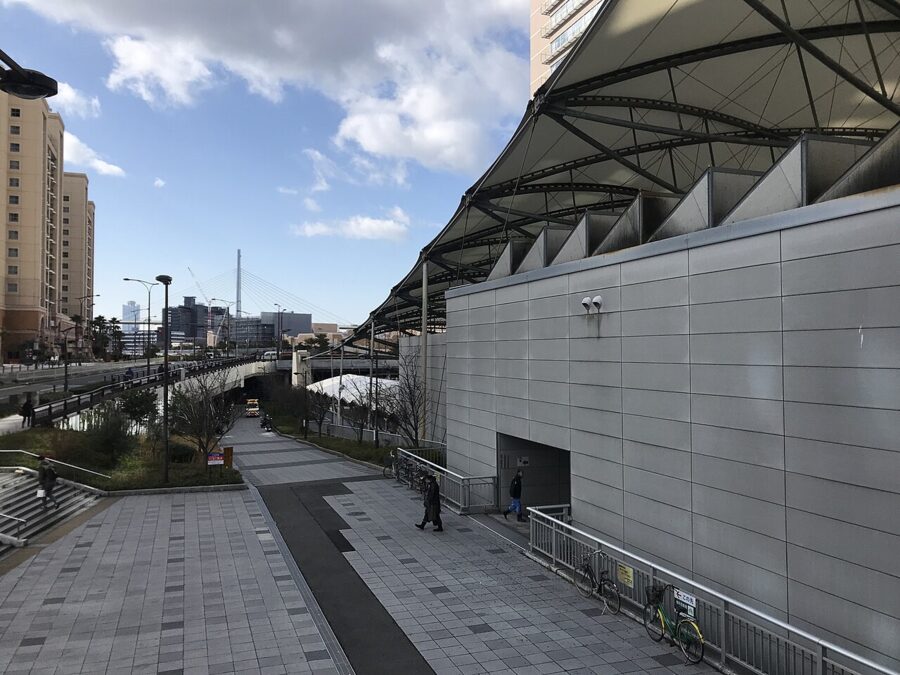

For The Flying Dinosaur and both Hollywood Dream rides you take nothing at all, so a small bag you can leave with a non-rider or in a ride locker is better than a large one. On most other rides, phones, cameras and keys must be secured, left with someone or put in a locker.
Guests with a disability certificate can buy a 1 Day Accessible Admission Pass from ¥4,700, and one companion can buy one too; the Japanese store also accepts the Mirairo ID app. The park’s barrier-free guide lists which rides take guests in wheelchairs, and since May 2026 it has lent navigation devices for visually impaired guests. Free Wi-Fi has covered the park since March 2025, and mobile batteries can be rented inside, which you will want by 15:00.
Before you go, then: buy the dated ticket and any Express Pass the day you fix the date, install the app and link every ticket to it, and check the closures page the week before. On the day, take the through train from Osaka toward Sakurajima and step off at Universal City an hour before the gates open.