
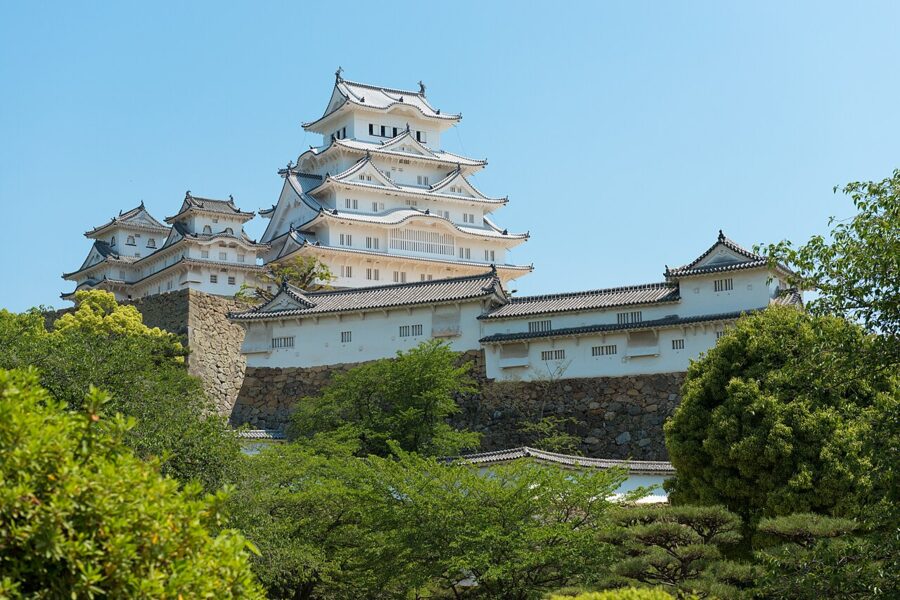

An incendiary bomb came through the thin board of a window on the top floor of Himeji Castle’s keep in the air raid of 3 July 1945, slid in at a shallow angle and failed to go off. The town below burned almost to the ground. In the morning the keep was still standing over the ashes, and it stands there now, on a frame mostly raised in the first decade of the 1600s.
That is the short answer to why Himeji is the castle to see if you only see one. Japan has twelve keeps that survive from before the Meiji era, and Himeji’s is the largest of them, the center of a complex of 82 buildings protected as National Treasures or Important Cultural Properties. Most other big castles you can visit, Osaka’s included, are concrete rebuilds with a museum inside. Himeji is the real thing, and it is an hour from Osaka by ordinary train.
It is also popular enough to punish a bad plan. Admission went up to ¥2,500 in March 2026, the queue for the keep stairs can run to an hour on a spring weekend, and the long west bailey, the best part, is the part most people miss.


Contents
- A castle that was never besieged and never burned
- The route in: gates, baileys and a maze that turns you around
- Inside the keep, floor by floor
- Nishi-no-maru: the long corridor and Princess Sen
- Tickets, hours and the queue
- Kokoen, the garden on the samurai quarter
- Three more reasons to stay the afternoon
- Otemae-dori and what to eat
- Getting there from Osaka, Kobe and Kyoto
A castle that was never besieged and never burned
There has been a fort on Himeyama hill since the 14th century. The city and the standard castle history give 1346 and Akamatsu Sadanori as the start; other historians argue that what the Akamatsu built was a small stronghold, and that the first real castle came with the Kuroda family in the 1550s. Either way, none of that survives above ground.
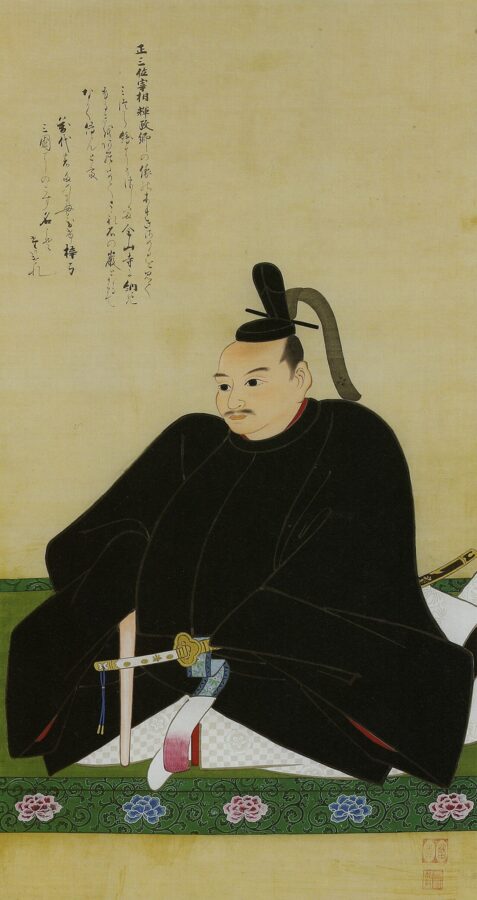
The castle you see is the work of three men in quick succession. Hashiba Hideyoshi, later Toyotomi Hideyoshi, took Himeji in 1580, ringed it in stone walls and built a three-story keep. After the Battle of Sekigahara, Tokugawa Ieyasu gave the province to his son-in-law Ikeda Terumasa, who pulled down Hideyoshi’s keep and from 1601 spent eight years building the present one, reusing some of the old timber in the northwest small keep. In 1617 Honda Tadamasa arrived, and with money that came with his son’s bride he built the west bailey, which completed the plan around 1618.
It was built to fight, and it never had to. The only time an army surrounded it was in 1868, when its lord had backed the losing shogunate. A few cannon shots were fired, one hit an outer gate, and the castle surrendered without a fight.
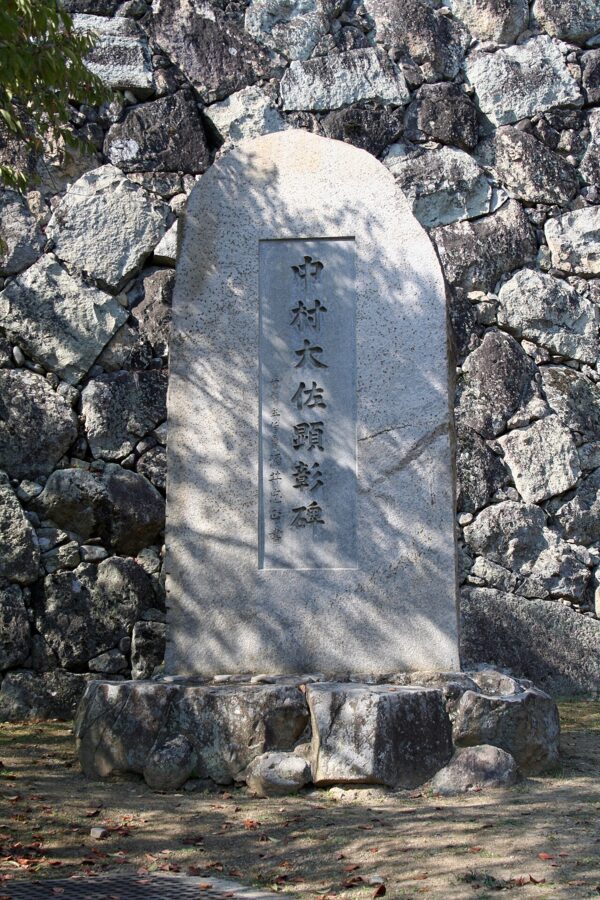
The Meiji years were closer to the end. Castles became army property, and Himeji was put up for auction; a local man named Kanbe Seijiro bought it for 23 yen 50 sen and then, it seems, walked away, perhaps because the tiles were too heavy to be worth selling. The army knocked down the lords’ palaces for barracks and lost another to fire in 1882. What saved the keep was a report in 1878 by an army engineer, Colonel Nakamura Shigeto, arguing that Himeji and Nagoya were the two castles Japan could not afford to lose; his memorial stands just inside the Hishi gate.
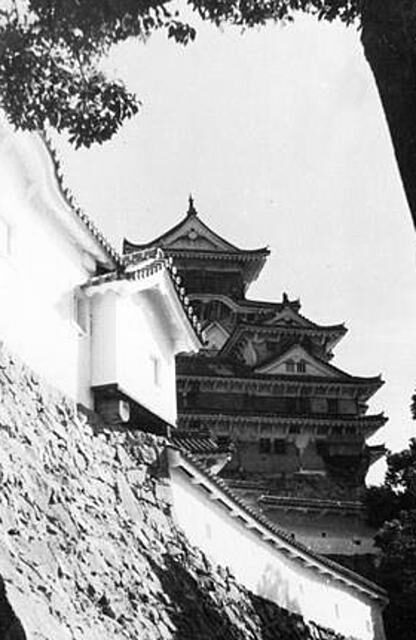
By the Second World War the white keep was an obvious landmark over an army town, so it was covered in black-dyed nets. On 3 July 1945 American bombers burned central Himeji. Bombs fell inside the castle too: a school in the third bailey burned, two that landed in the west bailey failed to explode or were put out, and the one through the top window of the keep was a dud. A B-29 commander who came back fifty years later said he had not known there was a castle there at all.
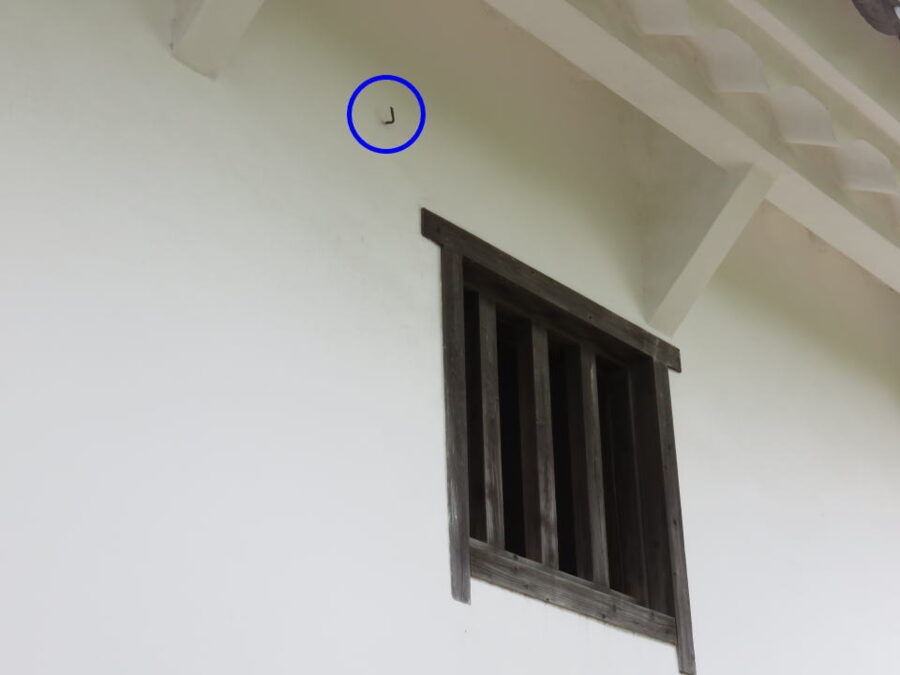

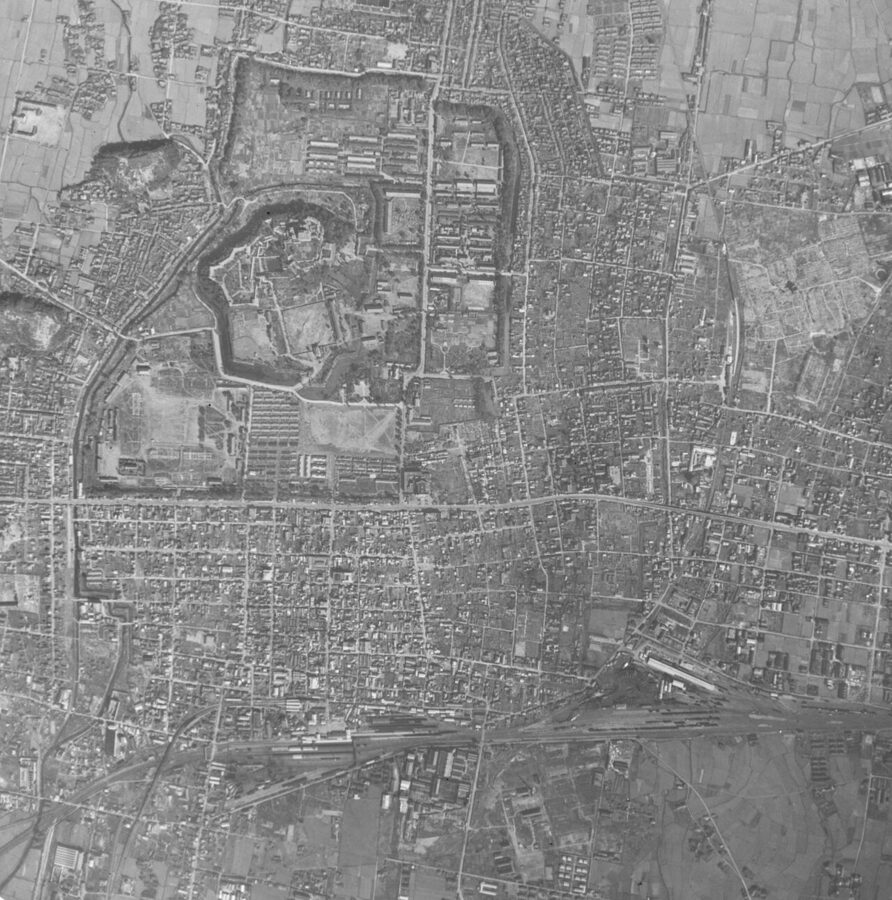

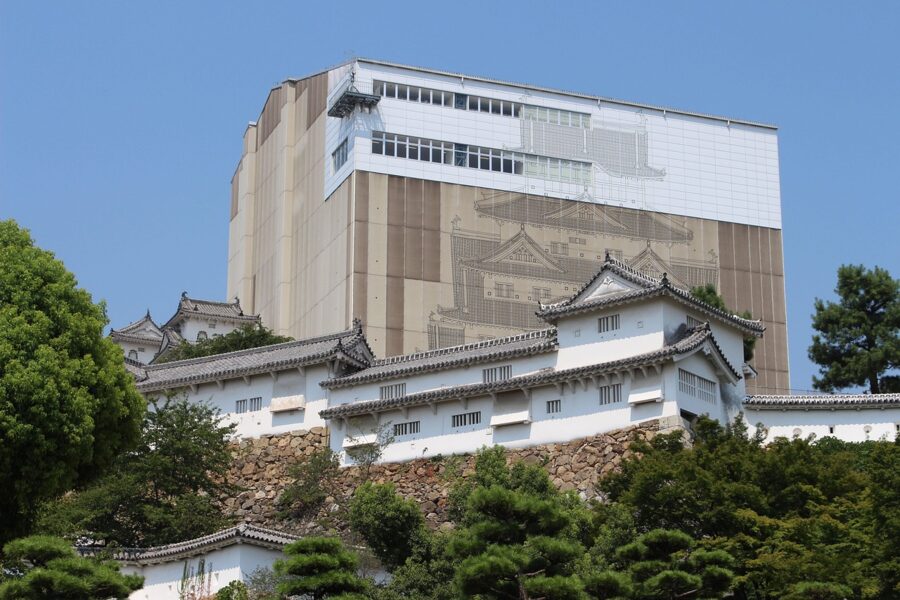
The keep you climb has been taken apart and put back together. Part of the west bailey’s turrets and walls collapsed in a rainstorm in 1934, which started a repair program that was paused by the war and finished with the complete dismantling of the keep between 1956 and 1964. The foundations had sunk 44 centimeters to the southeast, so the keep now stands on a reinforced concrete base set on the bedrock, and the stones of Hideyoshi’s earlier keep were found underneath it. Then from 2009 to 2015 the keep was closed inside a temporary eight-story shed for new plaster, retiled roofs and quiet earthquake bracing.
None of that rebuilding cost the castle its standing. In 1931 the keep and its linked buildings were listed as National Treasures under the old law, and in 1951 the five main structures (the great keep, the three small keeps and the corridor turrets that join them) were designated again under the modern one. Another 74 turrets, gates and walls are Important Cultural Properties. On 11 December 1993 Himeji and the temples of Horyu-ji in Nara became Japan’s first World Heritage Sites, and because so much of a wooden castle has been replaced over the years, the listing pushed UNESCO to rethink what “authentic” means for timber buildings.
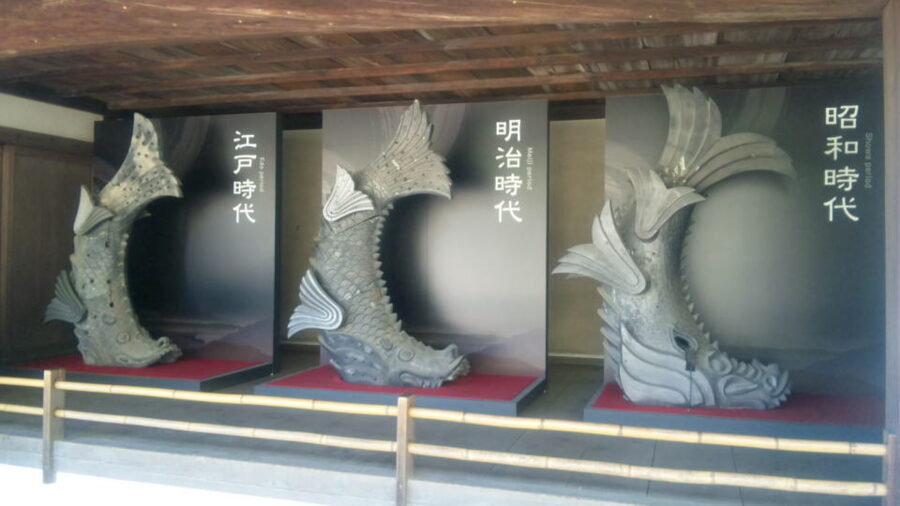

The route in: gates, baileys and a maze that turns you around
The paid route starts at the ticket booths on the north side of the big lawn of the third bailey, Sannomaru Hiroba. The tall Otemon gate you passed on the way in is a 1937 rebuild that looks nothing like the original. The real castle starts at the first gate after the ticket check.
Pick up a shoe bag at the gate if you did not bring one. You will be in socks inside every building, so wear thick ones.
Hishi-no-mon
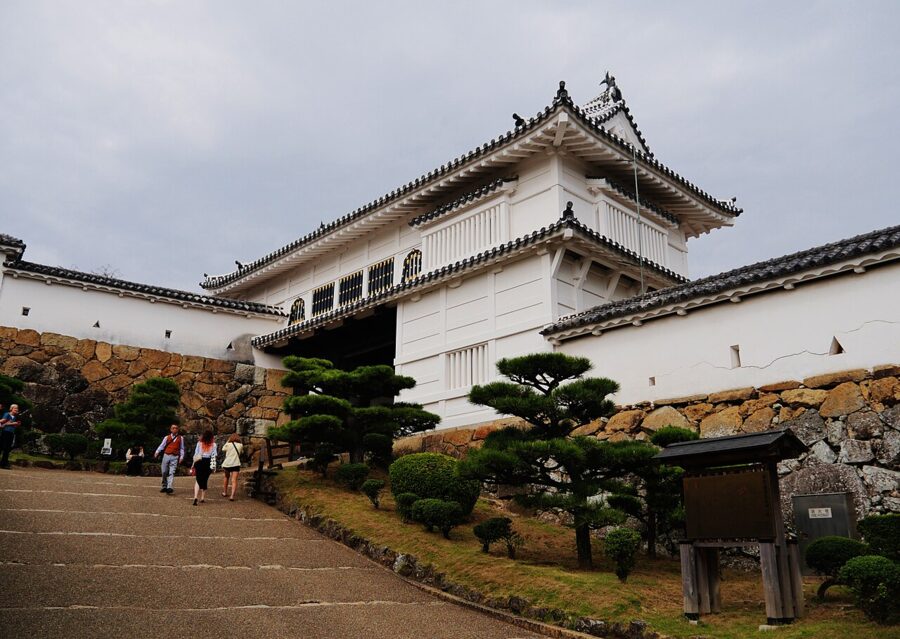

The Hishi gate is the only surviving gate in the castle built with its posts and beams showing on the outside, in the showier style of Hideyoshi’s time. The name comes from the carved flower motif on the crossbeam, or from a stream that ran here before the castle. Inside it, look for Colonel Nakamura’s memorial, then the moat on your right, the Sangoku-bori, named for the three provinces Ikeda Terumasa ruled.

The maze
From the Hishi gate the obvious route runs straight uphill through gates named for the first letters of the old Japanese syllabary, I, Ro and Ha. It is the long way. The shorter path to the keep is through the Ru gate, a narrow opening hidden in the stone wall to the right, and the castle’s whole defense works on that kind of trick: paths that double back, gates that face the wrong way, approaches that make you show your back to the defenders.
From the Ha gate the path turns past the Ni gate, which can only be approached by turning your back on the walls above, and on to the Ho gate, a narrow iron-clad door you have to pass almost single file. Then the path takes you most of the way around the keep before it lets you in. The keep keeps appearing and disappearing above the walls as you go, which is half the pleasure.
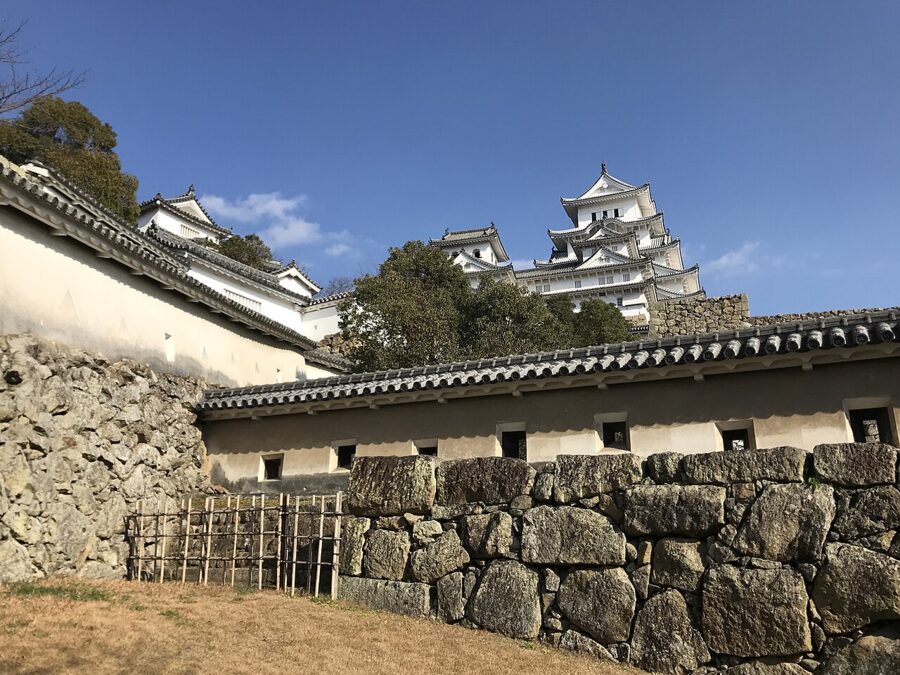

Watch for the stone-drop chutes built into the corners of the turrets and the keep, too, through which defenders could drop stones or fire straight down at anyone at the foot of the wall. For a castle that never saw a battle, it is very thoroughly armed.
The stories on the way
The castle has collected legends along the route. In a stone wall on the way up to the keep is the Ubagaishi, a millstone said to have been given by an old woman who heard that Hideyoshi was short of stone. Look closely and you will find real recycled stone too, old lanterns and gravestones built into the walls.
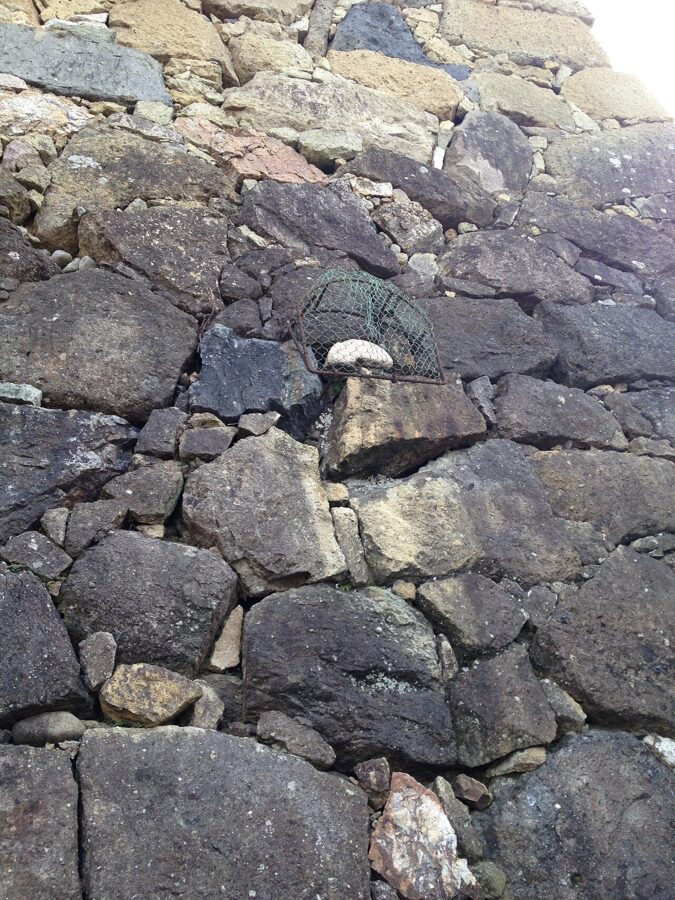

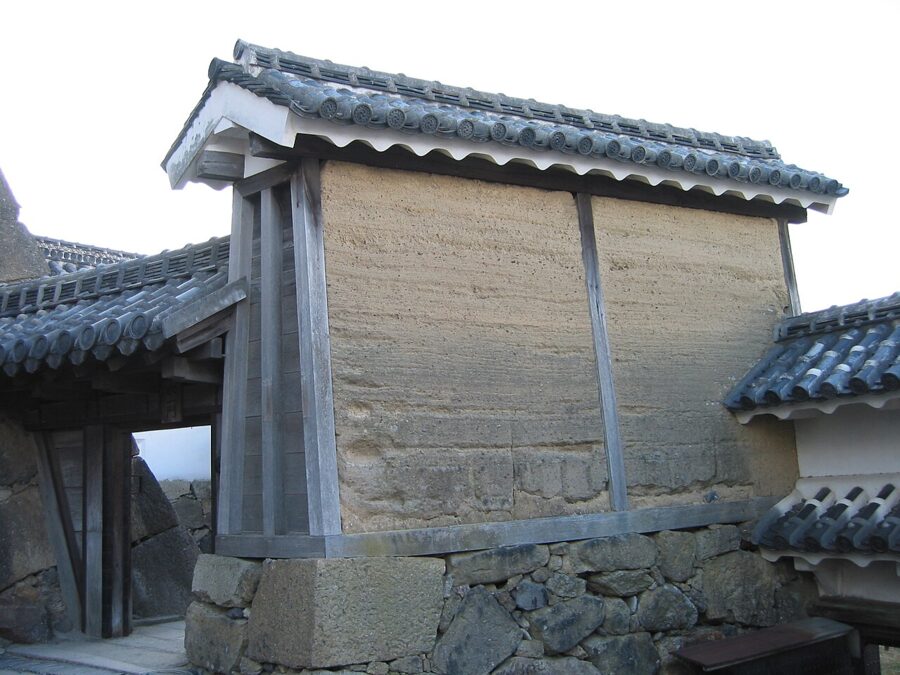

Near the Bizen-maru, the terrace under the keep where Ikeda Terumasa had his palace, is the Okiku well. It is attached to the ghost story of Okiku, a servant thrown down a well who counts plates at night, but the name only stuck after the castle opened to the public in 1912. Likewise the gloomy turret on the southeast side that guides call Harakiri-maru, the suicide bailey, was a firing position; the domain’s executions took place outside the castle, by the river.
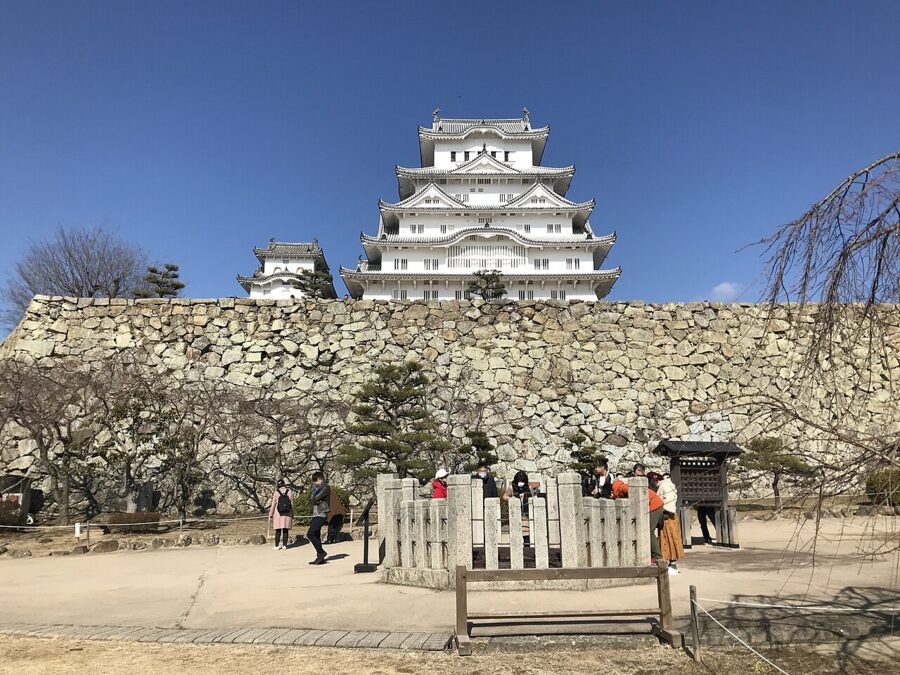

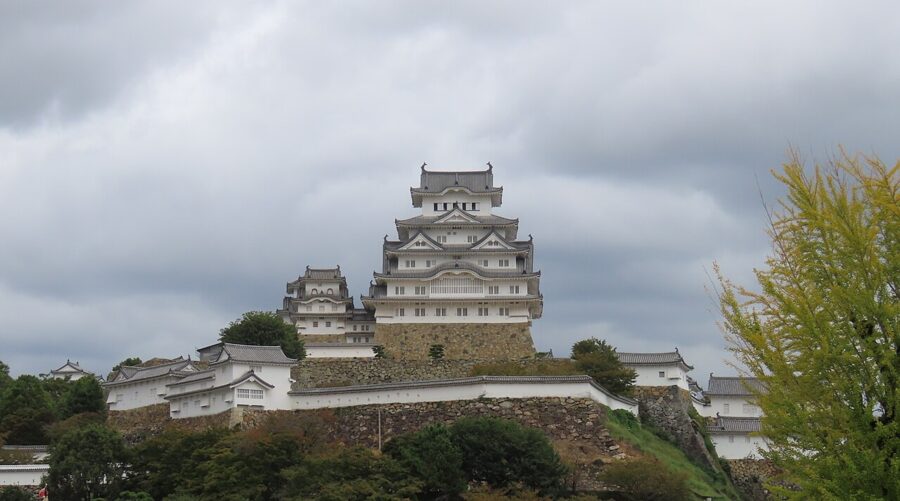
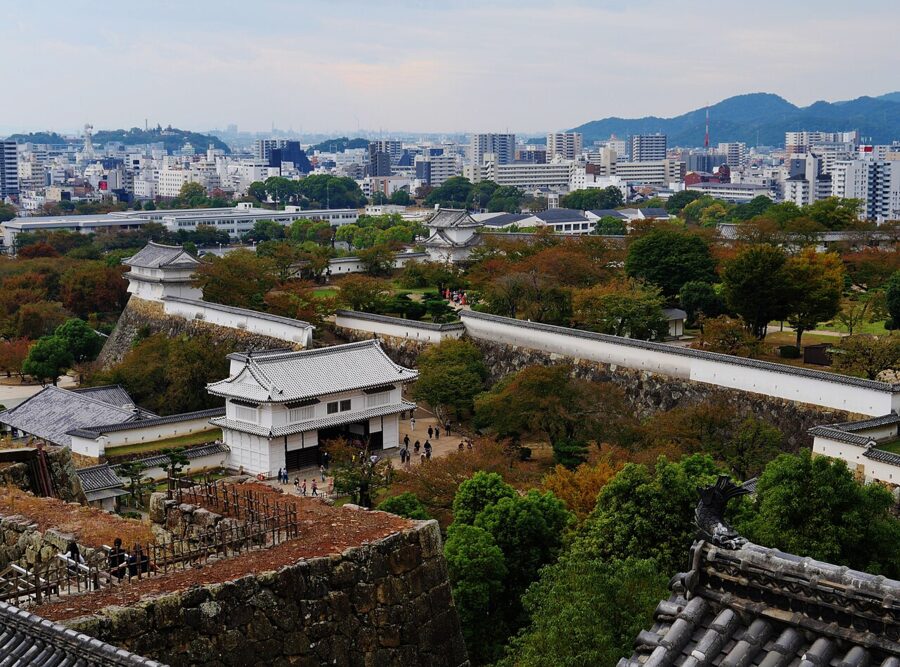
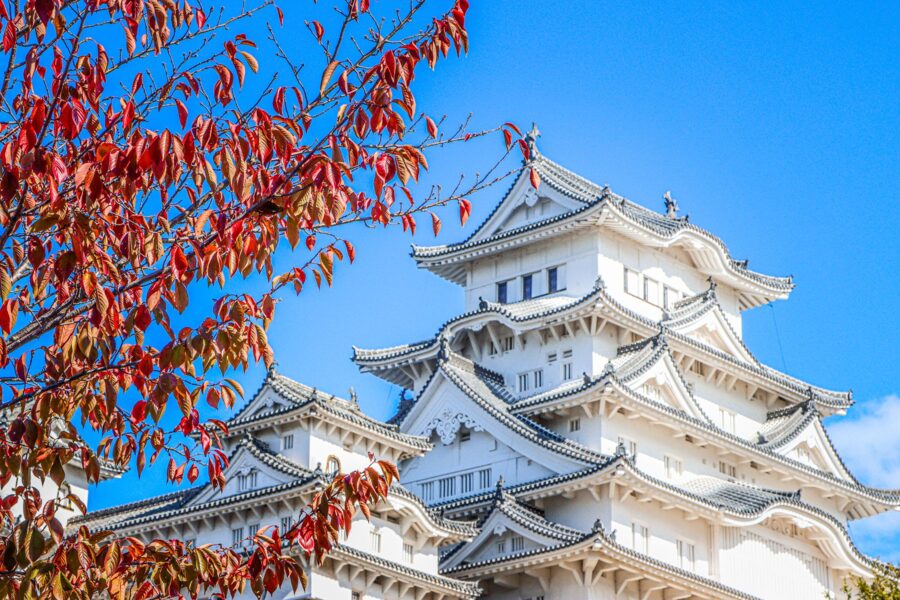
The Bizen-maru is also the best place to look straight up at the keep before you join the queue: five layers of roof, gables of three different shapes, plaster under every eave.
Inside the keep, floor by floor
From outside the keep has five roofs; inside it has six floors and a basement, 31.5 meters of timber on top of a 14.85-meter stone base, which puts the top floor 92 meters above the sea. It weighs about 5,700 tons. Since the last repair it has been left empty of exhibits, which is the right call: the building is the exhibit.
The basement and the pillars
You enter at the basement, a storeroom with a kitchen sink and three toilets built in for a siege. Right away you meet the two great pillars, east and west, that run up through the keep to the floor below the top. Each is about 24.6 meters long and 95 centimeters across at the base.
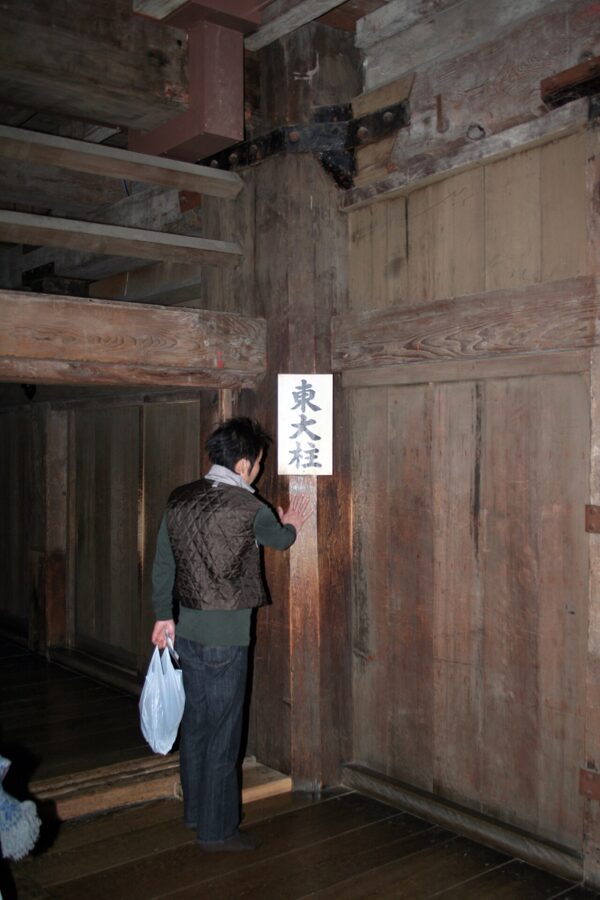

The west pillar has its own story. It had rotted through by the 1950s, so a new cypress was cut in the mountains of Gifu, and it broke as it was taken out of the forest. So did a second one. The pillar you see is made from the lower half of that second tree joined to a cypress from Kasagata Shrine in Hyogo, spliced near the third floor.

Floors one to four
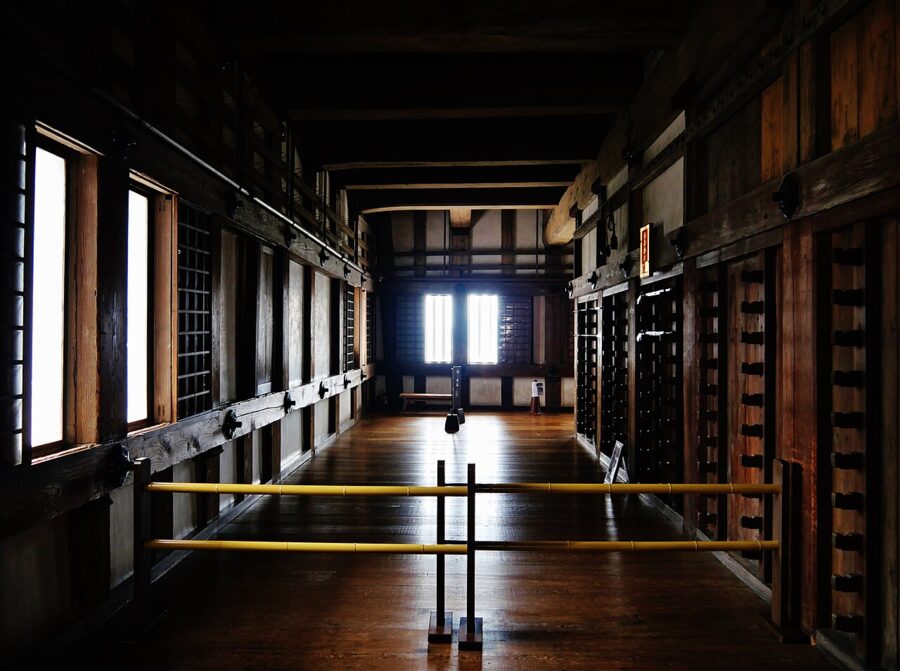
The first and second floors are broad halls lined with racks where matchlocks and spears hung. From the third floor up the keep gets narrower and stranger: small rooms tucked into the gables, a hidden chamber or two for soldiers to wait out of sight, and raised platforms under the high windows so a defender could stand tall enough to throw stones out of them.
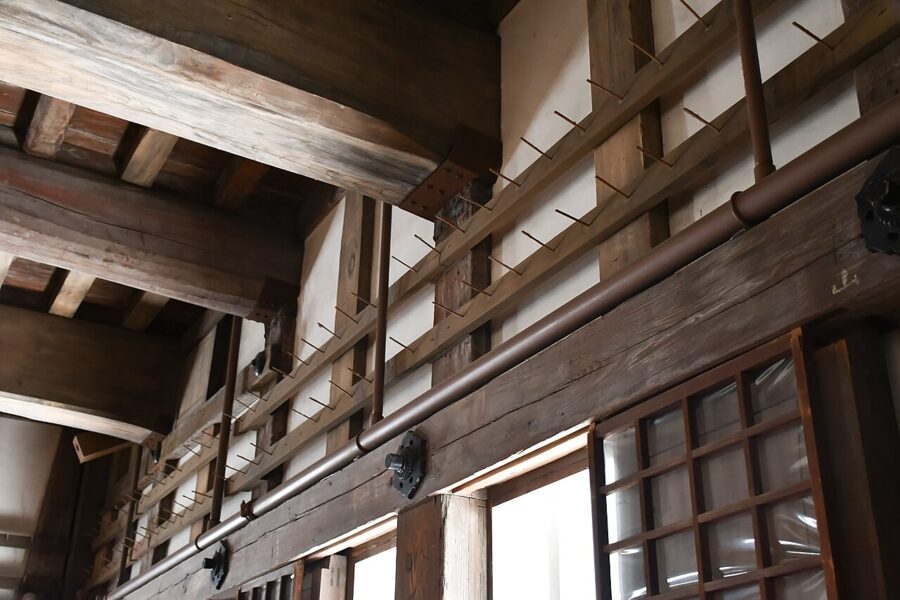

The stairs are the thing to prepare for. They get steeper as you go up, closer to ladders near the top, with low beams and handrails polished by millions of hands. On a busy day the queue moves at the speed of the slowest person in socks, so leave the big bag in a locker and keep your hands free.

The top floor
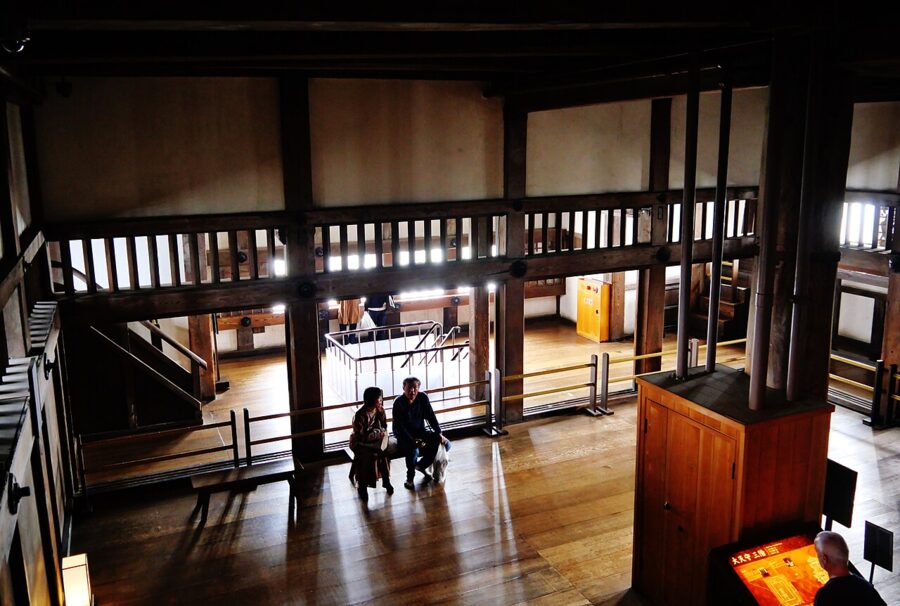
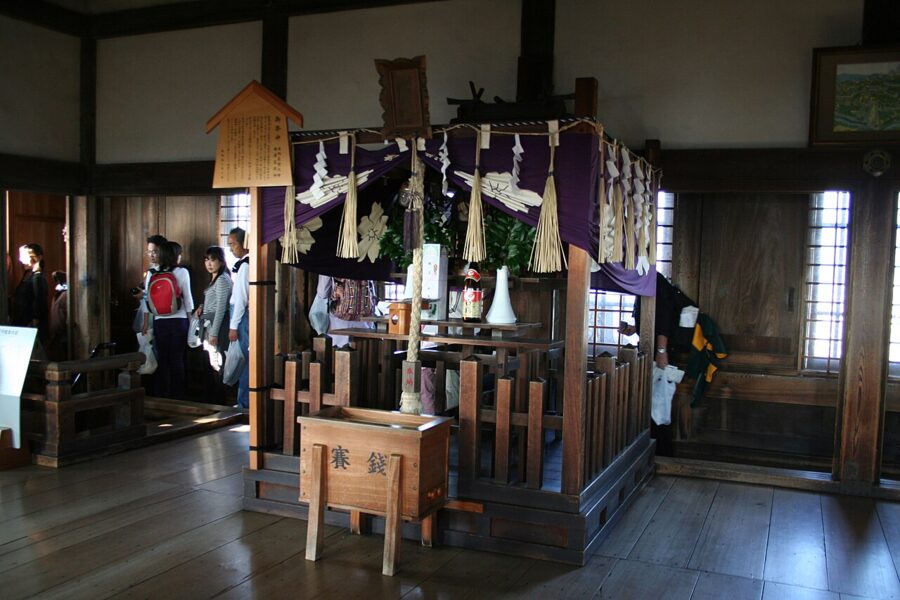
The sixth floor is a single room finished more like a mansion than a fort, with no pillars in the middle and a boarded ceiling of the kind found in reception rooms. Here is a small shrine to Osakabe, the protective deity of Himeyama hill. From the south windows you can follow Otemae-dori straight to the station.


Nishi-no-maru: the long corridor and Princess Sen
Here is the part most visitors miss. The west bailey, Nishi-no-maru, is included in the ticket, but it is reached by a separate path to the left after the Hishi gate, and people heading for the keep walk straight past it. I would go there first, before the keep.
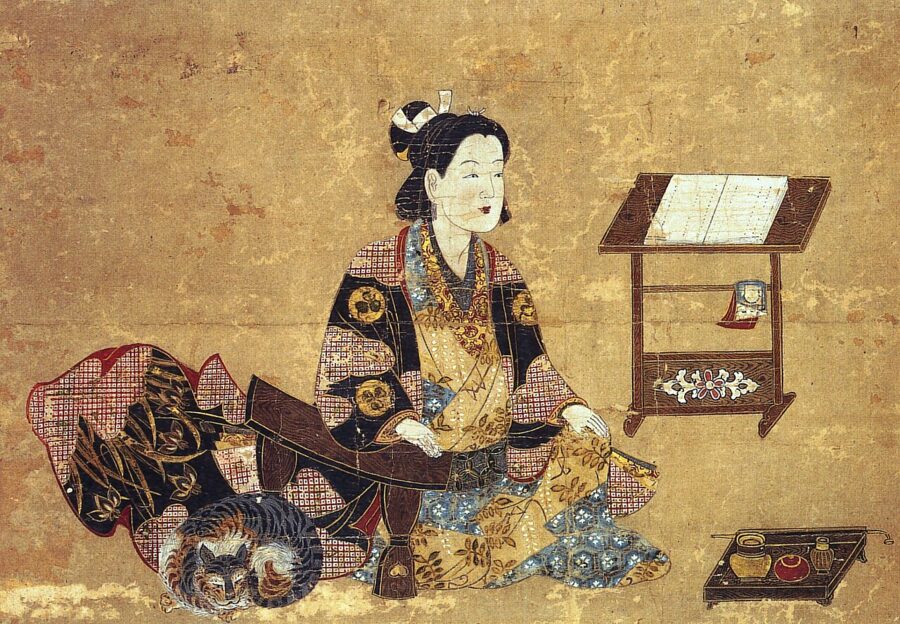
The bailey was built by Honda Tadamasa around 1618, after his son Tadatoki married Senhime, Princess Sen. She was a granddaughter of Tokugawa Ieyasu, married at seven to Hideyoshi’s heir, Toyotomi Hideyori, and pulled out of the burning Osaka Castle in 1615 when her own family destroyed his. Her second marriage, to Tadatoki, came with a large dowry, and part of it paid for the west bailey.
The Hyakken Roka
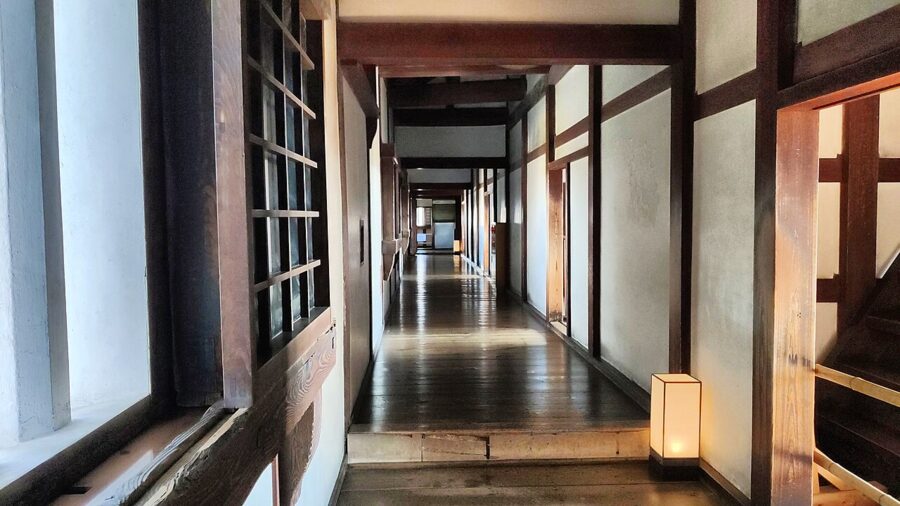
The west bailey’s outer wall is a chain of turrets joined by a corridor about 240 meters long, the Hyakken Roka, or hundred-bay corridor. On the outside it is a defensive wall with loopholes and stone drops facing the river; on the inside it was a row of rooms for the women who served in the household. The exhibits that used to fill the keep are now here.
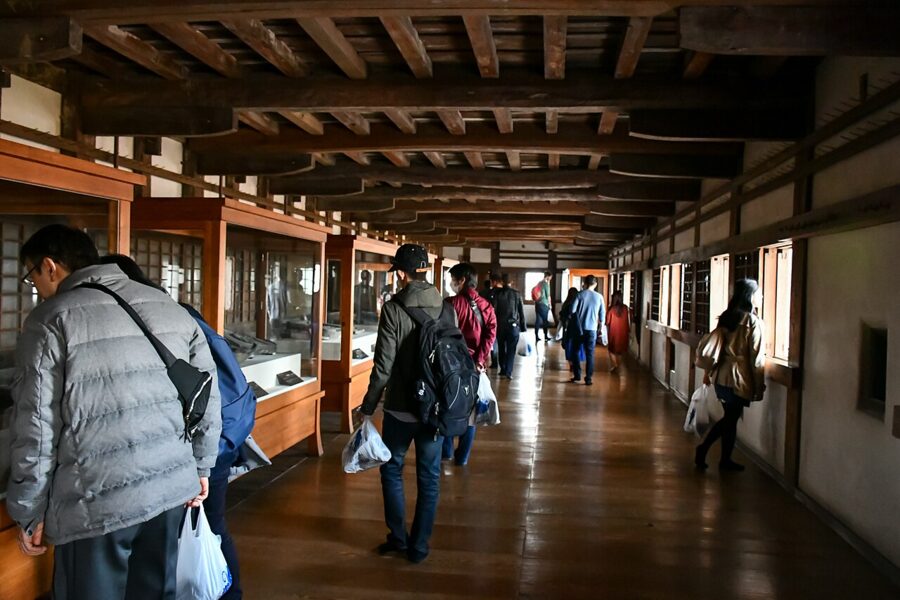

Keshoyagura
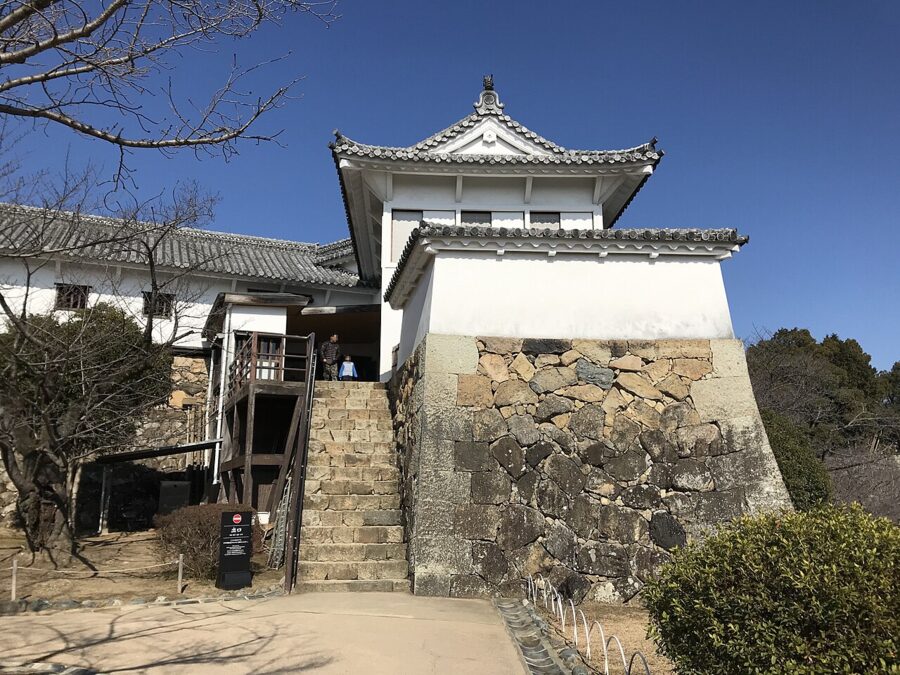
At the north end is the Keshoyagura, the dressing turret, built in 1618 out of that dowry money. From outside it is a plain two-story turret; inside are three tatami rooms with an alcove, a lady’s apartment set into a fortress wall. Before the prewar repair, the story goes, traces of cosmetics could still be seen inside.

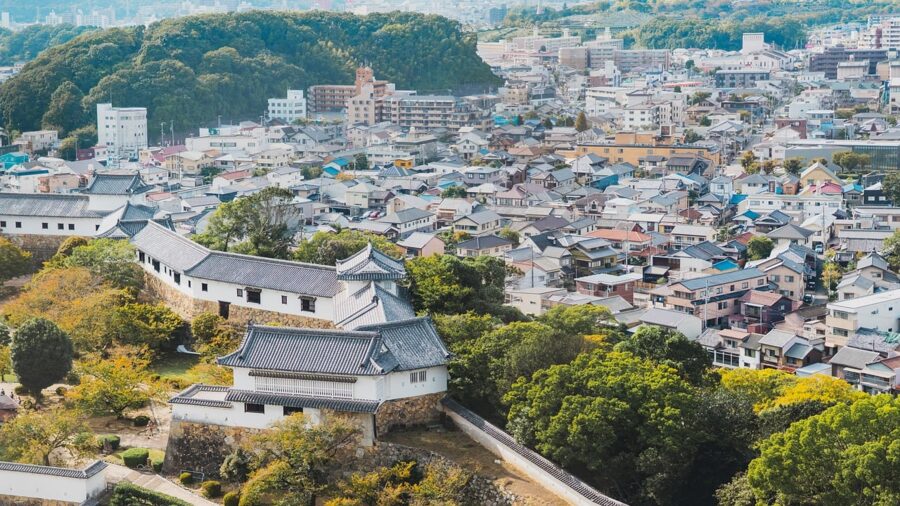
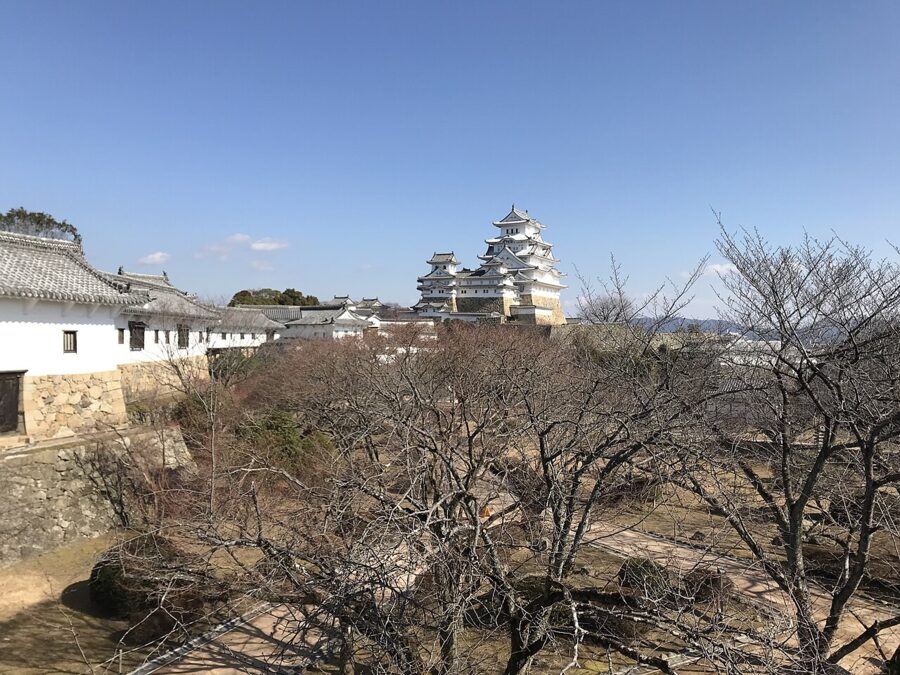
The west bailey also has the best view of the keep, side-on across the lawn and treetops, and in spring it is full of cherry blossom.

Tickets, hours and the queue
The admission rules changed on 1 March 2026. The castle now charges different prices by where you live, not by your passport: Himeji residents pay ¥1,000 and everyone else over 18 pays ¥2,500, including Japanese visitors from Osaka. Anyone under 18 now gets in free, whoever they are.
| Ticket | Price | Notes |
|---|---|---|
| Adult, 18 or over | ¥2,500 | Everyone not resident in Himeji |
| Himeji resident, 18 or over | ¥1,000 | Proof of address needed |
| Under 18 | Free | Until the first 31 March after turning 18; bring ID |
| Castle and Kokoen combined | ¥2,600 | Kokoen alone is ¥400 |
| Annual pass | ¥5,000 | Adults; sold only at the castle |
The castle is open 09:00–17:00 with last entry at 16:00, every day except 29 and 30 December. On 11 December, the anniversary of the World Heritage listing, it is free. A ticket is good only for the day you use it, and there is no re-entry, so finish the west bailey before you leave the paid area.
Buy the combined ticket: with it, Kokoen costs you ¥100 instead of ¥400. The booths take cash, credit cards, IC cards like ICOCA and most Japanese QR payment apps.
Advance tickets and guides
The castle now sells digital tickets online up to 90 days ahead with a time slot. They do not let you skip the queue for the keep stairs, but they spare you buying at the booth, which on a cherry blossom Saturday is its own wait.
The castle runs its own English tours twice a day, at 10:00 and 13:00, for ¥1,500 per adult on top of admission. They take ten people at a time, first come, first served at the information desk inside on the day, and last about an hour and three-quarters. If you care about the stories in the walls, it is the best ¥1,500 you will spend in Himeji.
When to go
Get there at 09:00 on a weekday and you will usually walk straight up the keep. The castle publishes a crowd forecast for the year, and for 2026 it marks New Year, the cherry blossom weekends at the end of March and start of April, Golden Week at the start of May and the long weekend in late September as the worst days. On those days the castle’s own advice is to expect up to an hour’s wait for the keep, on top of the usual hour and a half to two hours.
The castle’s home page shows the current wait at the ticket booth, the wait to enter the keep and how crowded the keep is, updated through the day. Check it from the train. If the keep is jammed, do the west bailey first and come back.
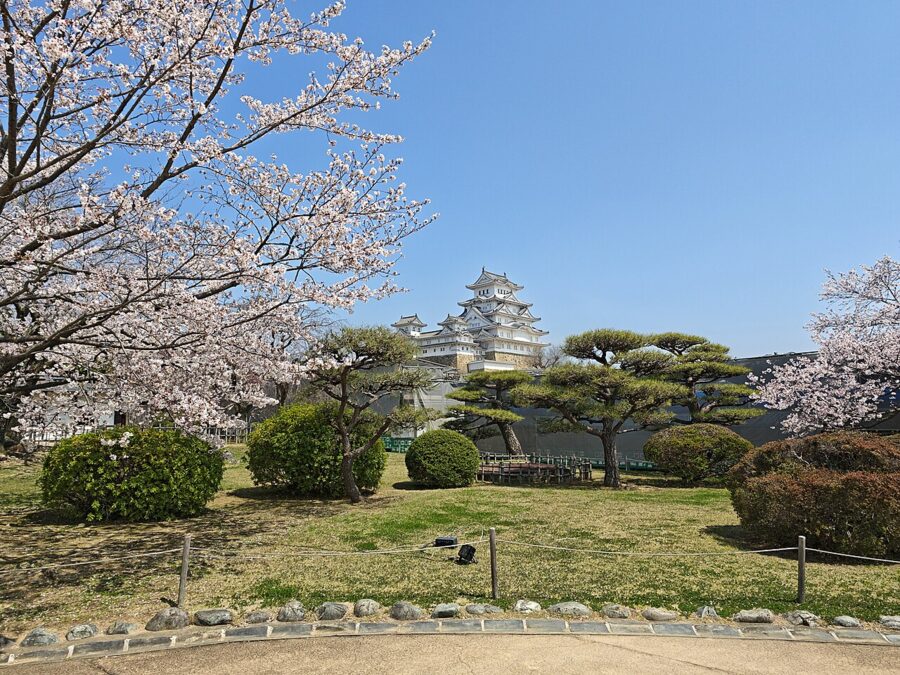
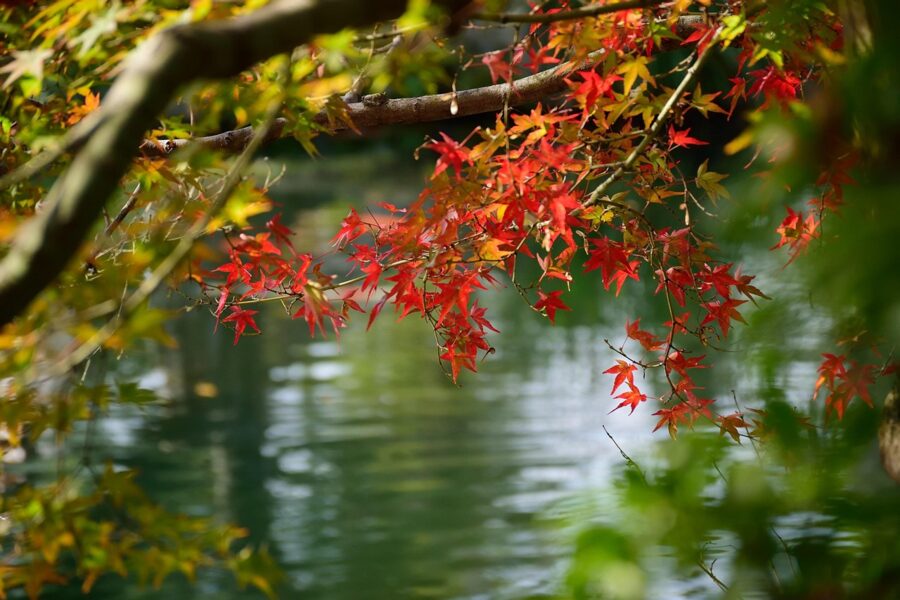
Cherry blossom usually comes at the end of March or the start of April, which is the reason to go and the reason to go on a weekday. Autumn is quieter and almost as good, with the maples turning from mid-November. Summer is hot work on the stairs; winter is the quietest season, with clear air for the view.
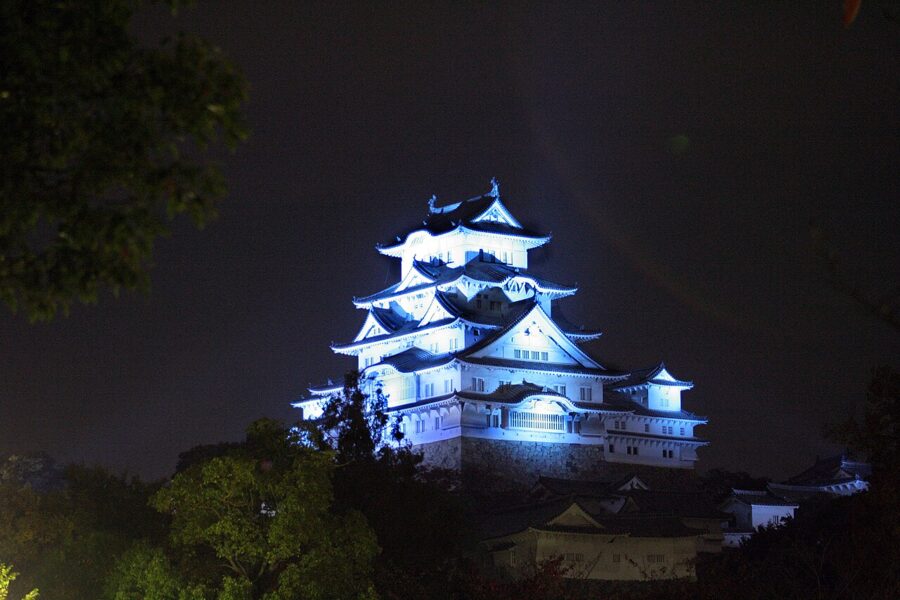
The keep is lit every night from sunset until midnight, in white light that shows off the plaster, with a 15-minute seasonal light show at 20:00 and again at 21:00. You do not need a ticket for that; the Sannomaru lawn and the top of Otemae-dori both have a clear view.
A few rules catch people out. Pets have not been allowed in the paid area since March 2026, tripods and selfie sticks are banned inside the buildings, and there is no eating inside the castle at all. There are no elevators, and wheelchair users can get as far as the Bizen-maru only with two or three helpers; the keep is out of reach.
Kokoen, the garden on the samurai quarter
Kokoen sits just southwest of the castle, on the ground where the lords of Himeji had their west residence and their senior retainers had their houses. Archaeologists dug it seven times before it was built, and the walls and lanes of the garden follow the plan of the old streets. It opened on 29 April 1992, the hundredth anniversary of Himeji becoming a city.
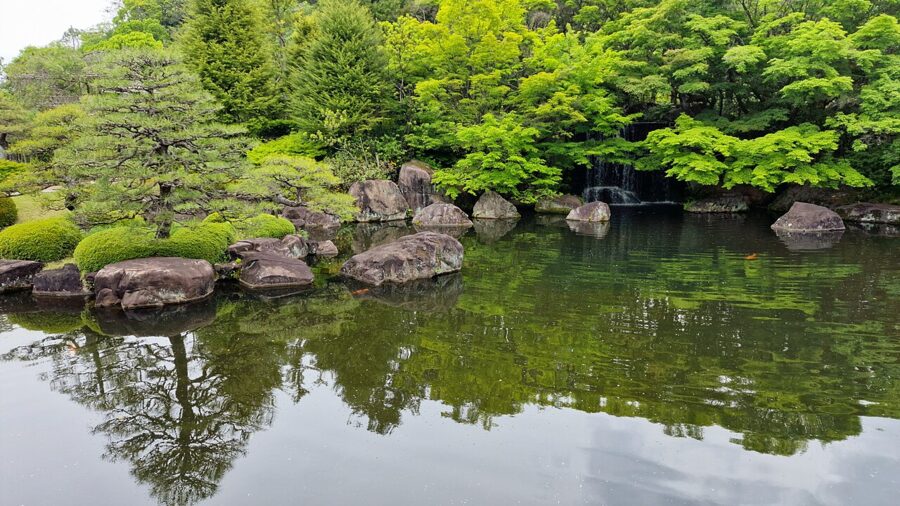

It is nine gardens behind earthen walls and wooden gates rather than one, laid out over about 3.5 hectares. The largest, the Garden of the Lord’s Residence, has a large pond with the keep borrowed into the view; others include a pine garden, a garden of summer trees, a bamboo garden and a garden of seedlings.
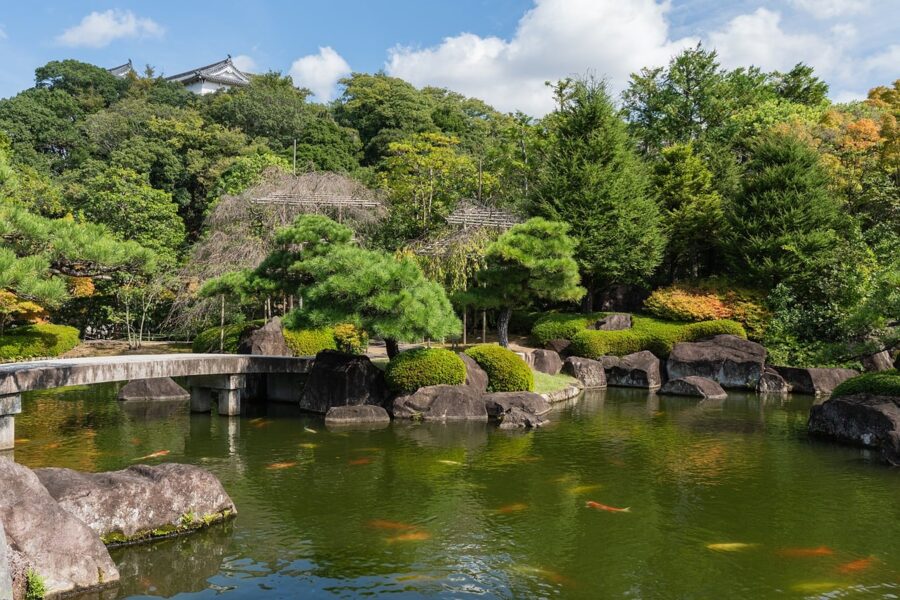
The tea house, Soju-an, was built under the supervision of the Urasenke tea school, with every room turned to face the keep. Matcha and a seasonal sweet cost ¥800, served 12:00–16:00 without reservations. The restaurant, Kassui-ken, serves lunch with a view over the garden.
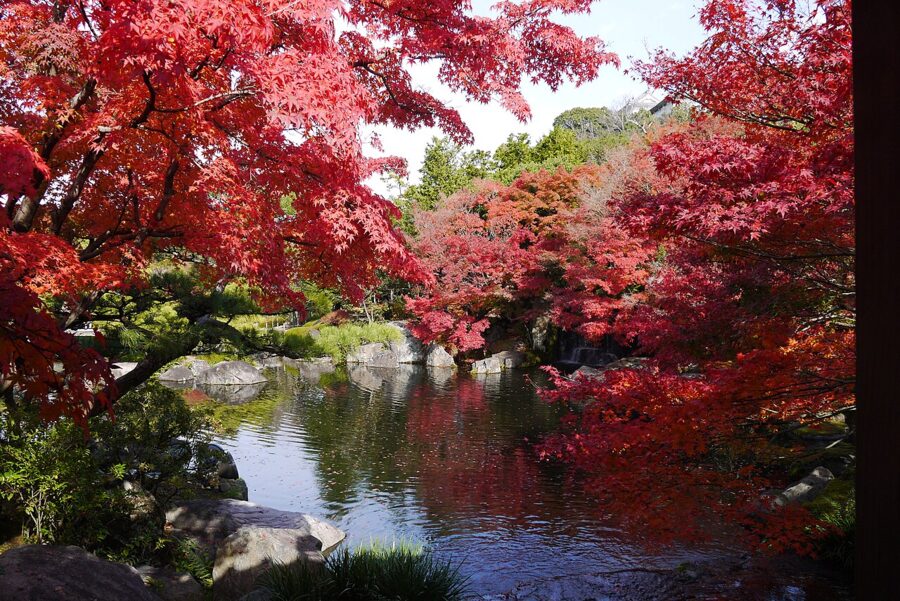

Kokoen is open 09:00–17:00 with last entry at 16:30, closed 29 and 30 December. Under 18s are free here too, and the autumn evening openings cost the same ¥400.
Three more reasons to stay the afternoon
Hyogo Prefectural Museum of History
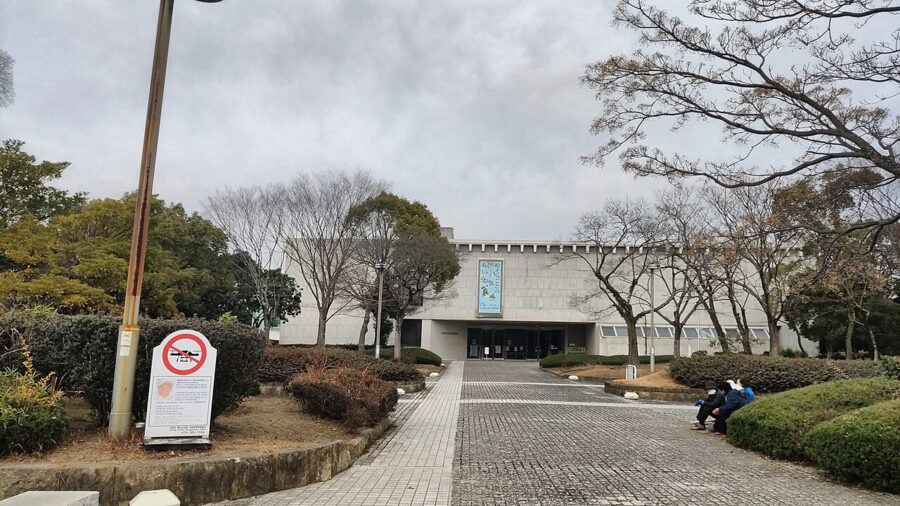
On the north side of the castle park, the prefecture’s history museum sits in a building by Kenzo Tange that was meant to read as a modern castle. It reopened in 2023 after a year and a half of refurbishment. The permanent exhibition is ¥200 for adults; it is open 10:00–17:00 with last entry at 16:30 and closed on Mondays.
Himeji City Museum of Literature
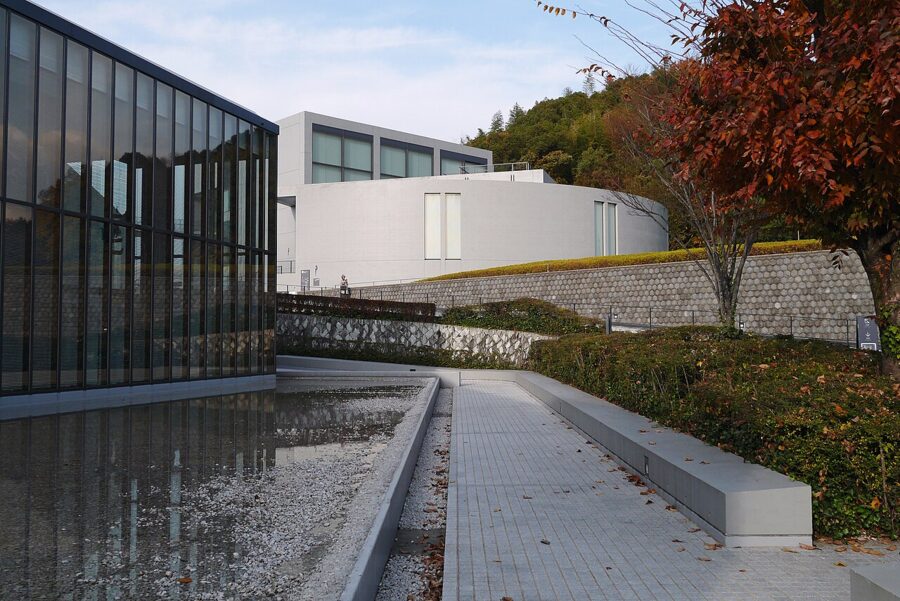
Northwest of the castle, the Museum of Literature is a pair of concrete buildings by Tadao Ando, the first opened in 1991 and the second in 1996. One of its galleries traces the history of Himeji Castle; the rest is given to writers connected with the region. It is ¥450 for adults, open 10:00–17:00 with last entry at 16:30, and worth it for the building alone.

Engyo-ji on Mount Shosha
The best side trip from Himeji is a temple on a mountain. Engyo-ji was founded in 966 by the monk Shoku on the summit of Mount Shosha, northwest of the city, and it grew into one of the great training temples of the Tendai school, sometimes called the Mount Hiei of the west. It is the 27th temple of the Saigoku pilgrimage to the 33 temples of Kannon.
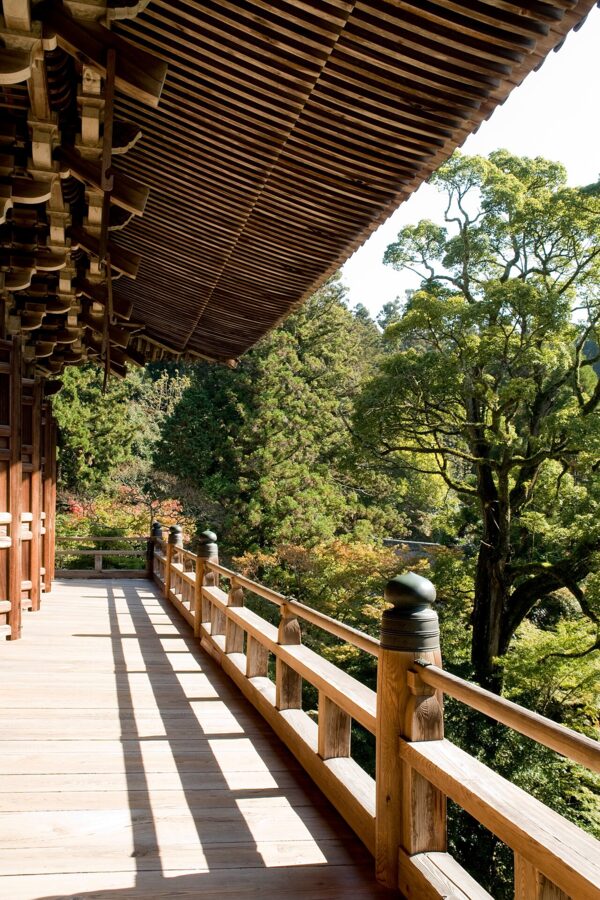

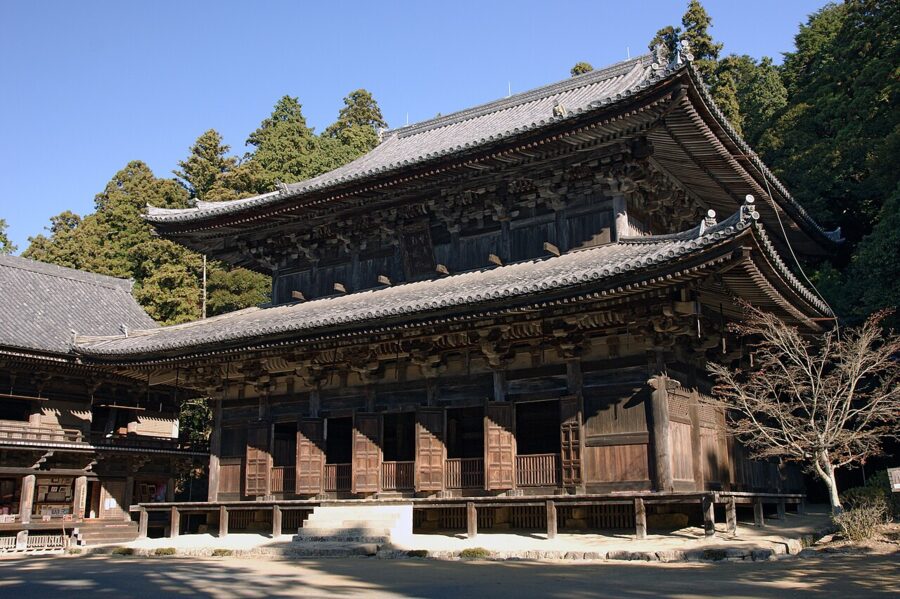
Most people come for the Mitsunodo, three great halls arranged around a square of gravel in the forest, which Hollywood used for The Last Samurai in 2003. Behind them are the inner temple and the mausoleum of the Honda family, the lords who married Princess Sen into their line.

Getting there is half the trip. Take a Shinki bus bound for the Shosha Ropeway from the North Exit of Himeji Station, about 30 minutes; the ropeway leaves every 15 minutes from 08:30 and costs ¥700 one way, ¥1,200 return. At the top the temple asks an ¥800 donation from everyone of junior high age and up, and a temple minibus covers the walk to the Maniden for ¥500 return.
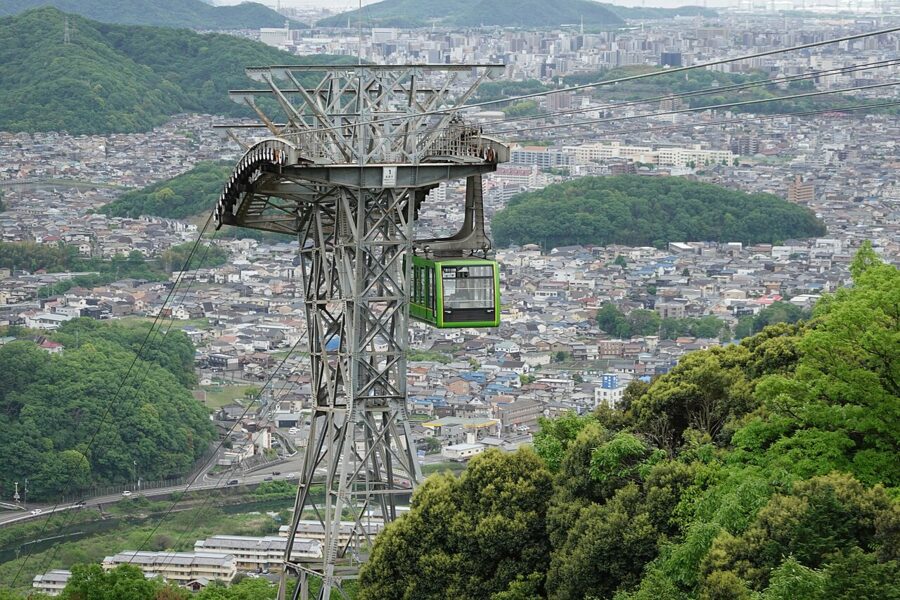
During that closure the temple stays open, but you walk up one of the old pilgrim paths, 30 minutes to an hour each way. The last ropeway down is 17:00 in winter and 18:00 from March to early October, an hour later on Sundays and holidays from April; the temple minibus stops well before that. Give Engyo-ji at least three hours from Himeji Station and back.
Otemae-dori and what to eat
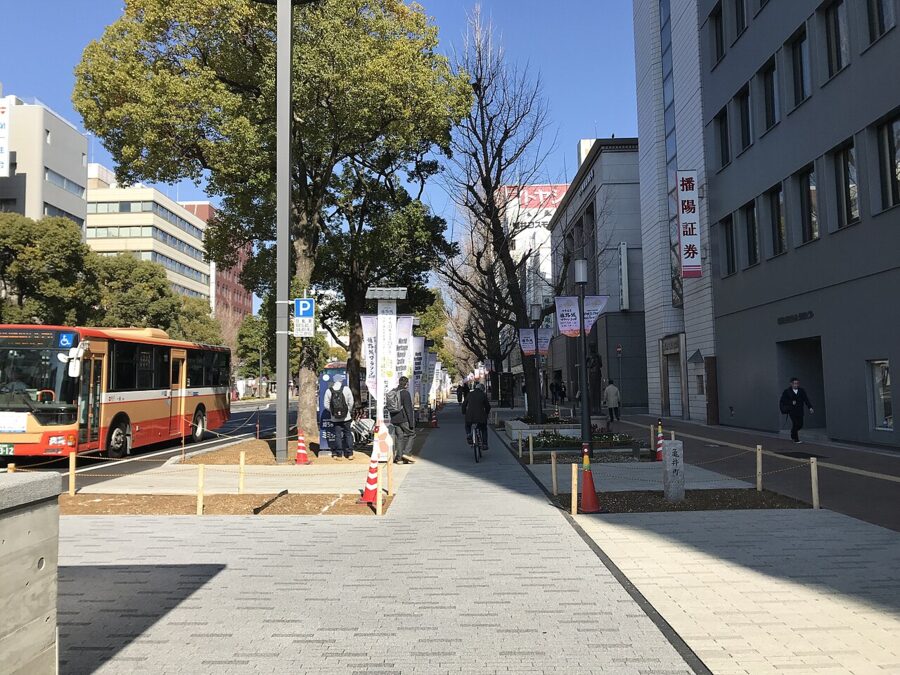
The castle’s outer moat once ran roughly where the station now stands, and everything between was the castle town. The raid of 1945 burned almost all of it, and in the rebuilding the city cut Otemae-dori straight and wide from the station to the castle gate.
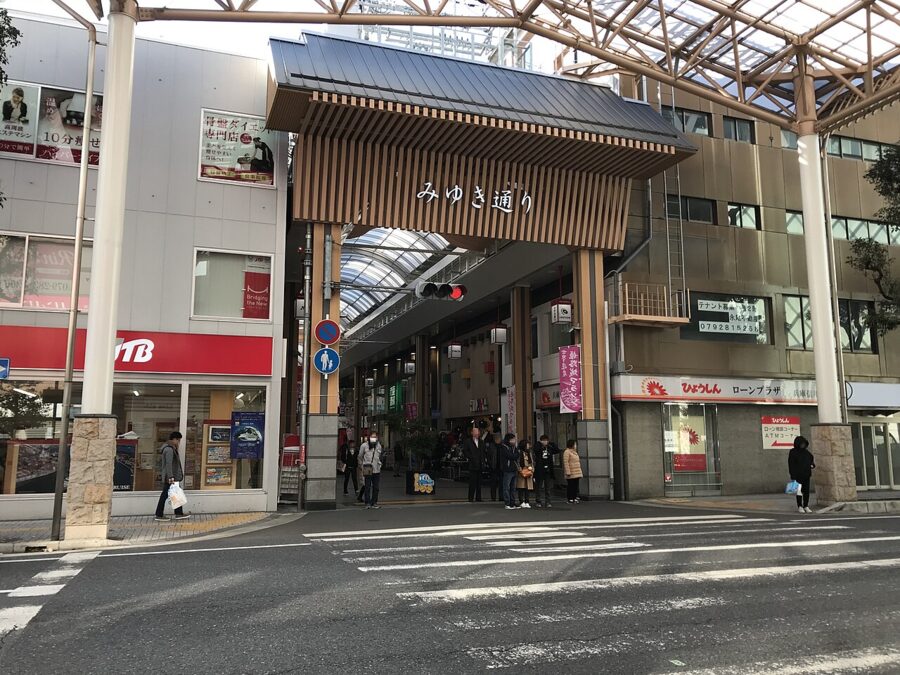
For the walk back, take one of the two covered shopping streets running parallel to it, Miyuki-dori on the east side and Omizo-suji on the west. They are the old commercial heart of town, full of kissaten (old-style coffee shops) and places to eat, and they keep the rain off.

Himeji oden
Oden is the winter stew of fish cakes, daikon, eggs and konjac simmered in a light stock, and every city in Japan has it. Himeji eats it with a splash of ginger soy sauce on top, a habit from the days when the region grew both. The city protects the name: shops have to be approved to use “Himeji oden” on the sign, and a castle-shaped piece of konjac is a giveaway that they are.
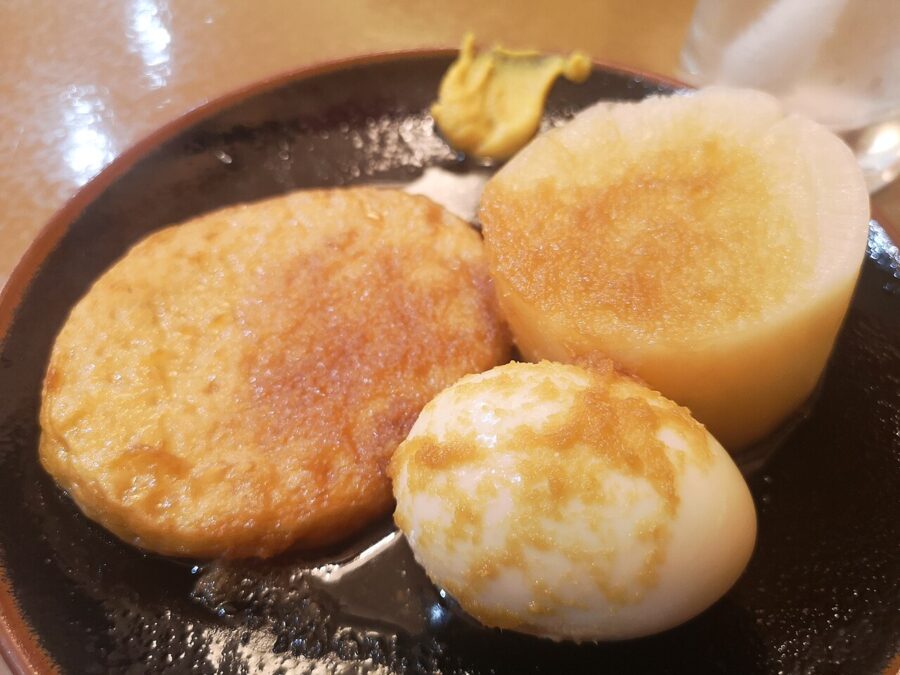

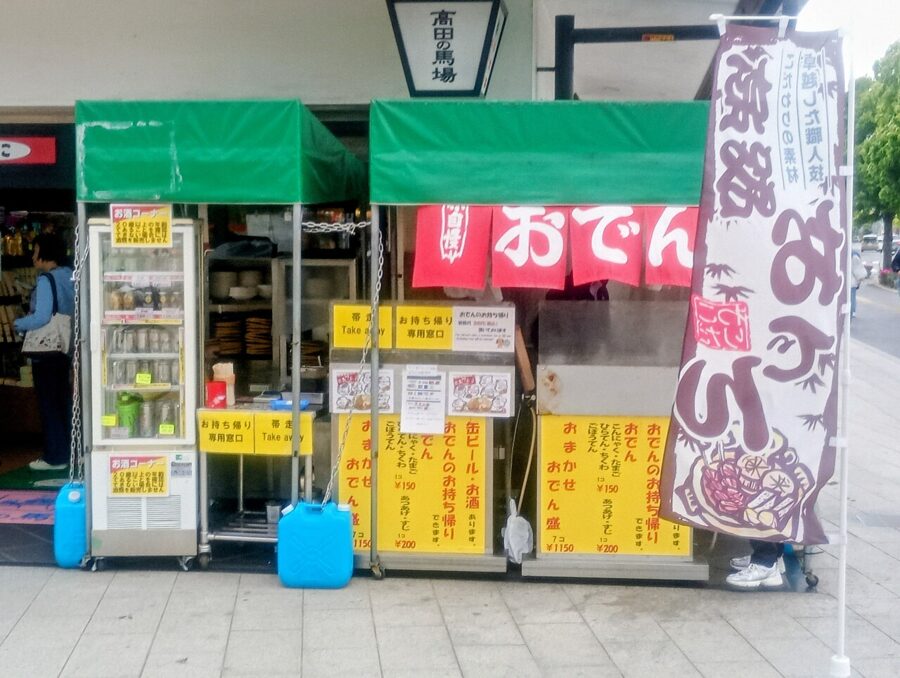
The place I would send you is Teishu, an izakaya near the castle that has made Himeji oden for over 60 years. It burned down in spring 2024 and reopened after a full rebuild on 1 August 2026, still with the stock the family has kept topping up since it opened. It is open 18:00–23:00, about 15 minutes’ walk from the station; oden pieces run ¥150–300, and the local hen with ponzu, hinepon, is the thing to order alongside. Check the restaurant’s own social accounts for the days it opens before you go.

Almond toast
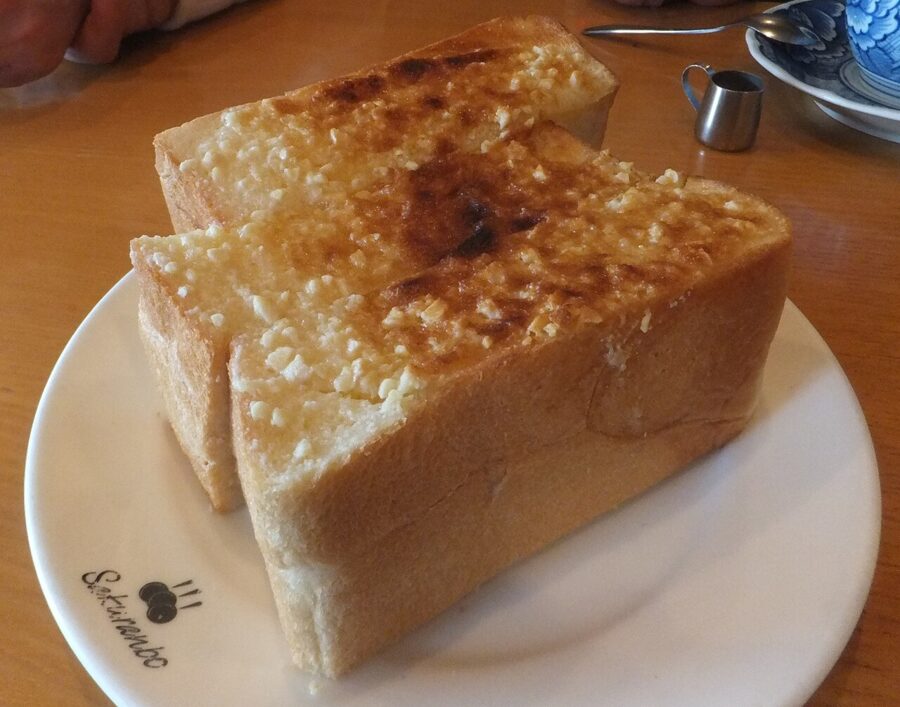
Breakfast in Himeji means a morning set at a kissaten: order a coffee before 11:00 and toast and an egg come with it. In this part of Harima the toast is often almond toast, a thick slice spread with a sweet almond butter and grilled until it caramelizes. Plenty of the coffee shops around the station put it on the morning set, and it is the right way to start a castle day.

Getting there from Osaka, Kobe and Kyoto
Himeji is on the JR Kobe Line, the western end of the same line that runs through Osaka and Kobe. The JR Special Rapid Service runs there every 15 minutes from Osaka Station without changing trains, and it is cheaper than the Shinkansen by more than half. The Shinkansen saves about half an hour from Shin-Osaka, which only matters if you are on a rail pass or short of time.
| From | Train | Time | Fare (one way, adult) |
|---|---|---|---|
| Osaka | JR Special Rapid Service | 63 minutes | ¥1,460 |
| Shin-Osaka | Sanyo Shinkansen (Nozomi, Sakura) | 28–29 minutes | ¥3,220 unreserved |
| Sannomiya | JR Special Rapid Service | 40–42 minutes | ¥960 |
| Kobe-Sannomiya | Hanshin and Sanyo direct limited express to Sanyo Himeji | 66 minutes | ¥1,020 |
| Shin-Kobe | Sanyo Shinkansen | 15–21 minutes | ¥2,720 unreserved |
| Kyoto | JR Special Rapid Service | 92–93 minutes | ¥2,210 |
| Kyoto | Tokaido and Sanyo Shinkansen | 44 minutes | ¥4,740 unreserved |
Times are for daytime trains on the November 2026 timetable. Not every Shinkansen stops at Himeji, so check the train before you board, and remember Shin-Osaka is a different station from Osaka.
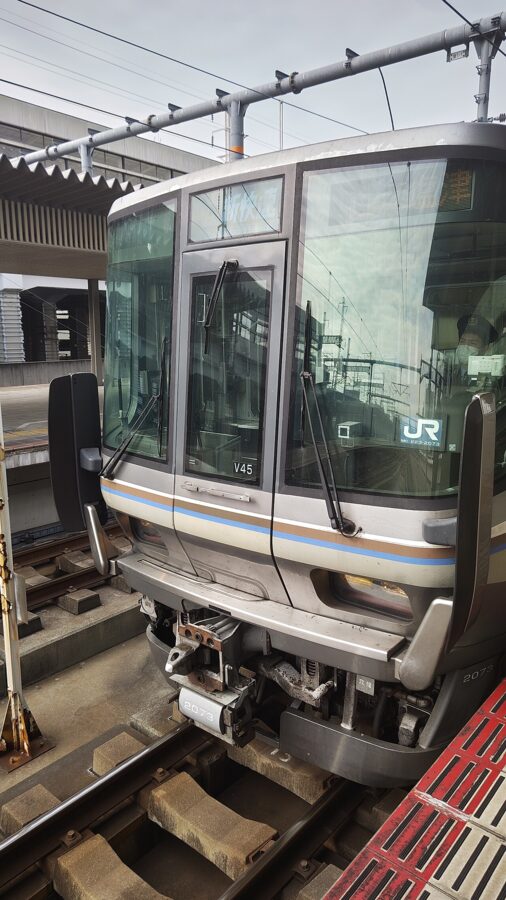

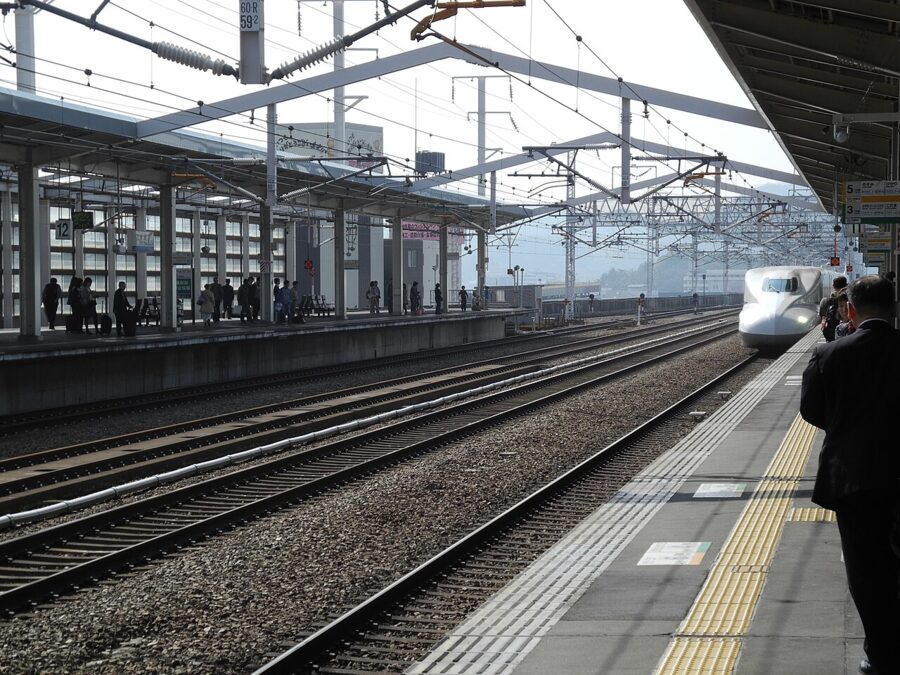

From Kyoto the choice is closer: an hour and a half for ¥2,210, or 44 minutes for more than twice as much. For a full day at the castle and Engyo-ji, take the Shinkansen in the morning and the Special Rapid home.
Most Kansai rail passes have been reshuffled since JR West stopped selling the Kansai Area Pass in September 2026. The three-day Kansai Mini Pass does not reach Himeji; the five-day Kansai WIDE Area Pass and the Japan Rail Pass both cover it, Shinkansen included (Hikari, Sakura and Kodama only on the Japan Rail Pass). If you are not on one, tap an ICOCA and do not think about it.
Luggage
Leave bags at the station, not the castle. JR Himeji Station has coin lockers in three places outside the ticket gates, near the souvenir hall by the South Exit, beside the Himeji Castle exit on the north side, and on the mezzanine of the Grand Festa underground mall; most are open 06:30–24:00. There are a few lockers inside the castle’s paid area and at Kokoen, but not many, and anything on wheels has to go into a locker before you enter the castle.
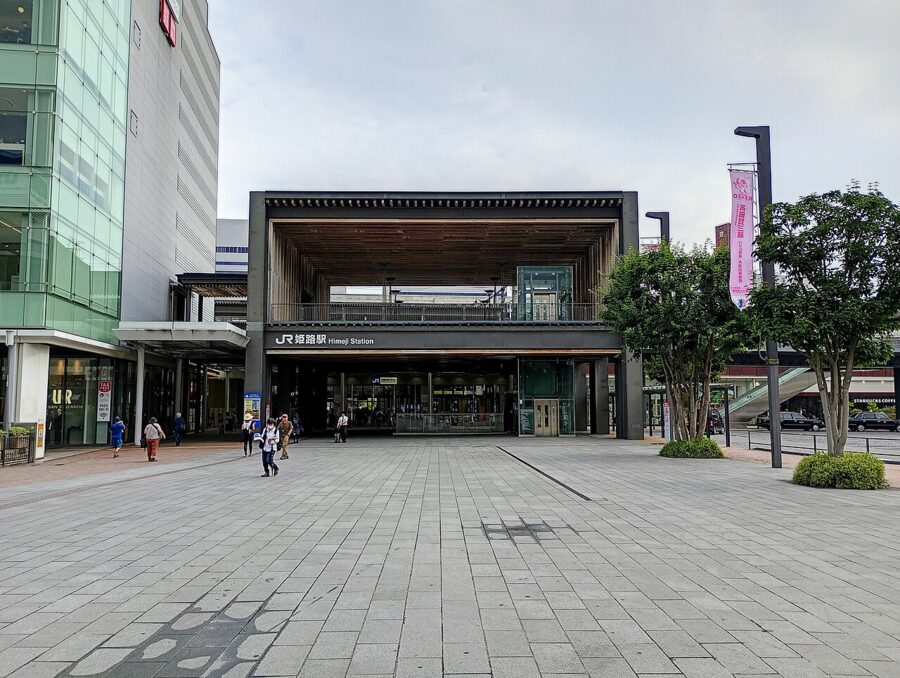

From the station to the gate
Walking takes 15–20 minutes straight up Otemae-dori. If you would rather ride, Shinki buses from the North Exit stop at Himeji-jo Otemon-mae, five minutes’ walk from the gate.
Himeji and Kobe in a day
Himeji and Kobe are made for one day. Start with the castle at 09:00, give it the morning and Kokoen, then take the Special Rapid back east 40 minutes to Sannomiya for the afternoon and dinner; Sannomiya is where the Special Rapid stops for the city center. You are back in Osaka 21 minutes later.
Or do it the other way round and have dinner in Himeji: the castle is lit from sunset, and Teishu opens at 18:00. Either way, when you come out of the North Exit, look up Otemae-dori before you do anything else. The keep that came through 1945 is at the end of it, and you walk toward it the whole way.