

Come up from the arrivals floor of Kansai Airport, cross the footbridge on the second floor, and you meet two rows of ticket gates side by side, one for JR West and one for Nankai. Your first decision in Kansai is made right there, usually with a suitcase in one hand and no yen in the other. Choose well and you are in Namba in 34 minutes or at Kyoto Station in 75. Choose badly and you spend the evening changing trains at Tennoji.
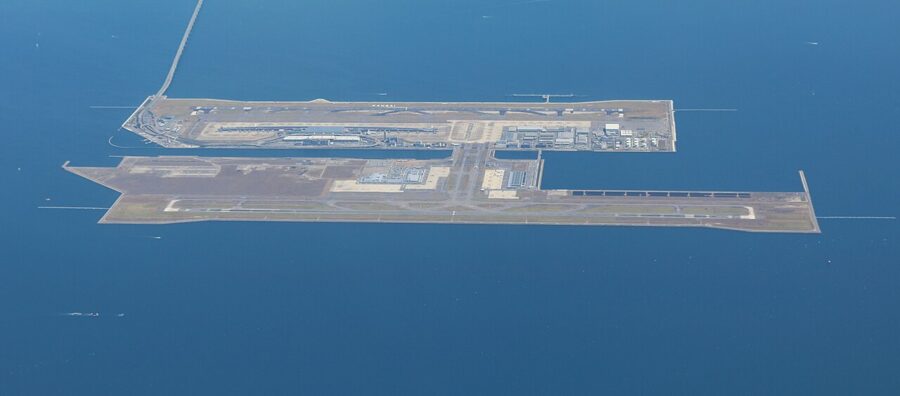
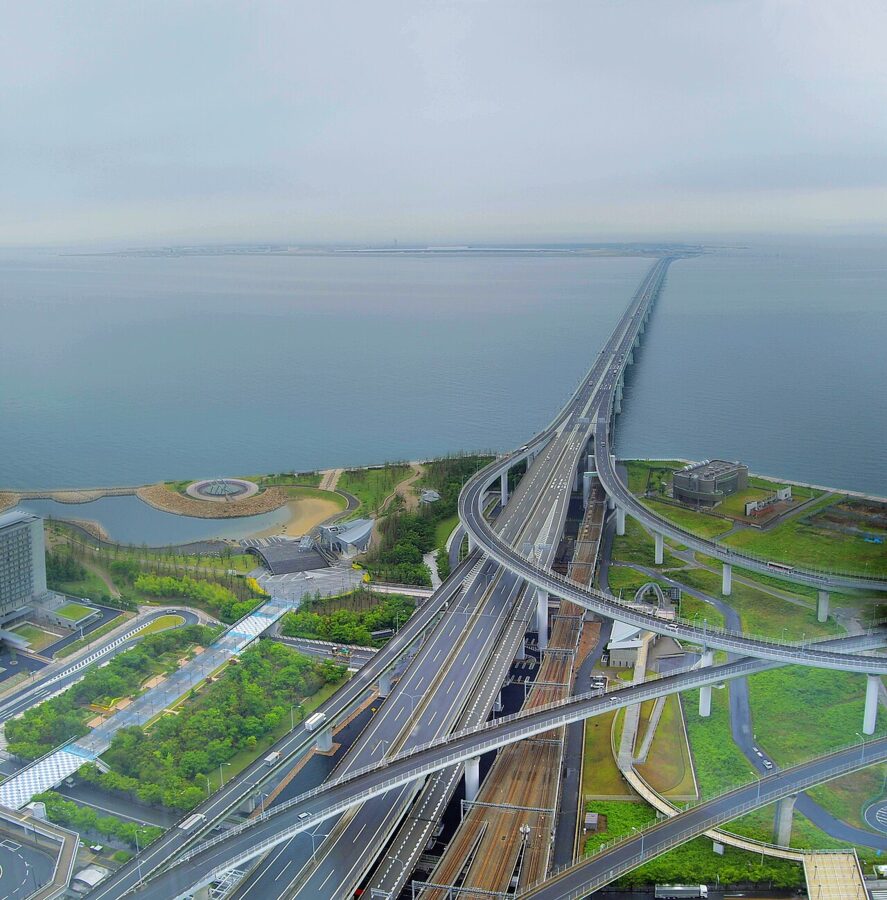
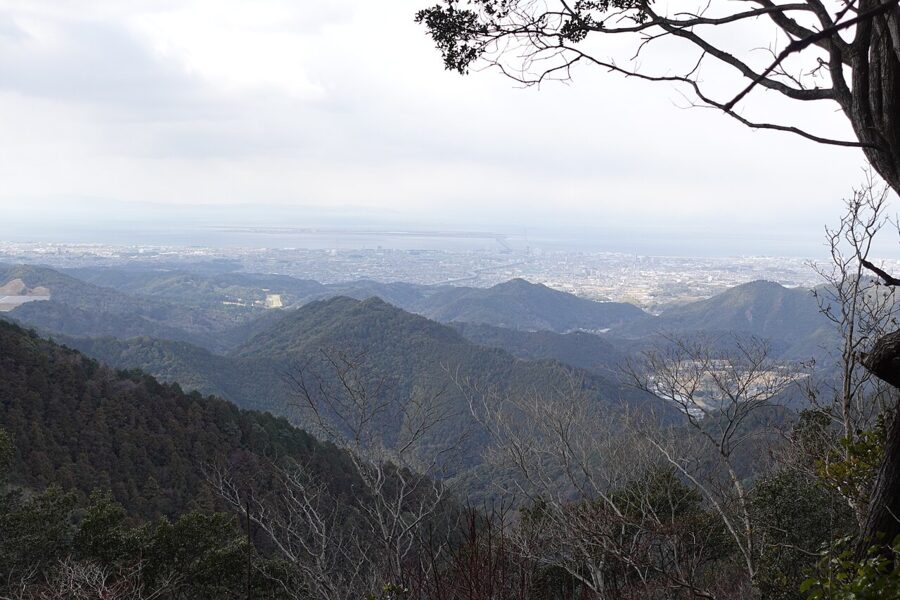
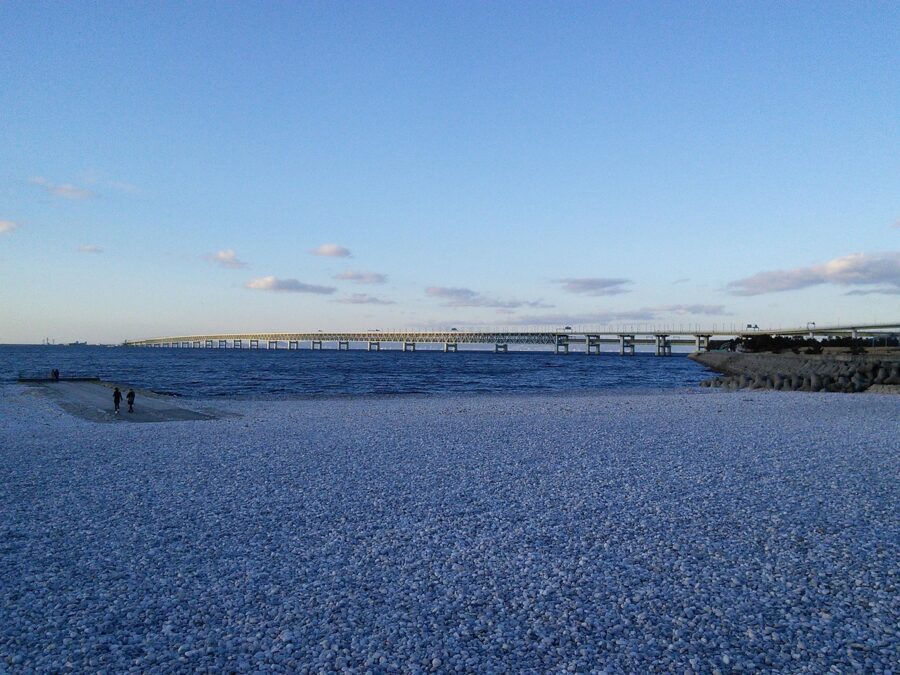
Everything else about KIX is easier than that choice. The airport sits on two artificial islands about 5 km out in Osaka Bay, joined to the shore by a single bridge that carries the road on top and the railway underneath. Terminal 1 has just come out of the first big rebuild since it opened, Terminal 2 is a plain shed for the budget airlines, and the trains, buses, a ferry and the taxis all start within a few minutes’ walk of each other.
Fares in what follows are adult one-way, as the operators list them in November 2026.


Contents
An airport built on the sea
Osaka’s old airport, Itami, sits in the middle of a residential city, and decades of noise complaints have kept it closed at night. The answer for international flights was to build somewhere nobody lived. Work on the first island began in 1987, about 5 km off Izumisano and Tajiri in the south of Osaka Prefecture, and Kansai International Airport opened on 4 September 1994 as Japan’s first airport able to run around the clock.

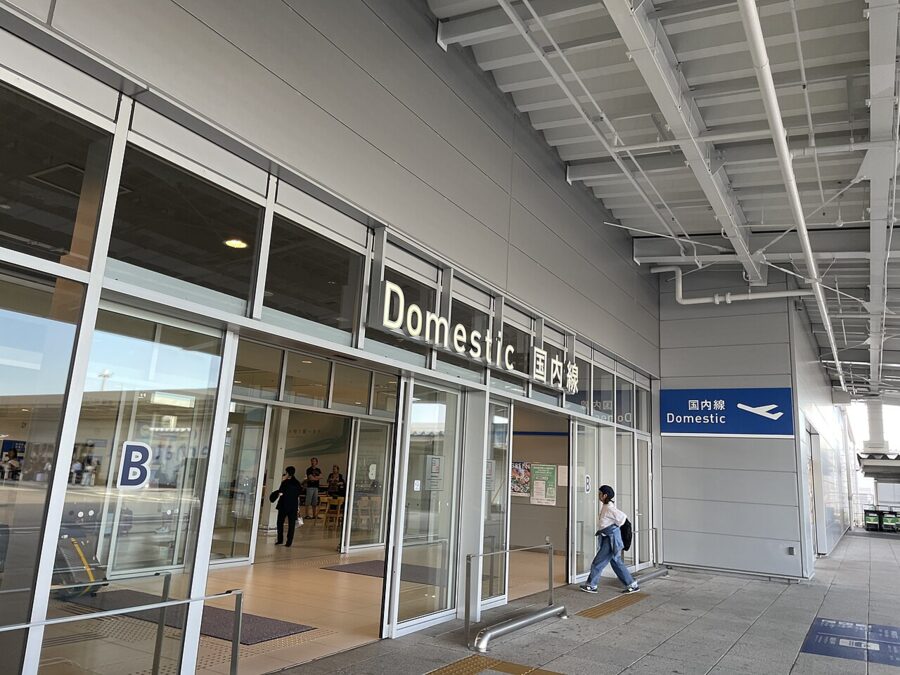
It is still open 24 hours, which matters more than any shop in it. Runway A is 3,500 m; runway B, on the second island, is 4,000 m and opened on 2 August 2007. Since April 2016 the airport has been run by Kansai Airports, a private concession that also took over Itami and later Kobe, so the region’s three airports now share one operator. In 2025 KIX handled about 33.5 million passengers.
The day the island flooded
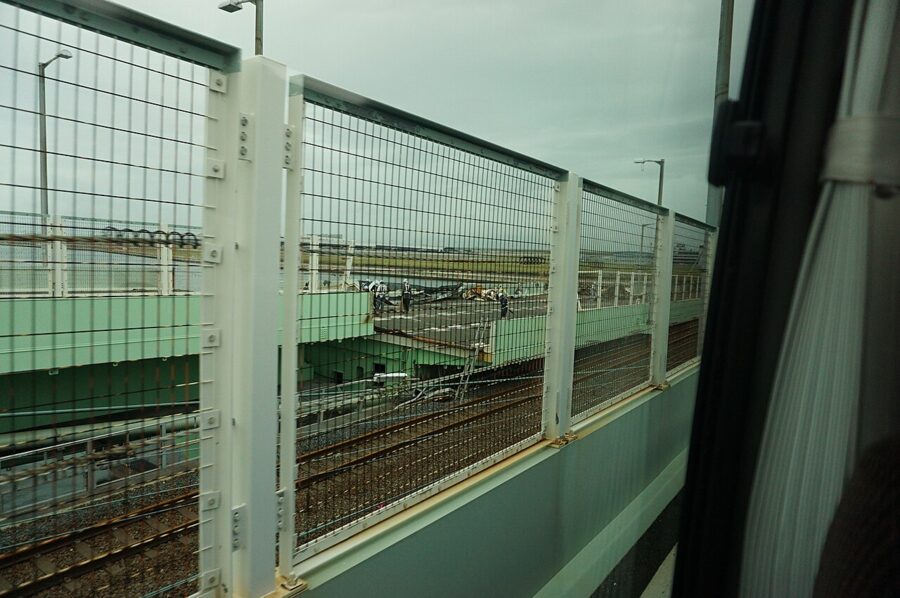
On 4 September 2018, the airport’s 24th birthday, Typhoon Jebi pushed the sea across most of the first island. Both runways had closed by noon and the power failed. At about 13:40 an empty tanker, the Houn Maru, dragged its anchor and slammed into the bridge. Nobody was hurt, but around 7,800 people spent the night cut off in the airport.
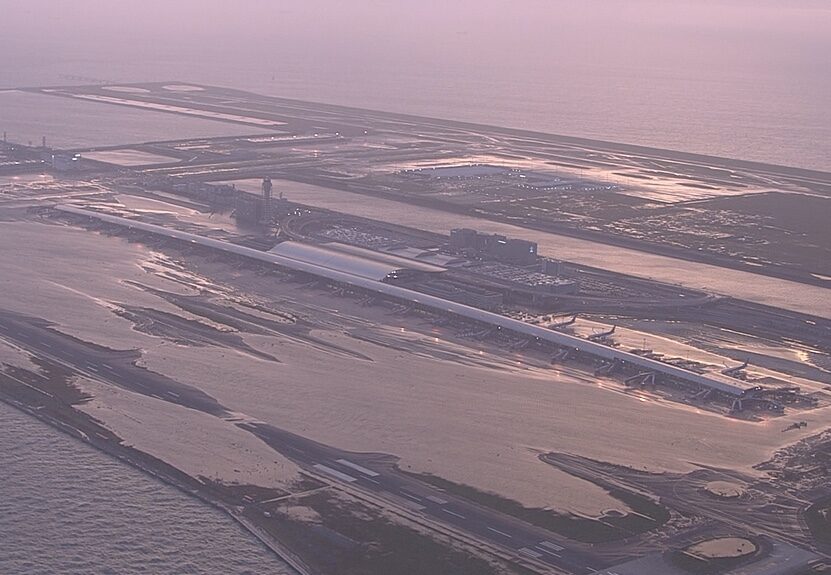

Flights restarted from runway B and Terminal 2 on 7 September. Trains did not come back across the bridge until 18 September, and Terminal 1 was not fully open again until the 21st. The lesson for anyone flying in during typhoon season (roughly July to October) is simple: when a big storm is forecast, the island can be shut, and the bridge is the bottleneck.

The rebuild of Terminal 1
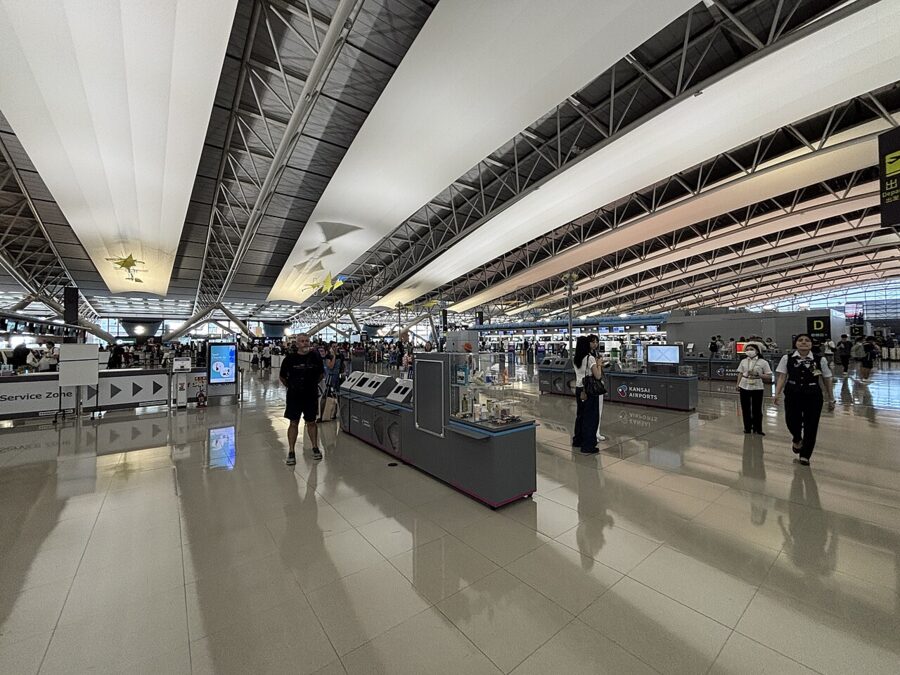
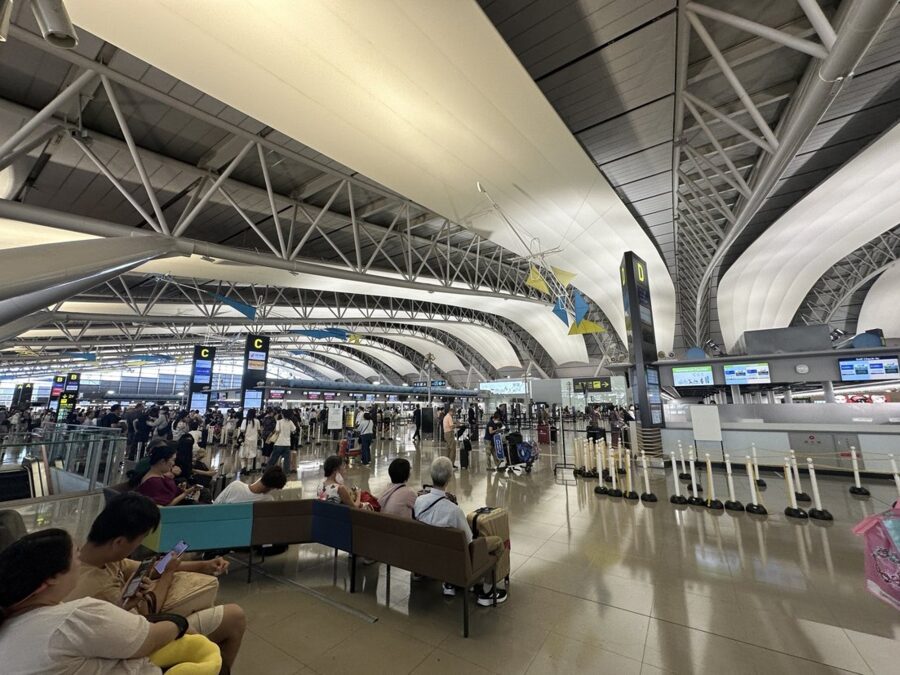
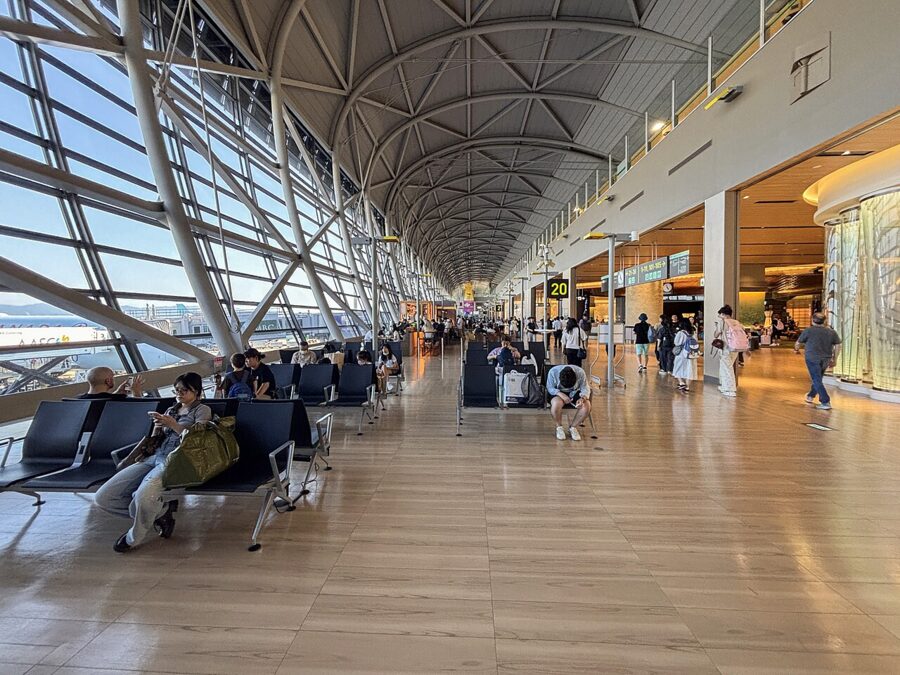
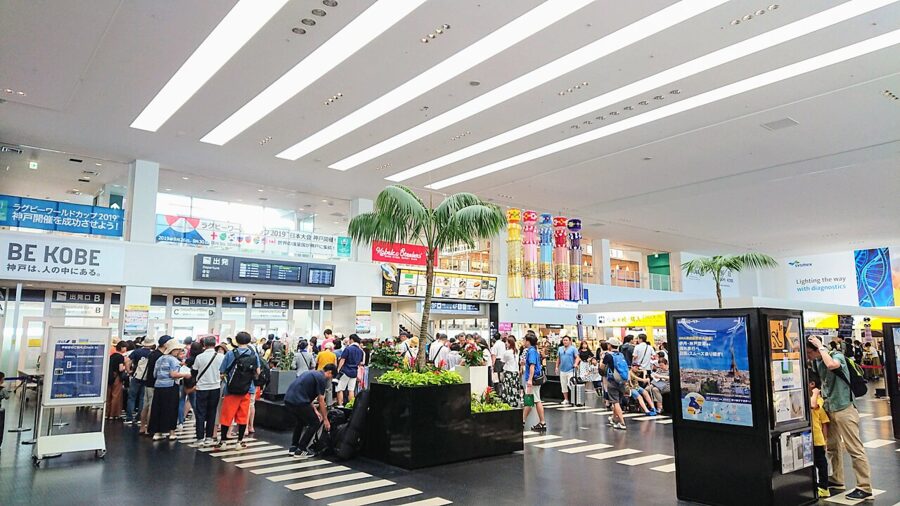
Terminal 1 is Renzo Piano’s long, curved roof, and from 2020 Kansai Airports spent about ¥100 billion rearranging what lies under it, about ¥30 billion of it on flood and disaster defenses. The aim was to swap space between domestic and international flights, merge the security checkpoints into one, and give the international side about 60% more room. The new domestic area opened in October 2022, the new international departure area in December 2023, and the whole terminal had its grand opening on 27 March 2025, in time for the Osaka Expo.
One more piece came later. On 2 June 2026 a further block of shops and restaurants opened in the international departure area, bringing the central airside zone to about 50 outlets. If you last flew from KIX before 2023, forget the old layout entirely.
Terminal 1, Terminal 2 and the AeroPlaza
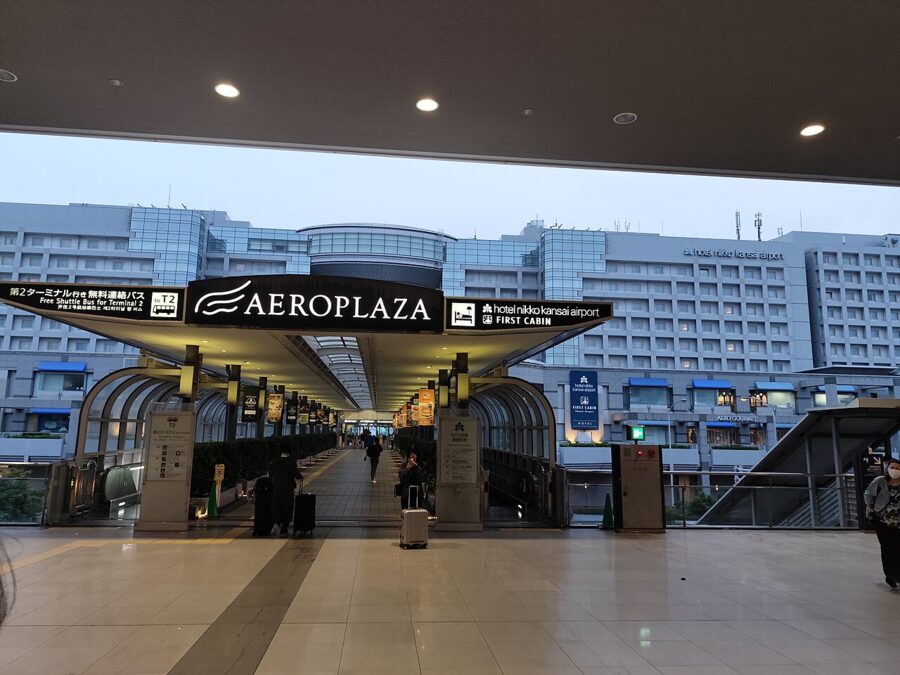
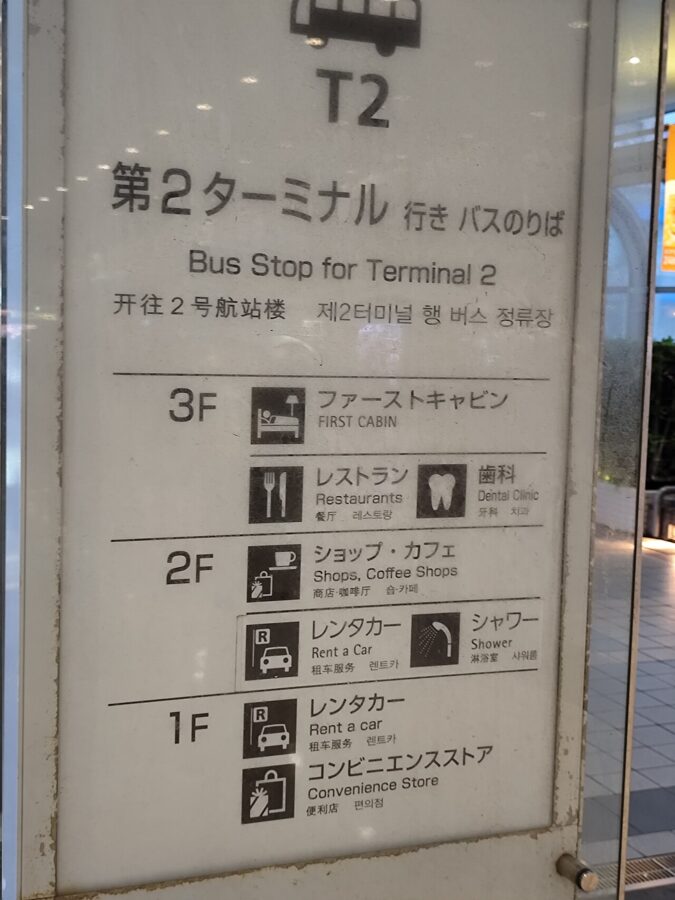
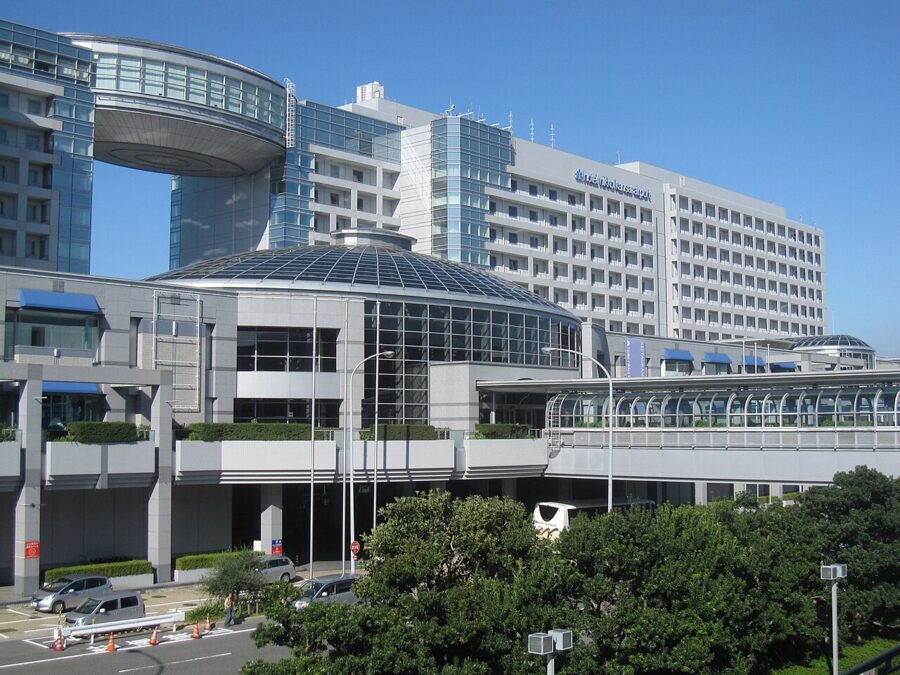
Think of the airport as four buildings. Across a footbridge from the second floor of Terminal 1 is Kansai Airport Station, where JR West and Nankai share one roof but run separate gates. Beyond the station is the AeroPlaza, with Hotel Nikko Kansai Airport, the First Cabin capsule hotel, a 24-hour lounge and the bus stop for Terminal 2, which stands on its own a 7–9 minute ride away.

Terminal 1, floor by floor
- 1F: international and domestic arrivals, the limousine bus stops and taxi ranks outside, currency exchange, SIM vending machines and the luggage-forwarding counters.
- 2F: domestic departures, and the footbridge to the station and the AeroPlaza.
- 3F: restaurants and shops on the public side; airside, this is where you come out of passport control into the international shopping area.
- 4F: international check-in, the baggage-delivery pickup counters, tax-refund kiosks and the entrance to security.
Kansai Airports puts the walk from the station to the international check-in area at 10 minutes and from the bus stops at 3. Both figures hold if you know where the lifts are. Gates in the far wings of Terminal 1 are reached on a small airside shuttle train, so the last part of the trip to your gate can take longer than the walk from the station.
Terminal 2: Peach and two other airlines
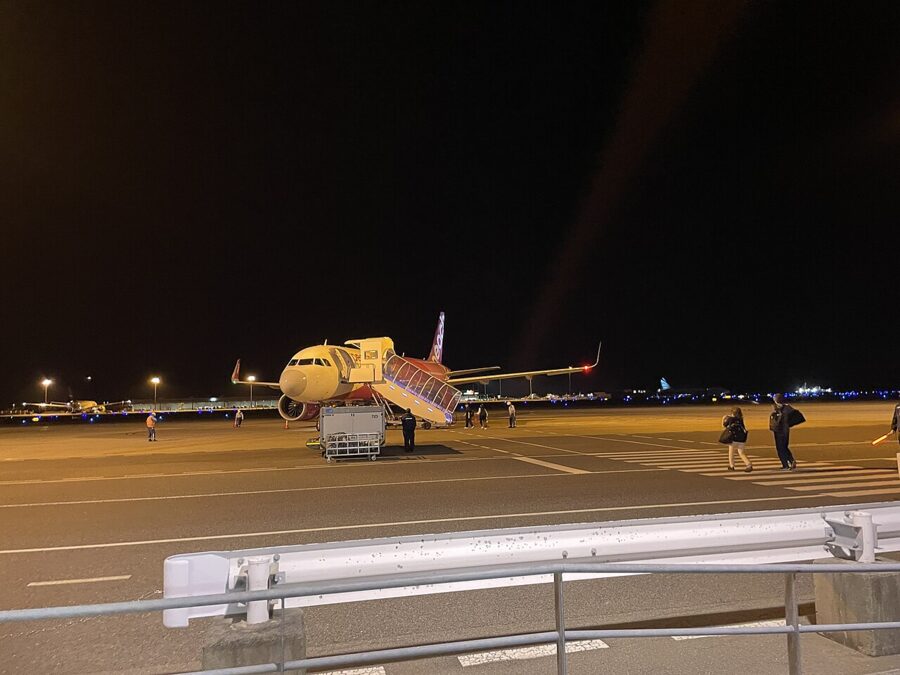
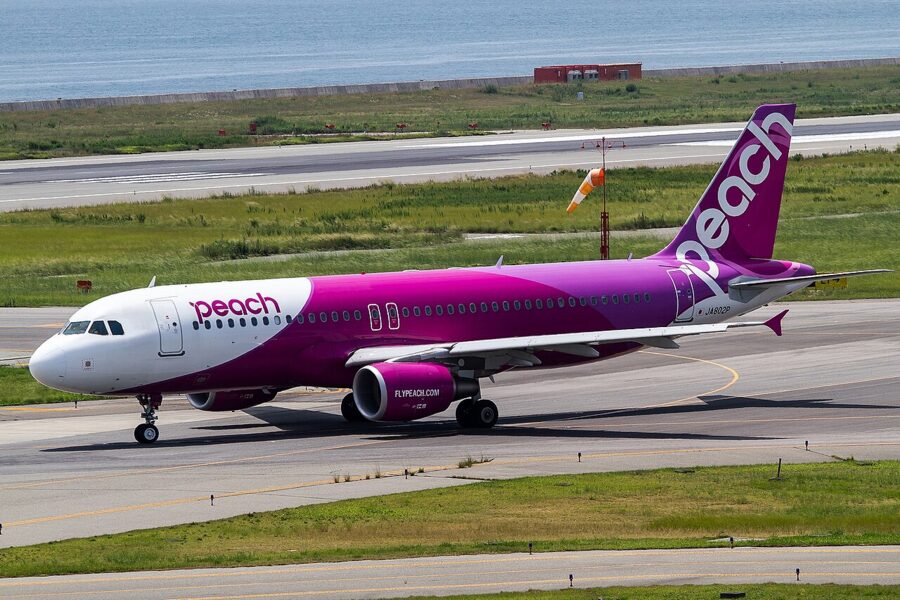
Terminal 2 was built for low-cost carriers. Its domestic side opened on 28 October 2012 and its international side on 28 January 2017, and it serves three airlines: Peach, Jeju Air and Spring Airlines. Every other airline, budget or not, uses Terminal 1.

There is no railway station at Terminal 2. A free shuttle bus runs between the terminal and the first floor of the AeroPlaza, and the ride takes 7–9 minutes. Add the wait, the walk through the station and the time to load a suitcase, and you should allow a good 20 minutes between the train gates and the Terminal 2 check-in desks. Some limousine bus routes, including those for Umeda, Kyoto, Kobe and Nara, stop at Terminal 2 directly, which saves the change.

Arriving: immigration, customs and the first hour
Immigration and customs
The arrival process has been rebuilt along with the terminal. If you register your passport, flight and customs declaration on Visit Japan Web before you fly, you get a QR code. On arrival you scan it with your passport at one of the integrated kiosks in the immigration hall (or at the stations of the airside shuttle), and the kiosk sends you to the right lane for immigration and customs in one go.
The integrated kiosks in Terminal 1 run from 08:00 to 22:00; in Terminal 2, from 09:00 to 21:00. Outside those hours, or without Visit Japan Web, you use the ordinary booths with an officer, and fill in a paper customs declaration. At customs, Visit Japan Web users pass electronic declaration gates that read your face; everyone else hands over the form. Fruit, vegetables and meat products have to be inspected before you leave the baggage hall.
Fill in Visit Japan Web the night before you fly. It is dull, but on a busy evening it is the difference between a kiosk and a long line.
Money
Currency exchange counters (Travelex and KIX Currency Exchange) and exchange machines wait outside customs on the first floor, with another machine just after immigration and a Travelex in the station. Cards work on trains, in convenience stores and most restaurants, but small places and some buses want cash, so I would take out a day or two’s worth of yen at an ATM rather than change a large sum.
SIM cards, eSIMs and pocket Wi-Fi
The arrivals floor has SIM vending machines from Global WiFi and JTB, pickup lockers for rented pocket Wi-Fi, WiFiBOX machines and counters such as Sakura Mobile and Telecom Square. If your phone takes an eSIM, buy one before you leave home and switch it on as the plane taxis in. The airport’s free Wi-Fi covers you until then.
ICOCA and paying for trains
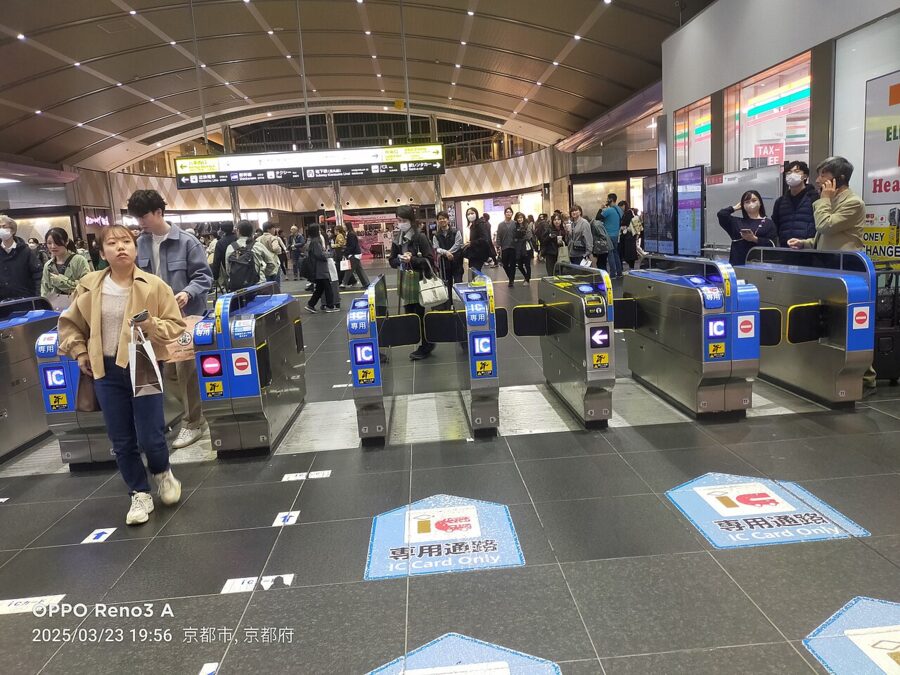
ICOCA is JR West’s rechargeable IC card, and it works on almost every train, subway and bus in Kansai and on transport across Japan. You can buy one at either the JR or the Nankai ticket office at Kansai Airport Station and top it up at any machine. JR West also sells a special-design ICOCA only to foreign visitors in Japan on “Temporary Visitor” status: ¥2,000, of which ¥500 is a deposit, one per person, at the JR ticket office at the airport. iPhone users can skip the plastic and add ICOCA to Apple Pay.

The old ICOCA & HARUKA bundle no longer appears among JR West’s tickets for visitors. JR West now sells the Haruka discount on its own, as the HARUKA One-way Ticket (below), and the ICOCA separately.

Luggage forwarding
This is the most useful service at the airport and the least used. Japan’s courier companies will take your suitcase at the airport and deliver it to your hotel, same-day to many addresses, and you ride into town with a day bag. At Terminal 1 the counters are Yamato Transport on the north side of the first floor and JAL ABC on the south side of the fourth, with Sagawa Express on the second floor of the AeroPlaza. Conditions and cut-off times differ by company, so ask at the counter.
Going home, the same companies hold bags you have sent ahead to the airport. Pick them up at the Yamato or JAL ABC counters on the fourth floor of Terminal 1, or at Sagawa in the AeroPlaza. There is no pickup counter in Terminal 2, so Peach passengers collect in Terminal 1 first and then take the shuttle.
Every way into the cities
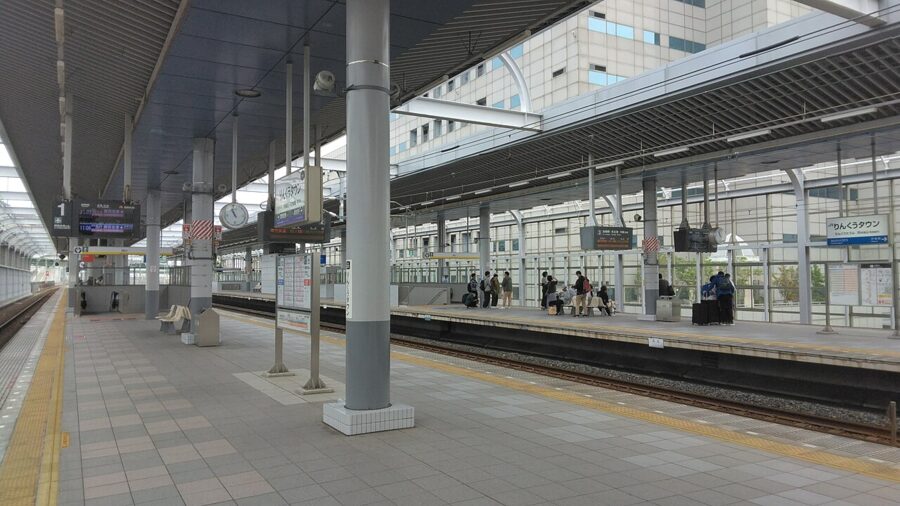
Rail is fastest to anywhere near a station, buses suit heavy bags, and taxis suit groups or the small hours. The two railways share the bridge and the track as far as Rinku Town and then part: JR runs up the Hanwa Line to Tennoji and round the Osaka Loop, while Nankai heads straight up the coast to Namba.

JR Haruka: Kyoto, Shin-Osaka, Osaka and Tennoji
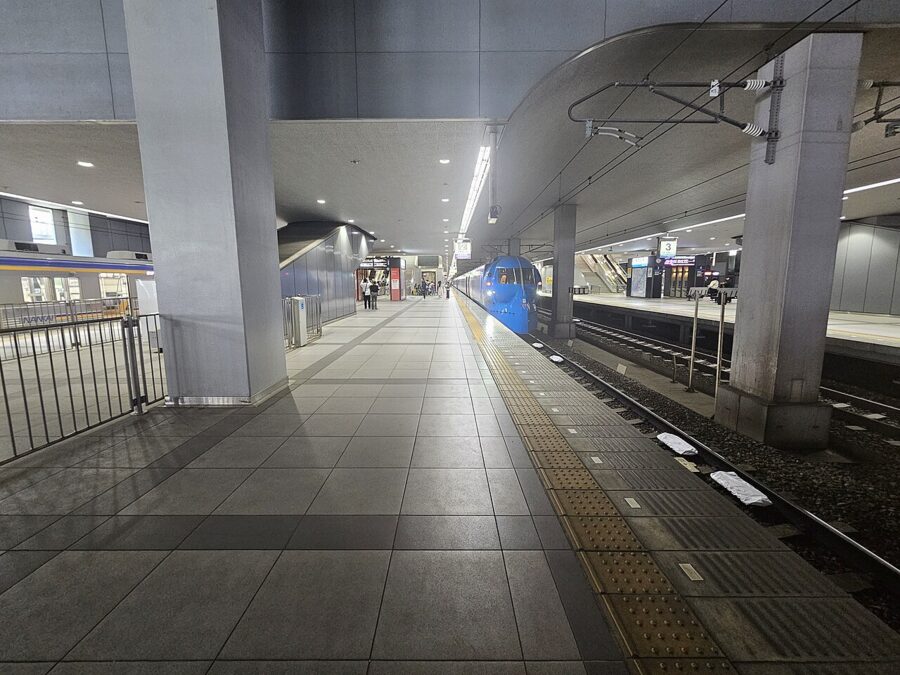
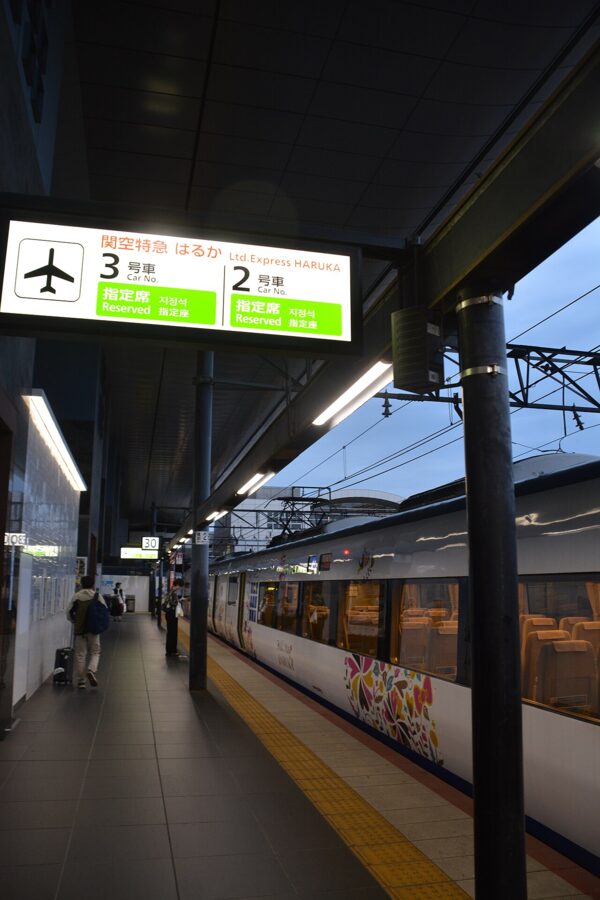
The Haruka is JR West’s airport limited express, and it has run since the airport opened. It stops at Tennoji (about 30 minutes), Osaka (about 47), Shin-Osaka (about 50) and Kyoto (about 75), and some trains carry on beyond Kyoto as far as Yasu, near Lake Biwa. At Osaka it uses the newer underground platforms on the Umekita side of the station, a fair walk from the main concourse.
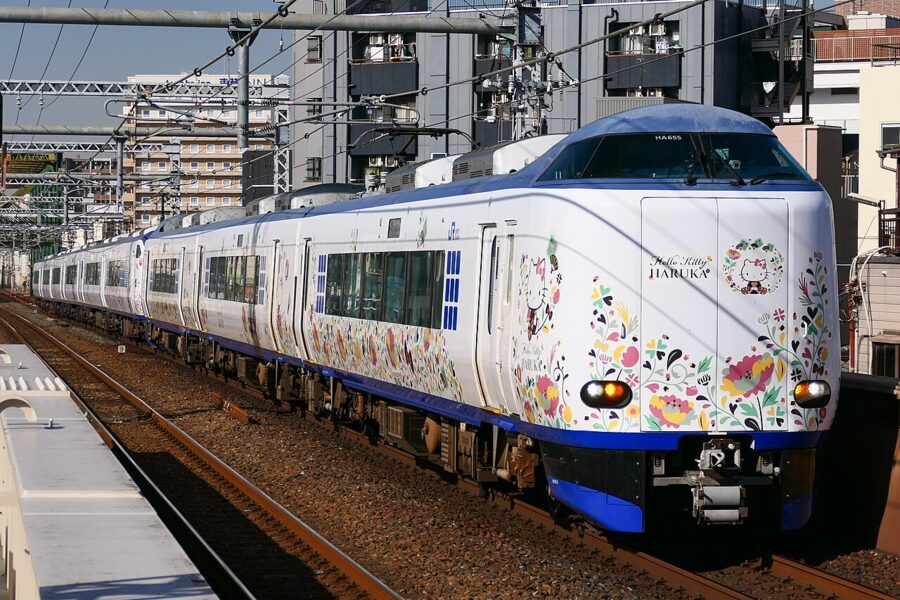
At full fare the Haruka is expensive. From Kyoto, the ¥1,860 base fare plus ¥1,200 for an unreserved seat makes ¥3,060, or ¥3,790 with a reserved seat; from Osaka it is ¥2,380 unreserved, and from Tennoji ¥1,820. Almost no visitor should pay that, because of the HARUKA One-way Ticket.
The HARUKA One-way Ticket is sold only to holders of a foreign passport entering Japan as a temporary visitor, and only from outside Japan, through JR-WEST Online Train Reservation or an overseas travel agency. The prices JR West lists are ¥1,600 to Tennoji, ¥1,900 to Osaka or Shin-Osaka, ¥2,200 to Nara, ¥2,300 to Kobe and ¥2,700 to Kyoto, half that for children aged 6 to 11. JR West notes that prices changed for tickets sold from 1 November 2026, and the price is fixed on the day you buy, so check the figure on the booking page.
The ticket covers a reserved or unreserved seat on the Haruka and, where you need it, the JR trains that take you on to your station in an unreserved seat. You collect it from a ticket machine at Kansai Airport Station using your reservation number, the card you paid with and a passport with an IC chip, and you cannot get off part way. Online booking opens one month ahead at 10:00 Japan time.


JR Kansai Airport Rapid: the cheap JR
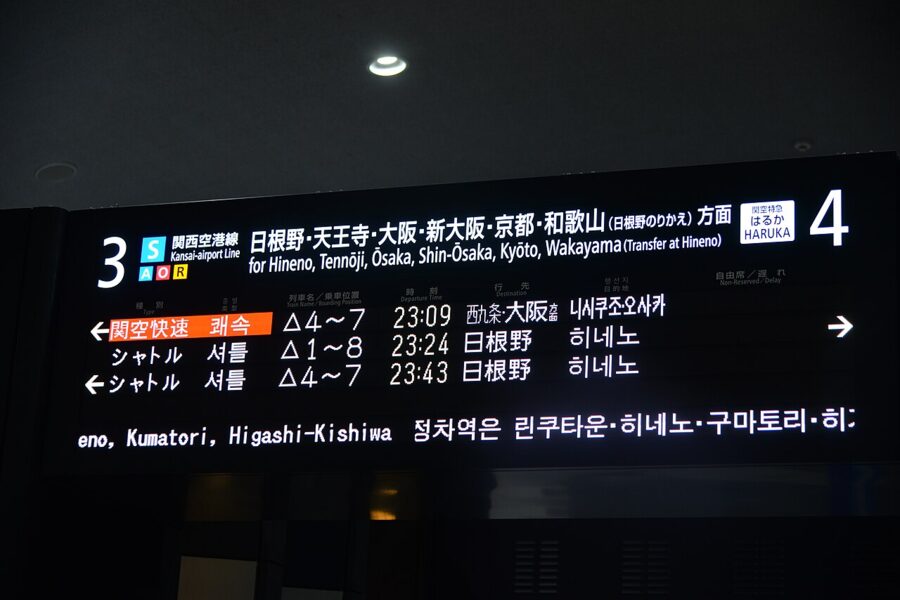
The Kansai Airport Rapid Service is an ordinary commuter train that runs to Tennoji in about 45 minutes and round the Osaka Loop Line to Osaka Station in about 70, then on to Kyobashi. It costs ¥1,060 to Tennoji and ¥1,180 to Osaka, half the Haruka’s full fare. It stops a lot and fills up at rush hour with commuters who will not thank you for a large suitcase, but at 10:00 or 14:00 it is a perfectly good way to reach Umeda for the price of a sandwich and a coffee.

Nankai rapi:t and the Airport Express: Namba
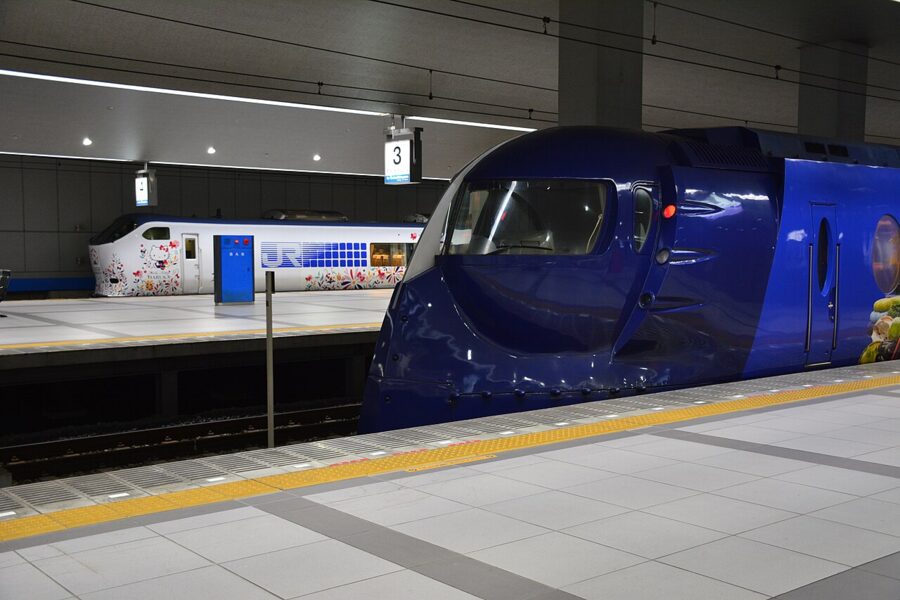
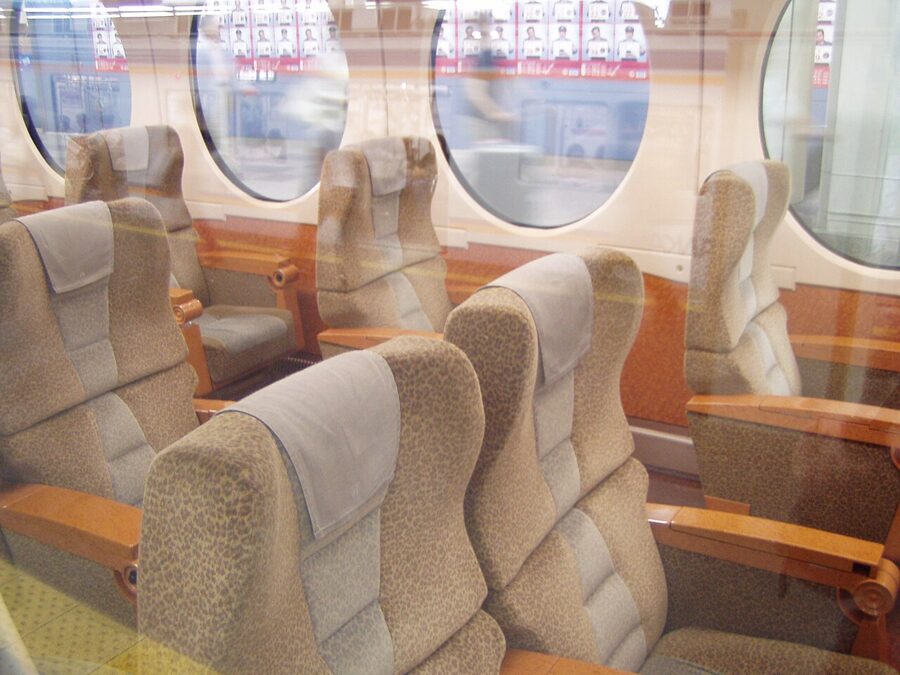
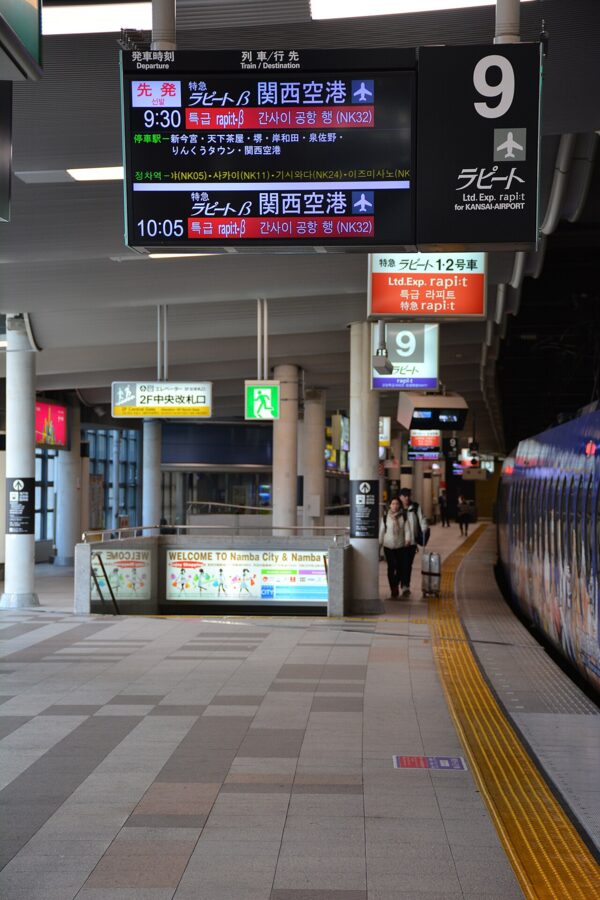
Nankai runs the most direct line from the airport to the south of Osaka, and its train is the best-looking thing at the airport. The rapi:t (Nankai says the name comes from the German for “fast”) is a navy-blue limited express with a heavy, rounded nose and oval windows, a design its makers call retro-future, and it has run since the airport opened. The rapi:t alpha reaches Namba in about 34 minutes and the rapi:t beta, which makes a few more stops, in about 39.

The fare to Namba is ¥970, plus a limited express charge of ¥700 for a Regular Seat, so ¥1,670 in all. Buy the seat through Nankai’s ticketless service on your phone and the charge falls by ¥150, to ¥1,520 total; buy it on the train and it rises by ¥300. Fifty-four of the 252 seats are Super Seats, three abreast with more legroom, for a ¥910 charge.
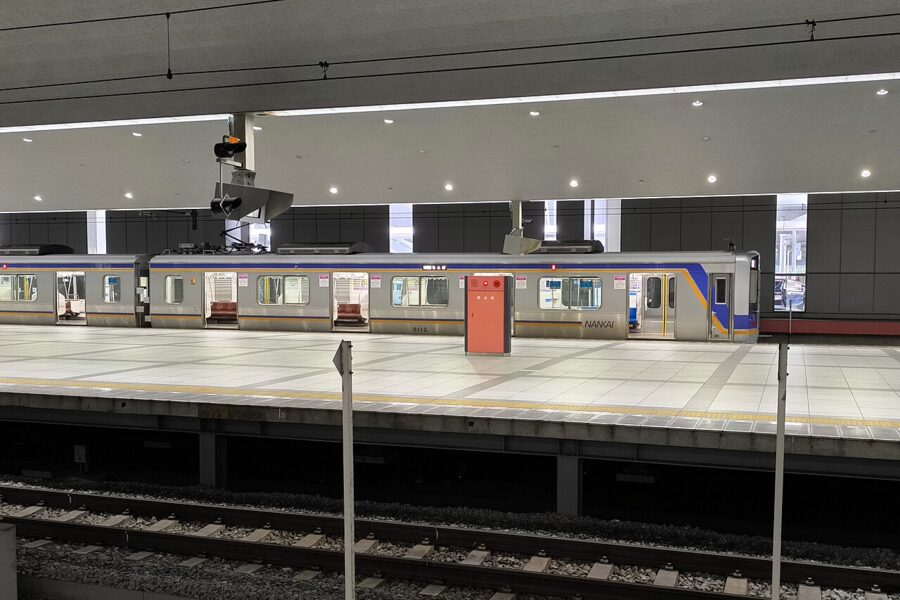
The Nankai Airport Express covers the same line in about 43 minutes for the bare ¥970 fare, with ordinary commuter seats and no reservation. With light luggage and outside the rush hour, it is the best value into Osaka. The last Nankai train to Namba leaves the airport at 23:55 and gets in at 00:42.


Limousine buses
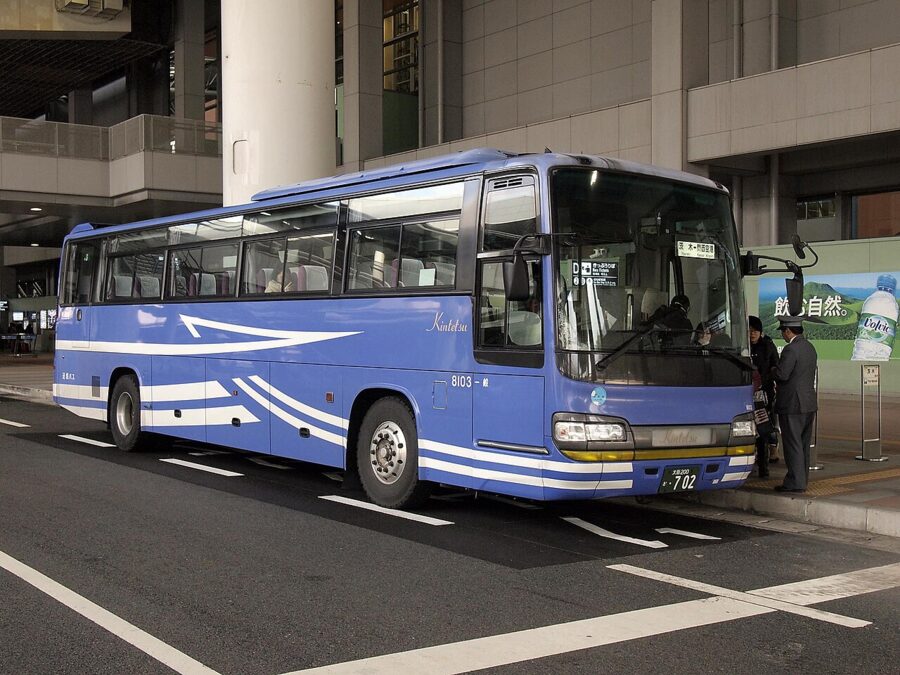
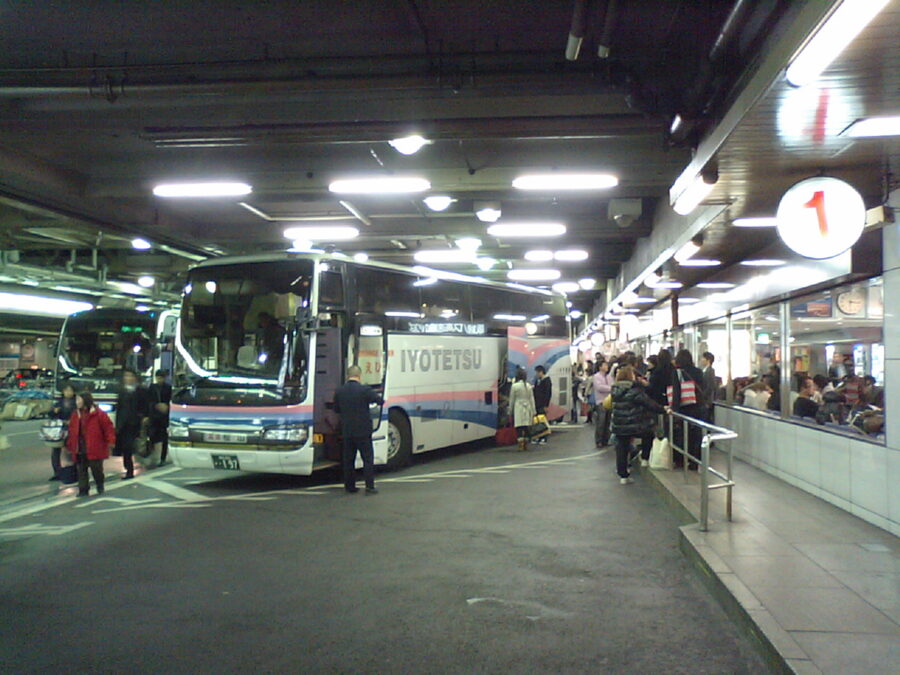
The airport limousine buses, run by Kansai Airport Transportation Enterprise (KATE) with the bus companies of each city, leave from numbered stops outside the first floor of Terminal 1, and some routes also call at Terminal 2. Buy tickets from the machines or the ticket windows by the stops. They are worth it if your hotel is near a stop, or if you would rather put your bag in the hold than wrestle it through a station.
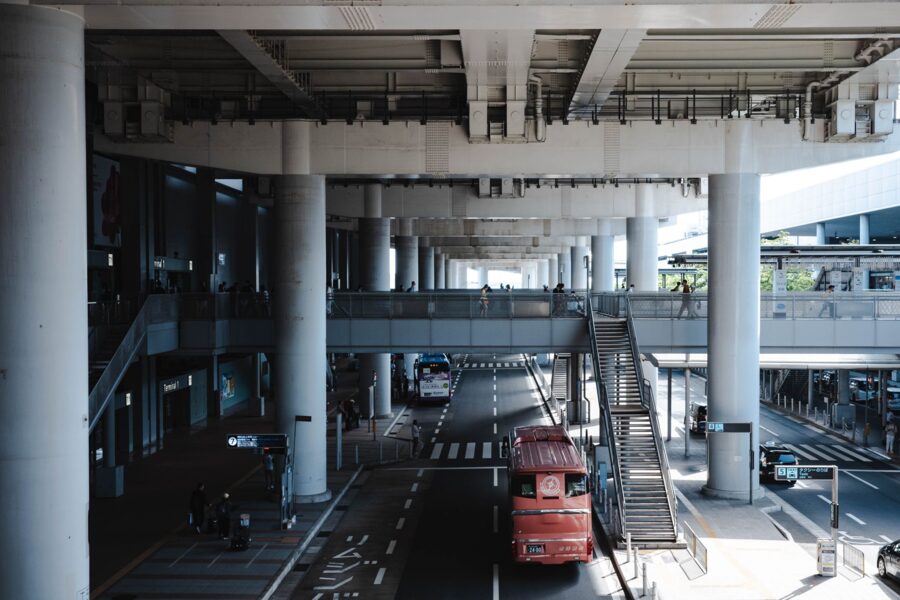
The main routes, with adult one-way fares and the operator’s journey times:
- Osaka Station (Umeda): ¥1,800, about 60 minutes to Hankyu Sanbangai and the Herbis Osaka stop.
- Kintetsu Uehommachi and Shinsaibashi: ¥1,800, about 55 minutes.
- Universal Studios Japan, Tempozan and Nanko: ¥1,800, about 70 minutes to USJ; the last bus leaves Terminal 1 in the early evening, at 17:10 in the current timetable.
- Kyoto Station (Hachijo exit): ¥2,800, about 85–90 minutes; the last bus leaves Terminal 1 at 23:20. Seats from Kyoto to the airport must be reserved.
- Kobe Sannomiya: ¥2,200, about 65 minutes nonstop.
- Nara: ¥2,400, about 1 hour 43 minutes to JR Nara; the last bus leaves Terminal 1 at 21:45. Seats from Nara to the airport must be reserved.


The Bay Shuttle ferry to Kobe
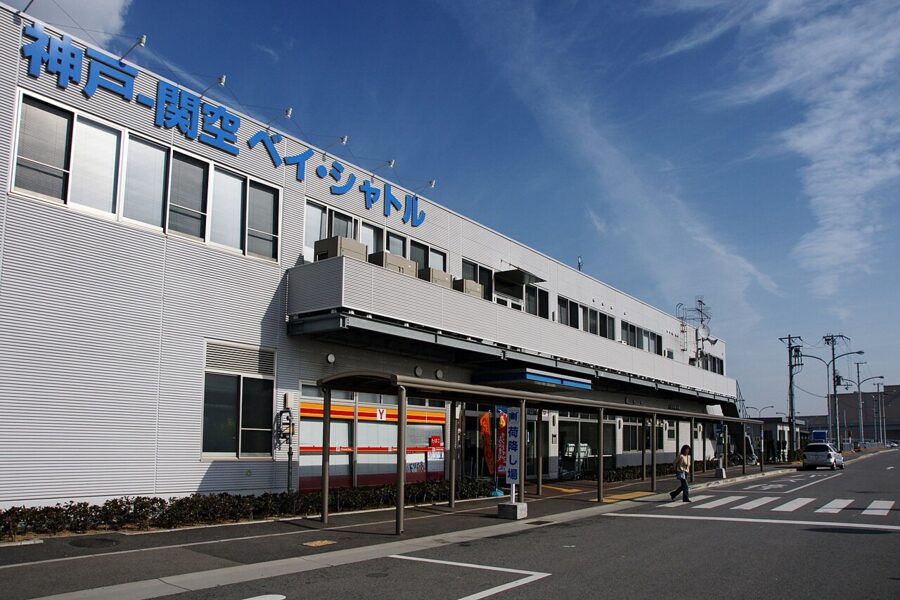
The Kobe-Kansai Airport Bay Shuttle is a fast boat across Osaka Bay to Kobe Airport, about 30 minutes for ¥1,880. A free bus from stop 12 on the first floor of Terminal 1 (or from outside Terminal 2’s international arrivals) takes you to the Port Terminal, because you are not allowed to walk or drive to the pier. At Kobe Airport you change to the Port Liner for Sannomiya; ask at the ferry counter for the set ticket that includes it.
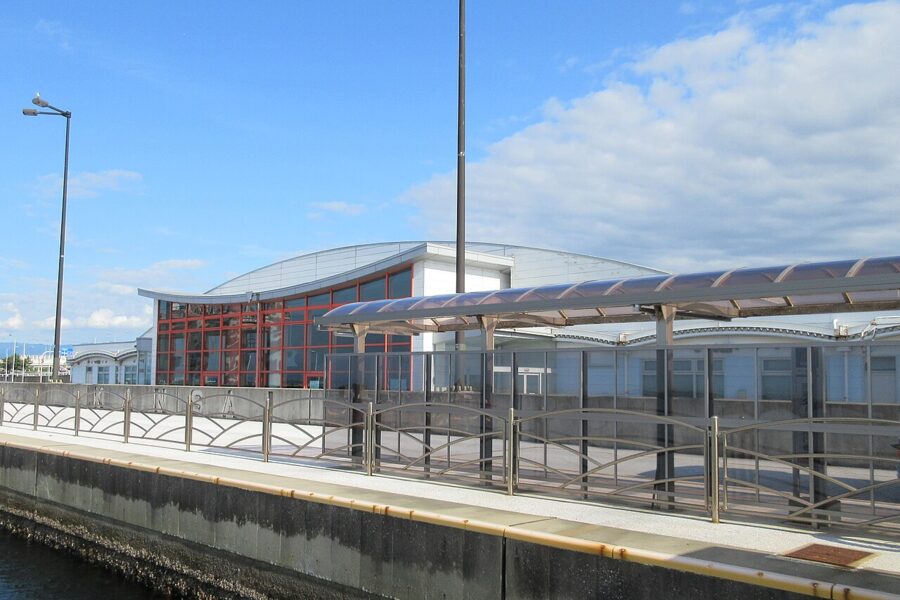

In March 2026 the operator announced the end of its discounted ferry tickets for overseas visitors. The boat runs from 06:20 to midnight from the airport side, which makes it one of the few ways into a city after the last train.

Taxis, flat-rate cars and shared shuttles
A metered taxi from KIX is a serious expense. Kansai Airports’ own estimates, including the bridge and expressway tolls, are about ¥23,320 to central Osaka (Chuo-ku), ¥25,480 to Shin-Osaka, ¥30,610 to Kobe Sannomiya, ¥35,490 to JR Nara and ¥43,150 to Kyoto Station. Between 22:00 and 05:00 the fare is 20% higher. The taxi ranks are outside the first floor of Terminal 1, with separate bays for Uber, DiDi and GO pickups.
Flat-rate cars cut that sharply if you book ahead. MK Taxi’s airport fixed fares start at ¥16,400 to Umeda, ¥22,000 to Kobe Sannomiya and ¥23,800 to Kyoto Station’s Hachijo exit, per car plus tolls, and it can send a van for a group. Cheaper still, if you are heading to Kyoto, is the Yasaka shared airport shuttle: ¥4,300 per person, door to door, but it must be booked by 12:00 two days before you travel. NearMe runs a similar shared door-to-door service, priced per person.
By destination
The short answer for each main destination, with the operators’ journey times and adult one-way fares.
| Destination | My pick | Time | Fare | Alternative |
|---|---|---|---|---|
| Namba | Nankai rapi:t | 34–39 min | ¥1,670 (¥1,520 ticketless) | Nankai Airport Express, 43 min, ¥970 |
| Umeda (Osaka Station) | Limousine bus | about 60 min | ¥1,800 | JR Kansai Airport Rapid, about 70 min, ¥1,180 |
| Shin-Osaka | JR Haruka | about 50 min | ¥1,900 with the HARUKA One-way Ticket | Nankai to Namba, then the Midosuji subway |
| Kyoto | JR Haruka | about 75 min | ¥2,700 with the HARUKA One-way Ticket; ¥3,060 full fare | Limousine bus, 85–90 min, ¥2,800 |
| Kobe (Sannomiya) | Limousine bus | about 65 min | ¥2,200 | Bay Shuttle ferry and Port Liner, ¥1,880 |
| Nara | JR via Tennoji | about 90 min | ¥1,680; ¥2,200 with the HARUKA One-way Ticket | Limousine bus, about 1 hr 43 min, ¥2,400 |
| Universal Studios Japan | Limousine bus | about 70 min | ¥1,800 | JR with one change, about 70 min, ¥1,180 |
Namba, Shinsaibashi and Dotonbori. Take Nankai. The rapi:t is worth the extra ¥700 for a guaranteed seat after a long flight; the Airport Express is fine if you are traveling light. I’d base myself in Namba on a first visit for exactly this reason: the airport is one train away.
Umeda and Osaka Station. The bus wins with luggage, because it drops you at the Hankyu Sanbangai terminal or outside the Herbis building rather than in the middle of the busiest station in western Japan. With the visitor ticket, the Haruka is a few minutes quicker for ¥1,900, but its platforms are at the far edge of the station. Travel light and the JR Rapid is cheapest.
Shin-Osaka. The Haruka, without question. With the visitor ticket it costs ¥1,900, and from its platform you are at the Shinkansen gates in a few minutes.
Kyoto. The Haruka, with the HARUKA One-way Ticket, every time. It is faster than the bus and immune to traffic on the expressway. The bus is the answer only if you are staying on the Hachijo side of the station, where it stops, and want to avoid the walk from platform 30.
Kobe. Take the bus for speed and simplicity; take the ferry if you have time, decent weather and a liking for boats. By rail you need at least one change and gain nothing.
Nara. The bus is direct but slow. JR with a change at Tennoji to the Yamatoji Line is quicker and cheaper, and the HARUKA One-way Ticket to Nara covers the Haruka to Tennoji and the onward JR train.
Universal Studios Japan. The bus is direct, but check the time: the last one leaves early in the evening. By JR, take the Kansai Airport Rapid to Nishikujo and change for the Yumesaki Line.
Late arrivals and early departures
KIX never closes, but the city connections do. These are the last departures from the airport in the current timetables:
- JR Haruka: 22:16, reaching Kyoto at 23:32.
- JR Kansai Airport Rapid to Osaka: 23:09.
- Nankai to Namba: 23:55, arriving 00:42.
- Limousine bus to Kyoto: 23:20 from Terminal 1.
- Limousine bus to Kobe Sannomiya: 23:00 from Terminal 1.
- Late-night bus to Umeda: 00:15 from Terminal 1, arriving about 01:13. Cashless only, and no extra bus is laid on if it fills up.
- Bay Shuttle to Kobe Airport: the last boat at 00:00.
In the other direction, the first Nankai train from Namba leaves at 05:08 and reaches the airport at 05:58, and the first Haruka from Kyoto leaves at 05:45 and arrives at 07:10. For a flight before about 07:30, you either sleep near the airport or pay for a car.

Airport hotels
Hotel Nikko Kansai Airport is the only full-service hotel on the island, in the AeroPlaza across the station from Terminal 1. Besides normal rooms it sells day-use stays and shower booths (¥2,500 an hour, 09:00–21:00), and the breakfast from 05:45 is designed for people on the first flights out. In the same building, First Cabin Kansai Airport is a compact capsule-style hotel with a large shared bath and a lounge; check-in is from 17:00, check-out at 10:00, and it also sells short daytime stays.
Across the bridge in Rinku Town and Izumisano are cheaper hotels, among them the Kansai Airport Washington Hotel, the Star Gate Hotel and the Kansai Airport Spa Hotel Garden Palace, with free shuttles from stop S12 at the south end of Terminal 1’s first floor. Fine for a late arrival; for a 06:00 departure, the short walk from the AeroPlaza is worth the difference.
Waiting out the night
Because the airport never closes, you can wait out the night in Terminal 1, though the halls stay lit and the announcements carry on. A better compromise is KIX Airport Cafe Lounge NODOKA on the second floor of the AeroPlaza, open 24 hours, where a shower costs ¥1,400 for 40 minutes with towels and toiletries. Airside, after passport control, coin-operated showers in the central gate area of Terminal 1 cost ¥800 for 15 minutes, from 07:00 to 23:00.
Leaving from KIX
Which terminal, and when to arrive
If you are flying Peach, Jeju Air or Spring Airlines, go to Terminal 2; everyone else uses Terminal 1. In Terminal 1, international check-in is on the fourth floor and domestic on the second. Check-in deadlines differ by airline, so read your booking rather than trusting a rule of thumb.
For a long-haul flight I aim to be off the train two and a half hours before departure. That leaves time for the walk, check-in, the tax-refund kiosk if you need it, the single security area at its morning peak, and the shuttle train to the far gates. For Terminal 2 add 20 minutes for the bus.

One rule to check before you pack. From 24 April 2026, power banks may not go in checked bags, only in the cabin, with no more than two per passenger, each of 160 Wh or less, kept with you rather than in the overhead locker and not charged from the seat power. Individual airlines can be stricter.
Tax refunds after 1 November 2026
Japan’s tax-free shopping changed on 1 November 2026. Shops no longer take the consumption tax off at the till: you pay the full price, and the tax is refunded once customs has confirmed at the airport that you are taking the goods out of the country. Purchases made on or before 31 October 2026 follow the old rules.
At KIX the customs confirmation comes first, before you check in your bags. Keep every tax-free item in your hand luggage, unopened; if one item from a receipt is missing, nothing on that receipt is refunded. Then either open Visit Japan Web on the dedicated Wi-Fi in the designated area (fourth floor of Terminal 1, first floor of Terminal 2) or scan your passport at a tax-refund kiosk. A green result means you can check in; red means a customs officer wants to see the goods.
The kiosks run 24 hours. The refund itself goes back to your card or another cashless method, or, if the shop offers it, in cash at the refund counter on the third floor of Terminal 1 after passport control (07:00–24:00), or at self-service kiosks there and in Terminal 2 from 05:30 until the last flight.
Duty-free and the new airside
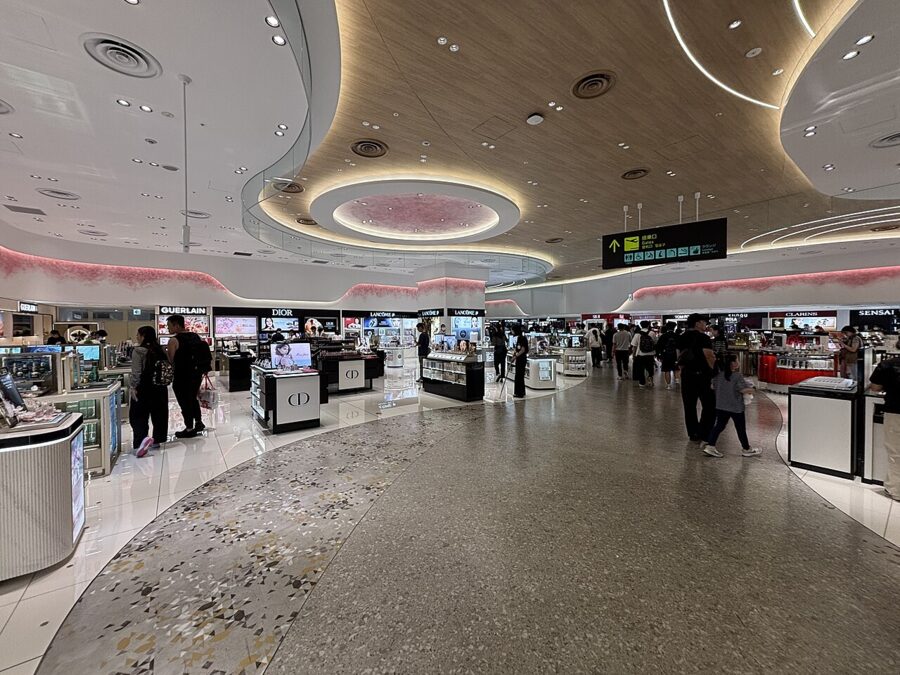
After passport control, the shopping is duty-free and none of the above applies. The rebuilt international area of Terminal 1 is laid out as a walk-through: you come out of passport control into KIX Duty Free and then into the zones that opened in 2023 and June 2026. There are luxury boutiques along the wall side, Kansai sweets and souvenirs in the middle, and food from Crystal Jade dumplings to a Kamukura ramen counter, KIX Beer and a kamameshi and matcha shop called Tsumugi.

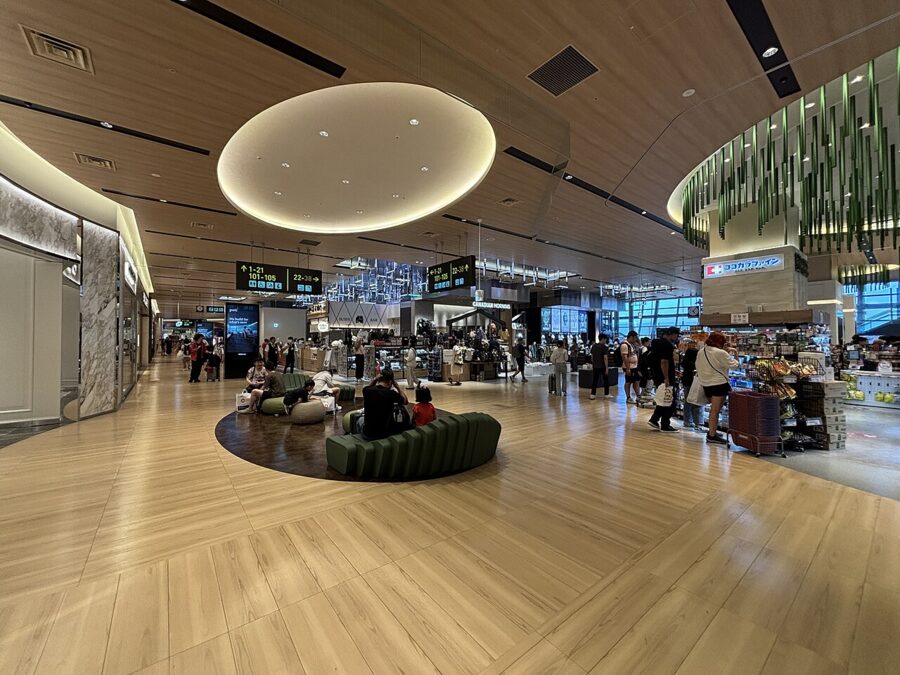

The food airside is far better than it was, but with time to spare I would still eat landside, on the third floor of Terminal 1.

The observation hall
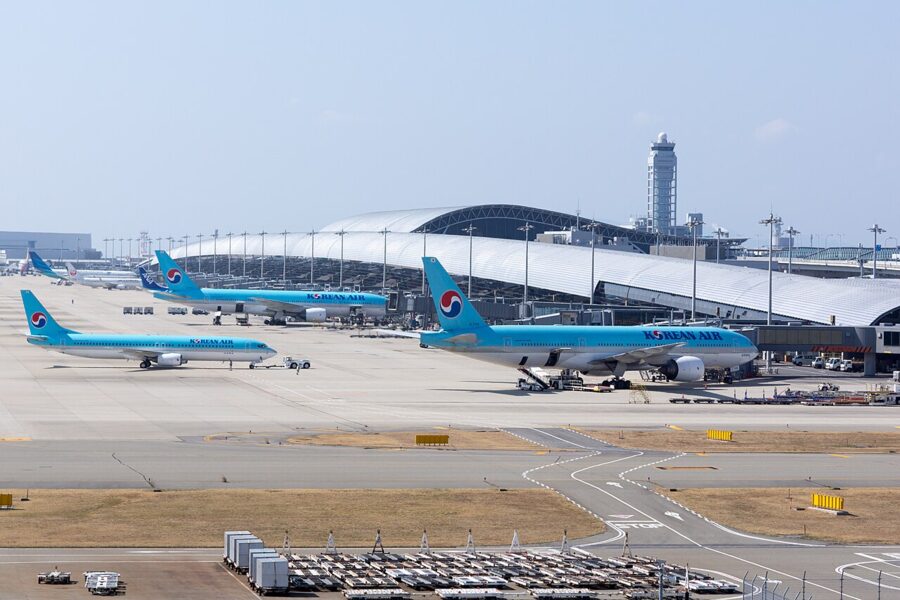
Sky View, the airport’s observation hall, stands beside runway A on the eastern side of the island, with a rooftop Sky Deck, a small aviation museum and a few shops. It opens 10:00–17:00, with the Sky Museum 11:00–16:00. A free bus runs there from the Terminal 1 arrivals floor, roughly twice an hour, and takes about 6 minutes. It is the best plane-watching in Kansai.


KIX, Itami or Kobe?
Kansai has three airports, and one company now runs them all.
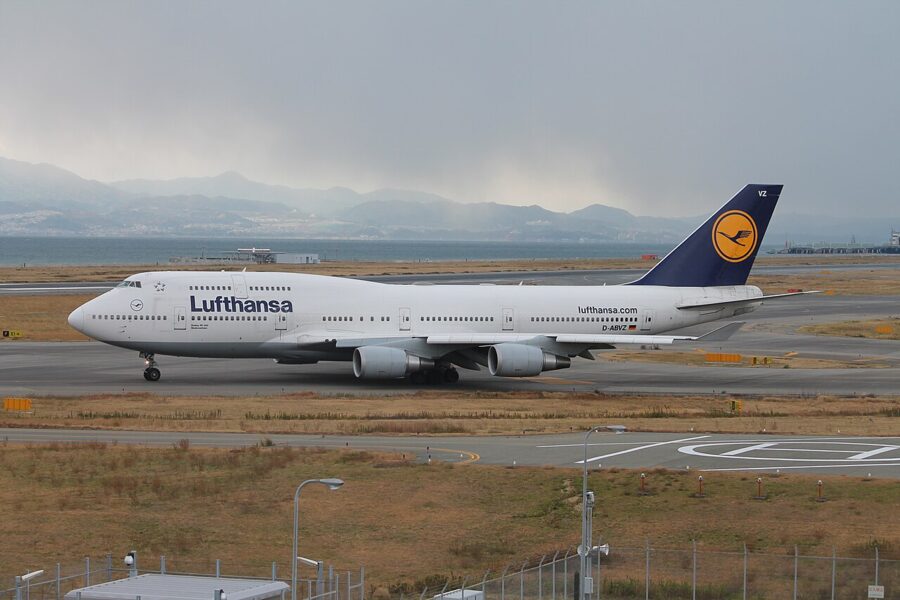
Kansai International (KIX) handles almost every international flight, including the long-haul routes from Kansai to Europe, and plenty of domestic ones. It is the only one of the three open all night. For anywhere south of Osaka, or for Kyoto on the Haruka, it is also the most convenient.
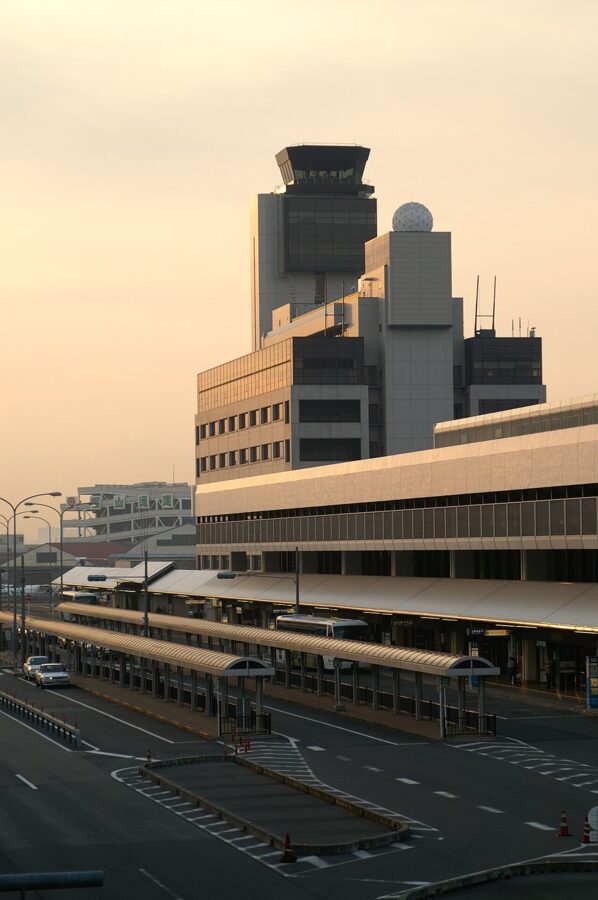
Osaka International Airport (Itami) is, despite the name, domestic only. It sits on the northern edge of Osaka, much closer to Umeda than KIX, with frequent flights to Tokyo and the rest of Japan. If you are connecting from an international arrival at KIX to a domestic flight from Itami, a direct limousine bus links the two from stop 8 outside Terminal 1; a taxi takes about 70 minutes and costs around ¥28,630.

Kobe Airport is on its own island south of Kobe’s Port Island, 18 minutes by the Port Liner from Sannomiya for ¥340. It is mostly domestic, but international charter flights began there in 2025 from a new second terminal, and regular international services are planned for around 2030. The Bay Shuttle ferry links it to KIX.

Whichever way you are going, the advice for your first hour is the same. Fill in Visit Japan Web before you land, buy an ICOCA at the station, send the big suitcase on by courier, and then pick your gate, JR or Nankai. For the way home, write down the one train that matters, the first Haruka from Kyoto at 05:45 or the first Nankai from Namba at 05:08, and the platform it leaves from.