

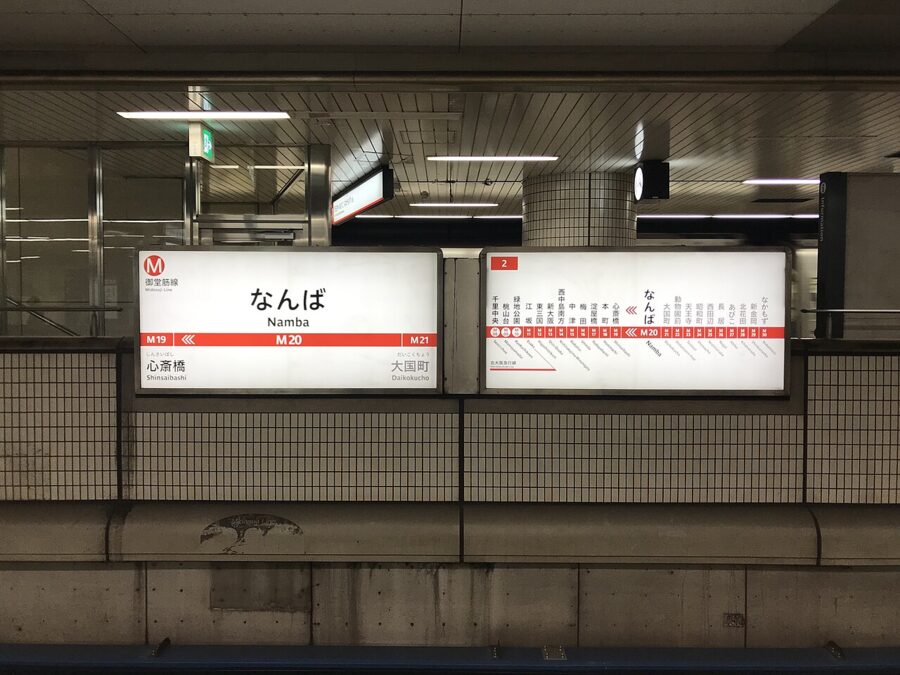
Four stops on the Midosuji Line separate Osaka’s two downtowns. Umeda to Namba is 4.1 km of subway under the city’s grandest boulevard, ¥240 one way for an adult, and almost every decision you make about Osaka starts with which end of that line you wake up at. Kita, the north, is stations, department stores, office towers and the new park that replaced a freight yard. Minami, the south, is canals, neon, arcades and the reason people say Osaka eats better than Tokyo.
The city sells itself to itself with one word: kuidaore, eat until you drop. It means it. But Osaka is also the second city of a country that runs on trains, the merchant capital that once fed the whole of Japan, and a place that has just come out of a building boom timed to a world fair. It rewards a plan more than most cities do, because the good parts are spread out and the bad parts (chain-store arcades, overpriced market stalls, the queue at the wrong observation deck) sit right in the middle.

Osaka is the biggest city in Kansai and the easiest base for Kyoto, Nara and Kobe, and I’m partisan about it. Prices and hours are those the operators and venues give for late 2026.

Contents
How Osaka divides itself
Locals use two words for the center, and you will hear them on signs, in hotel names and from taxi drivers. Kita (north) is the area around Osaka Station and the cluster of stations called Umeda. Minami (south) is everything around Namba, Shinsaibashi and the Dotonbori canal. Between them runs Midosuji, a ginkgo-lined avenue with the subway of the same name underneath, and a business district of banks and trading houses that empties at night.
The rest of the city arranges itself around that spine. South of Minami is Tennoji, with a temple founded in the sixth century, a 300-meter tower and the old amusement quarter of Shinsekai. East of the center sits Osaka Castle in its park, and beyond it Tsuruhashi, where the smell of grilling meat greets you on the train platform. West is the bay, with the aquarium, the Universal Studios Japan theme park and the artificial islands where the Expo was held.
Most first visits need only Kita and Minami plus one trip south or east. If you have two days, I’d give one to Minami and its food, and split the other between the castle and Kita. A third day goes to Tennoji and Shinsekai, or to a day trip, which from Osaka is easy in every direction.
What changed after Expo 2025
The world fair ran on Yumeshima, an island of reclaimed land in Osaka Bay, until October 2025, and the city used it as a deadline for projects that had been on paper for decades. The most visible is in Kita: Grand Green Osaka, built on the old Umeda freight yard, opened its first section and part of its park on 6 September 2024 and its south block on 21 March 2025. The whole development is not finished; the full park is scheduled for spring 2027 and the rest of the district for the 2027 fiscal year.
Underneath it, JR West opened new underground platforms at Osaka Station in March 2023, so the Haruka airport express and the Kuroshio to Wakayama now stop in the middle of Kita rather than only at Shin-Osaka. On the bay, the Osaka Metro Chuo Line was extended to a new Yumeshima Station in January 2025.
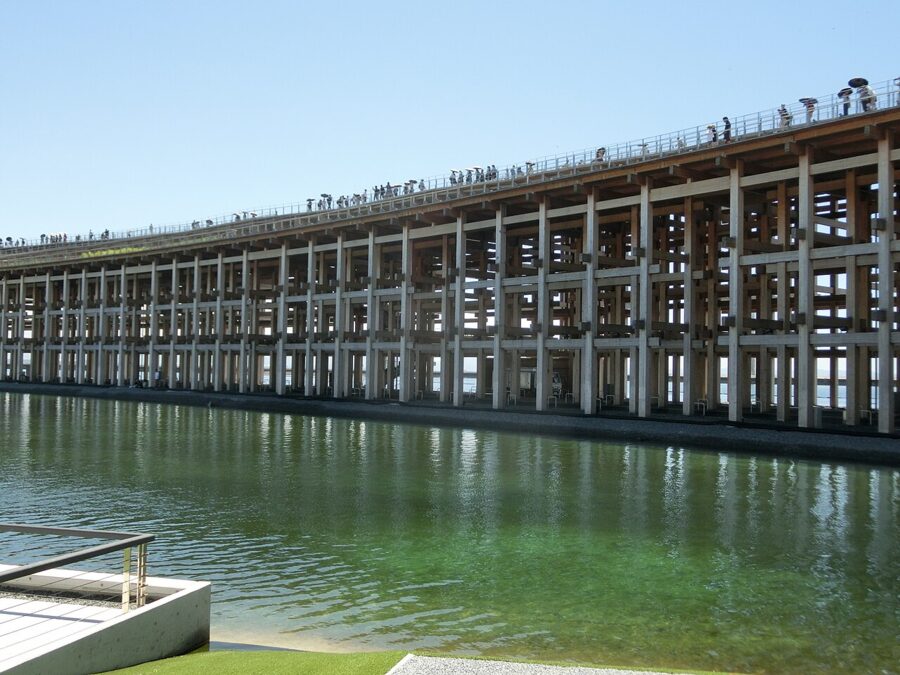
Yumeshima itself is now a construction site. The fairgrounds are being cleared, around 200 meters of the timber Grand Ring is to be kept as a monument in a new city park, and an integrated resort with a casino is being built next door for a planned opening in autumn 2030. Until then there is little reason to ride out there unless you want to see a building site from a very new station.
Kita: Umeda and around
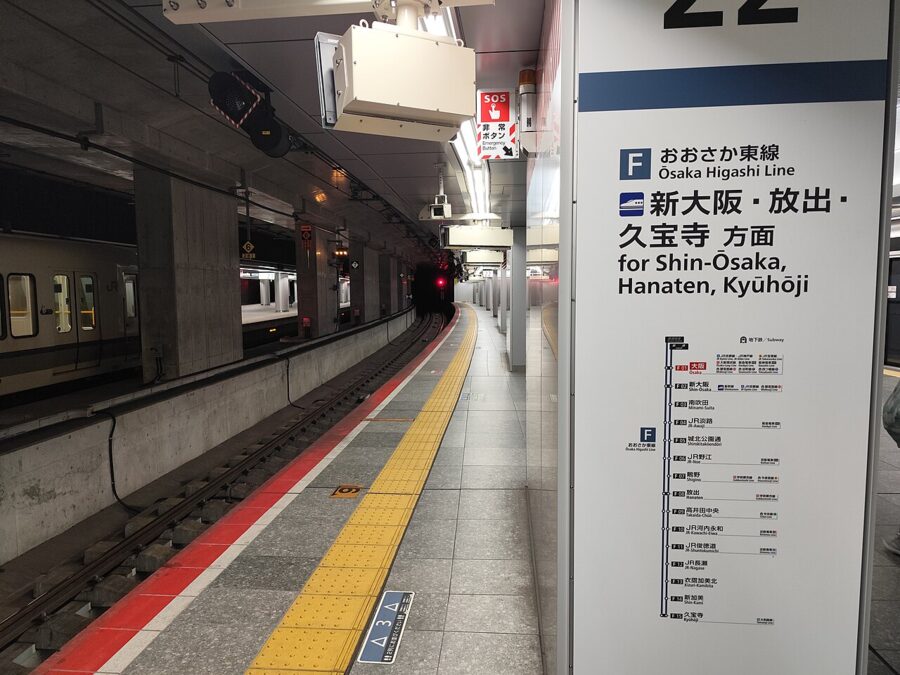
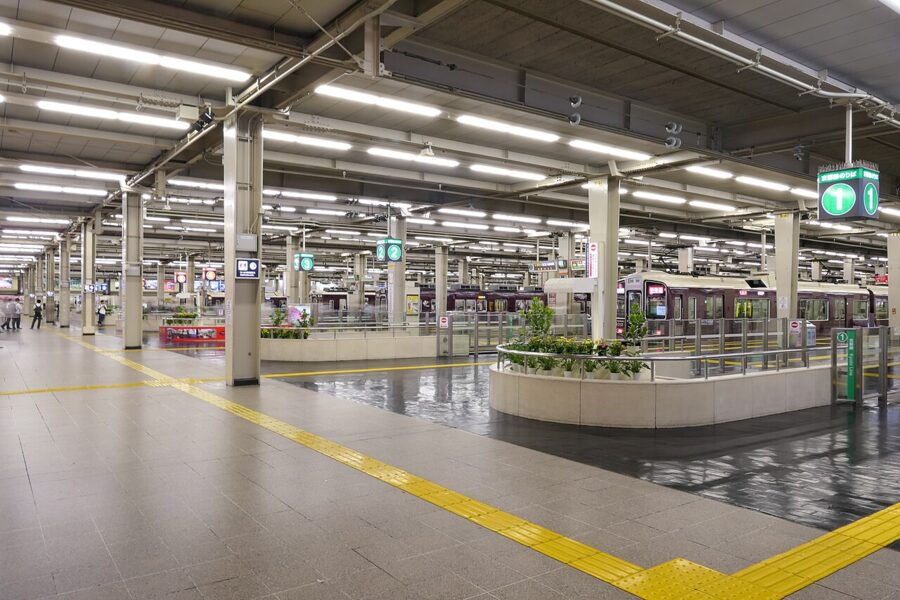
Umeda is not one station but a knot of them, and the first rule of Kita is that the name on your ticket matters. JR’s Osaka Station, Hankyu’s Osaka-umeda, Hanshin’s Osaka-umeda and three Osaka Metro stations (Umeda on the Midosuji Line, Higashi-Umeda on the Tanimachi Line, Nishi-Umeda on the Yotsubashi Line) all sit within a few hundred meters of each other, connected by tunnels. Osaka Metro lets you change between its three Umeda stations outside the gates as one journey, as long as you do it within the time limit.
Under the city
Kita’s real main street is underground. Whity Umeda, Diamor Osaka and the basements of Hankyu and Hanshin department stores join into a warren of corridors, restaurants and food halls that you can walk for twenty minutes without seeing daylight. On a rainy day this is the most useful fact in Osaka. On a busy evening it is the most confusing.
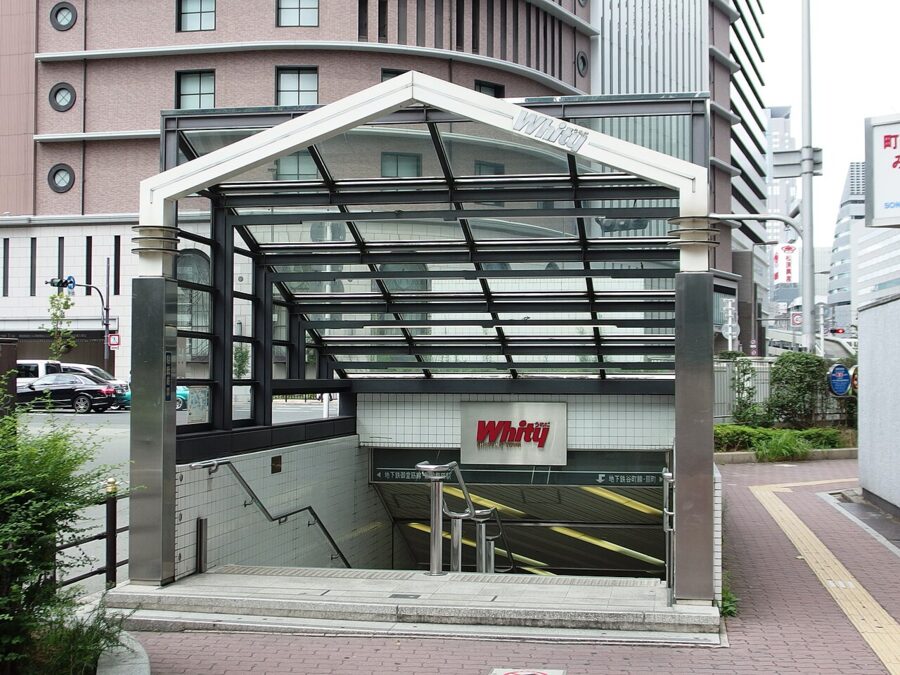

Two tips. Signs in the tunnels name the railway companies, not the districts, so decide which company you want before you go down. And the department store food halls are worth a look even if you buy nothing: Hanshin’s basement food floor is where Osaka buys its ready-made dinner, and the 1st floor has a section of regional stalls, including one from Dotonbori Imai, the udon house on Dotonbori.
Grand Green Osaka and Umekita Park
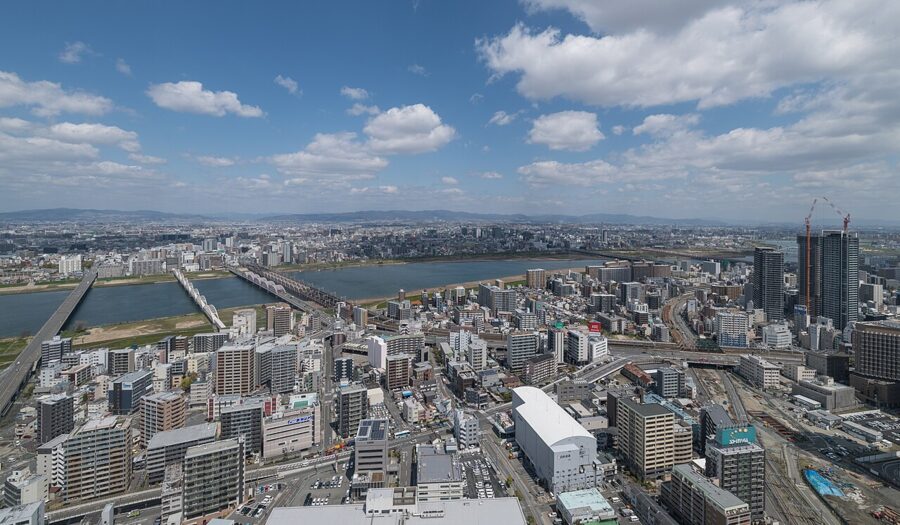
The freight yard north of Osaka Station was the last large piece of empty land in central Osaka, and the city chose to put a park in the middle of it. Umekita Park is 4.5 hectares split by a road, with offices, hotels, flats and shops in the towers on either side. It is the best place in Kita to sit outside with a coffee from the station, and on a summer evening the lawn fills with office workers who have clearly been waiting all day.
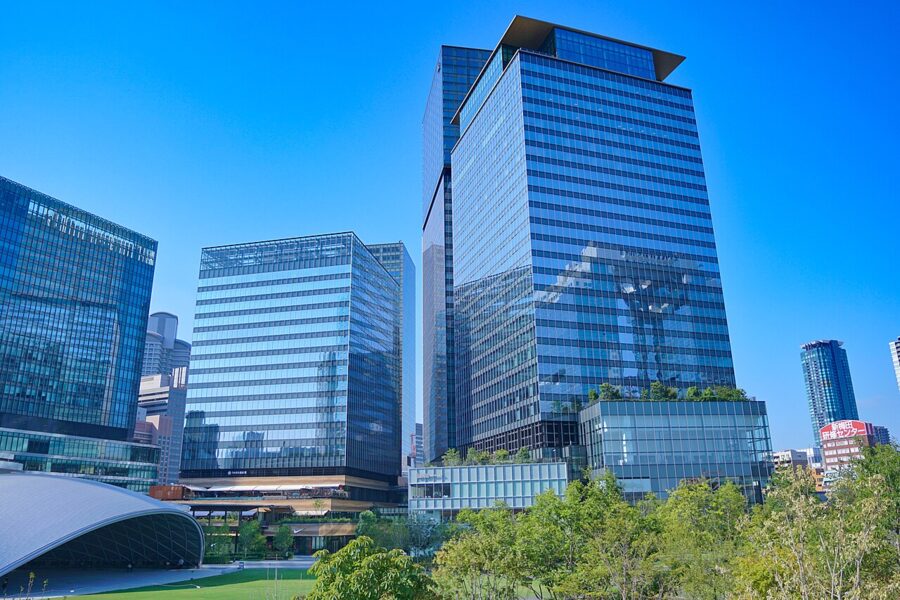

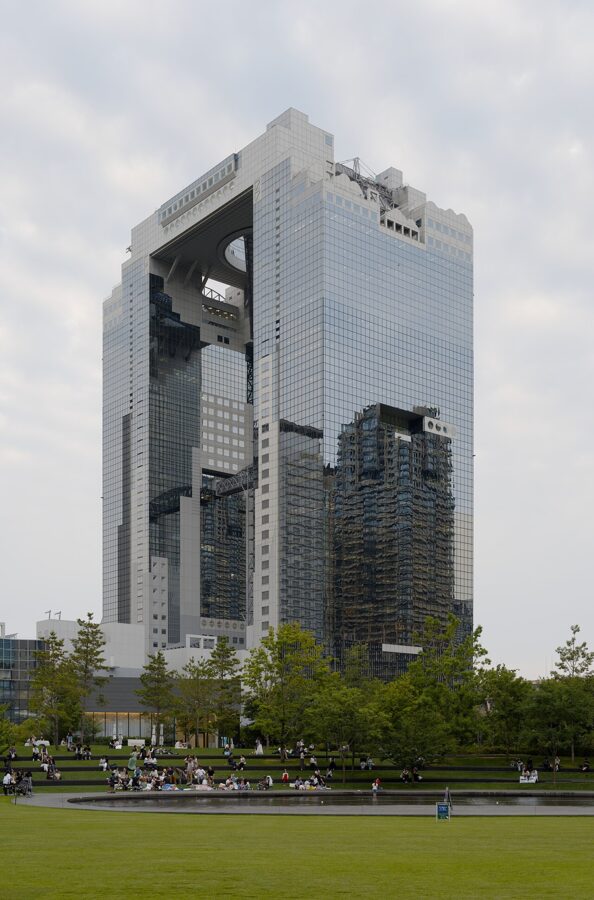
Under the north park is VS., a mostly underground exhibition space whose design was supervised by Tadao Ando’s office. It hosts changing exhibitions and performances, so check what is on before you go. The rest of Grand Green is shopping and restaurants of the kind you find in any new Japanese development; come for the park and the view of the Sky Building across it, not for the mall.
Umeda Sky Building
Two towers joined at the top by a ring-shaped open-air deck, the Umeda Sky Building went up in 1993 and still looks like nothing else in the city. The Kuchu Teien Observatory on top costs ¥2,000 for adults and opens 09:30–22:30. It stands north-west of Osaka Station, and the nicest way to reach it on foot is now straight across Umekita Park.
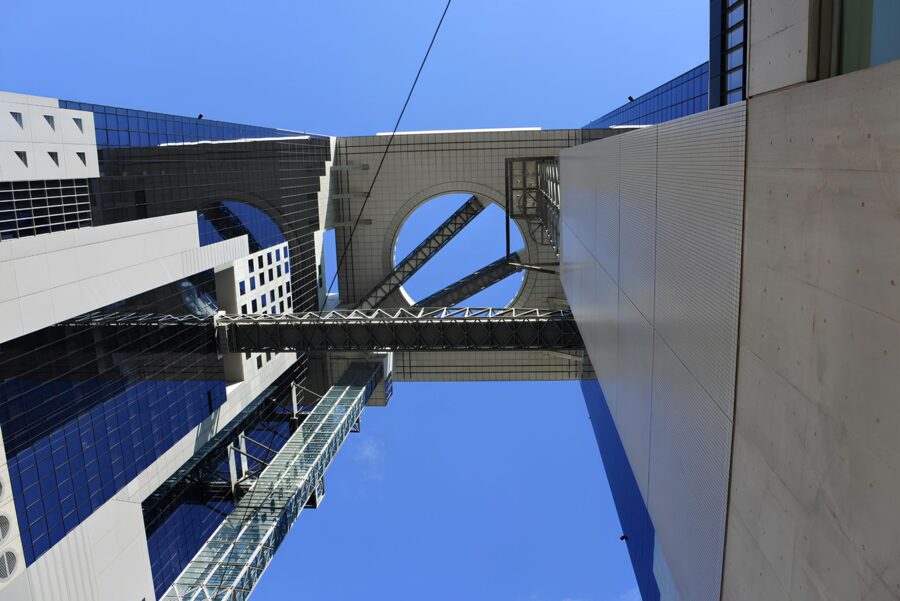
Should you go up here or at Abeno Harukas in Tennoji? Harukas is much taller and its view is wider; the Sky Building is outdoors and the architecture is half the point. For sunset I prefer the Sky Building. Go before 15:00 if you have the Osaka Amazing Pass, because after that the pass gets you only a discount.

Nakazakicho
One stop from Higashi-Umeda on the Tanimachi Line, or about fifteen minutes on foot from Umeda, Nakazakicho is what a part of Kita looked like before the towers. It escaped the wartime air raids, so its lanes of old wooden row houses (nagaya) survived, and over the last twenty years they have filled up with small cafes, secondhand clothes shops, galleries and craft stores. There are no sights as such. You come to wander, drink coffee and look at old buildings at a slower pace than Umeda allows.
The shops are mostly one-person businesses that keep their own hours, so come in the afternoon rather than the morning, and don’t build a plan around any single one of them.
Tenma, Tenmangu and the longest shotengai
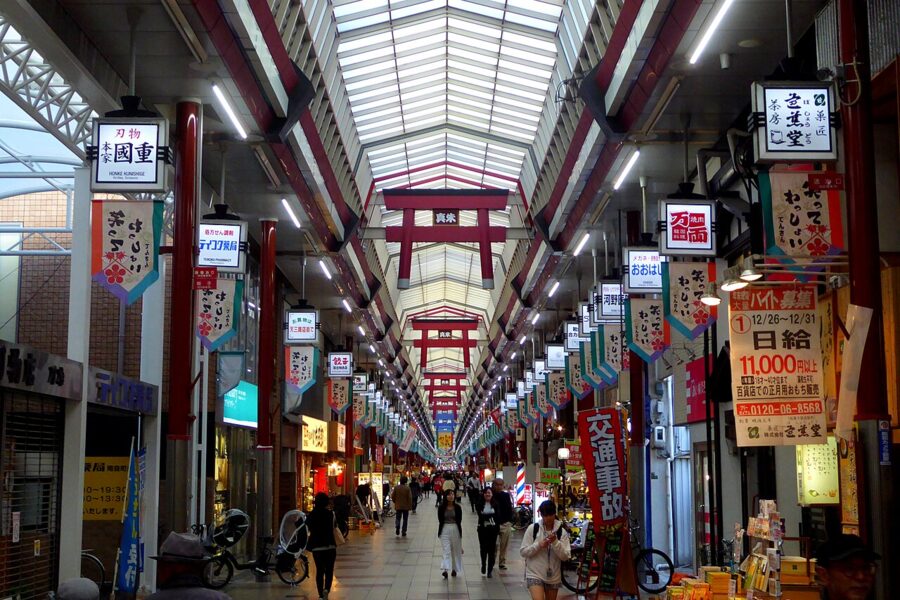
Tenjinbashisuji is a covered shopping street, a shotengai, that runs about 2.6 km north from near Tenmabashi to Tenjinbashisuji 6-chome station, and it has called itself Japan’s longest since the 1990s. It is not pretty and it is not for tourists. That is its appeal: butchers, futon shops, cheap standing bars, croquette stands, pharmacies and old-fashioned coffee shops, the everyday Osaka that Shinsaibashi has priced out.

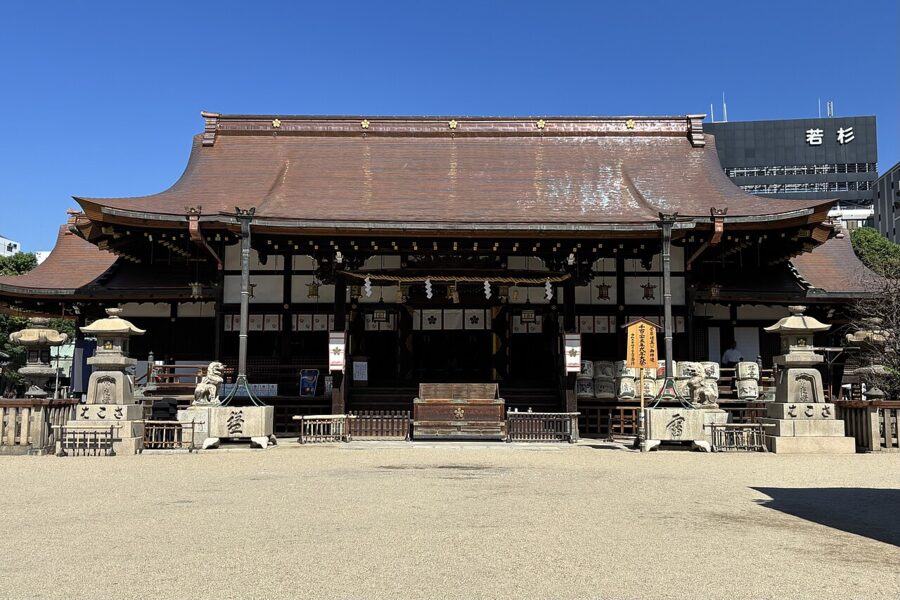
Osaka Tenmangu sits just off the southern end. Founded in 949 and dedicated to Sugawara no Michizane, the patron of scholarship, it is a working shrine where students come to pray before exams, and it organizes the Tenjin Matsuri on 24 and 25 July, one of the great summer festivals of Japan, with a boat procession on the river and fireworks.
Around Tenma Station, under and beside the JR tracks, is one of the best places in Osaka to drink and eat cheaply: small izakaya, standing bars and grills packed into the streets east of the arcade. The Osaka Museum of Housing and Living at the north end, with its life-size Edo-period street, is closed for work until 5 January 2027.
Kitashinchi
Directly south of Osaka Station, across the main road, is Kitashinchi, a few blocks of hostess clubs, members’ bars, ryotei (exclusive traditional restaurants) and expensive sushi counters. It is where Osaka’s companies entertain their clients, and many doors have no sign at all. As a visitor you will mostly look in from the street.
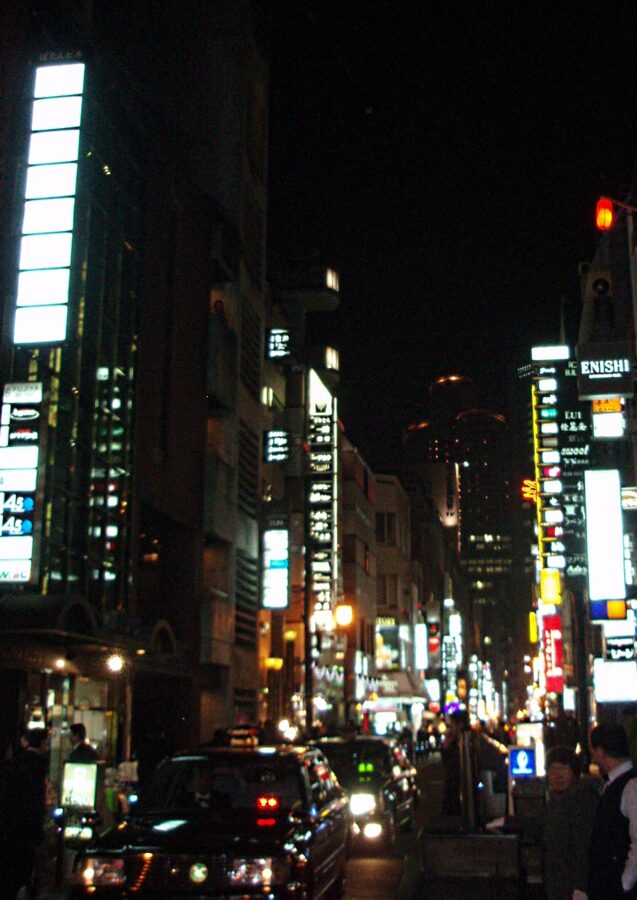
Some of its counter restaurants are among the best in the city, but come with a booking and a budget. Ignore anyone on the street offering to take you into a club; the bill will explain why.
Nakanoshima’s museums
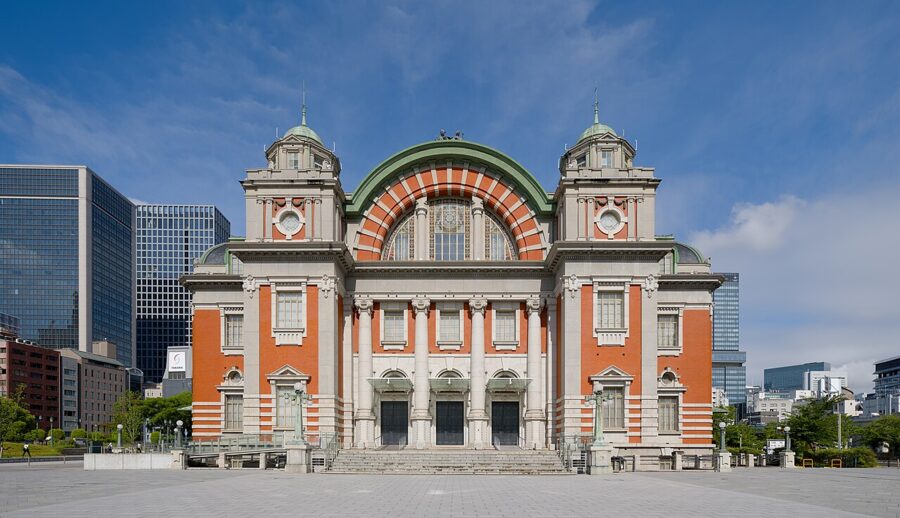
Nakanoshima is a long island between two rivers just south of Kita, with the city hall, the Bank of Japan’s Osaka branch and the best cluster of museums in Osaka. The red-brick Osaka City Central Public Hall, finished in 1918 and still used for concerts and lectures, is the building on every postcard.

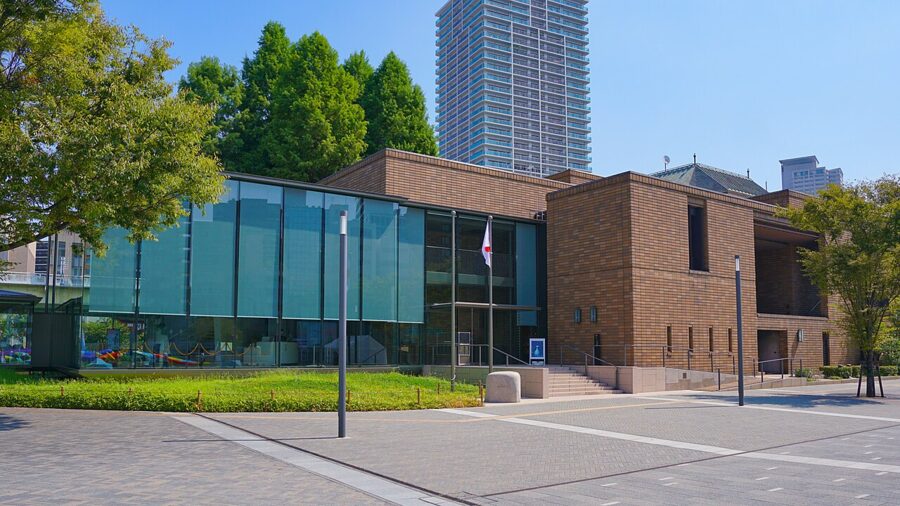
West along the island are the Nakanoshima Museum of Art, Osaka (NAKKA), which opened in 2022 in a black box of a building, and the National Museum of Art, Osaka, which is almost entirely underground and reopens with new exhibitions from 1 December 2026. At the eastern end, the Museum of Oriental Ceramics holds one of the world’s best collections of Korean and Chinese ceramics; it opens 09:30–17:00 and closes on Mondays. Higobashi on the Yotsubashi Line, Yodoyabashi on the Midosuji Line and Kitahama on the Sakaisuji Line all put you within a few minutes of the island.

Minami: Namba, Shinsaibashi and Dotonbori
If Kita is where Osaka works, Minami is where it goes out. The area runs roughly from Shinsaibashi in the north to Namba in the south, with the Dotonbori canal cutting across the middle, and it is small enough to walk end to end in twenty minutes if the crowds let you. They often don’t.
Dotonbori
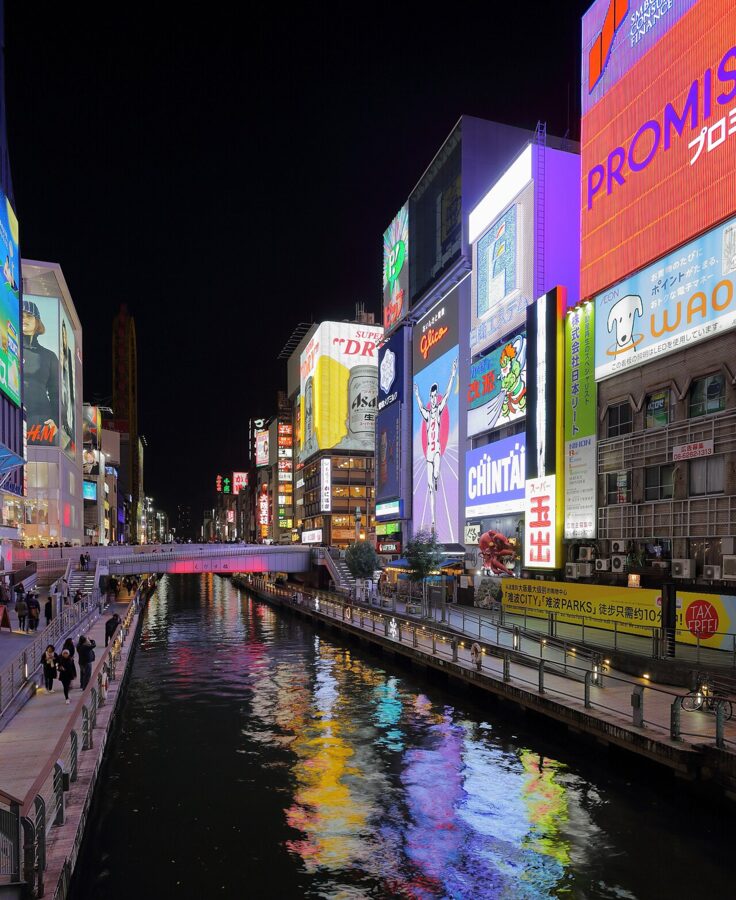
Dotonbori was dug as a canal in the early 1600s and became the city’s theater district; the theaters have nearly all gone, but the street along the south bank still lives by its signs. The giant mechanical crab waving its legs over a restaurant door and the Glico runner on the wall by Ebisubashi bridge are both advertisements, and both are now landmarks in their own right.
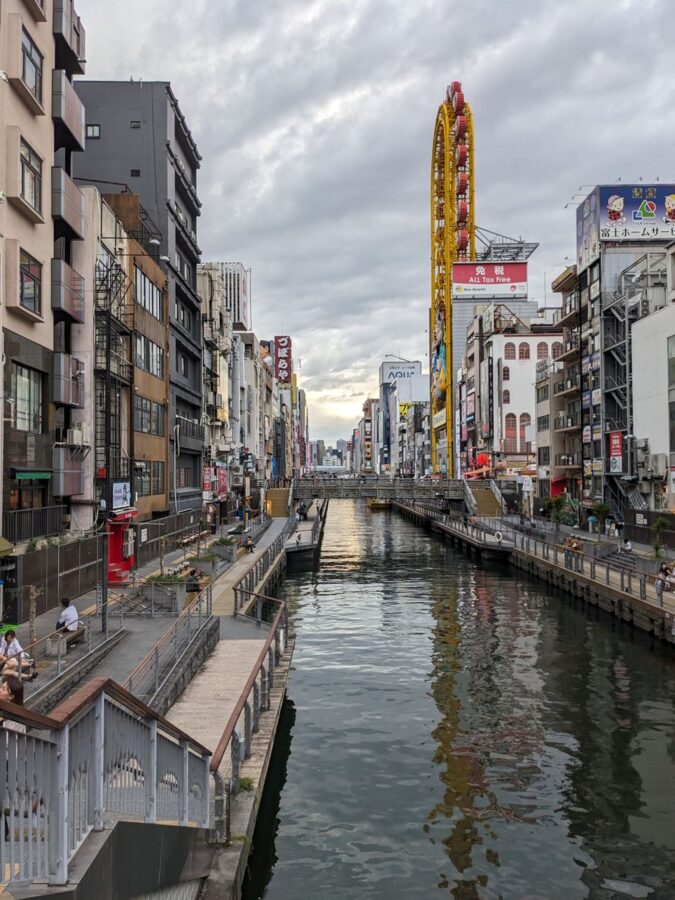
Come twice: once in the evening for the lights, and once before 10:00, when the street is being swept and you can see what it really looks like. The Tombori River Cruise leaves from the landing below the Don Quijote building every half hour between 11:00 and 21:00 and costs ¥2,000 for adults. Boarding is by timed slot and the evening ones sell out first, so collect your slot in the afternoon if you want to be on the water when the signs come on.
What to skip: most of the food on Dotonbori itself, with a few exceptions named below. The restaurants with the biggest signs charge for the signs. A couple of streets south, the same dishes cost less and taste better.
Shinsaibashisuji and Amerikamura
Shinsaibashisuji is the covered shopping street that runs north from Ebisubashi to Shinsaibashi Station, and for most of its length it is the same drugstores, chain fashion and souvenir shops you can find anywhere in Japan, packed shoulder to shoulder. The Daimaru department store at the northern end is the exception, and the reason the street became famous in the first place.
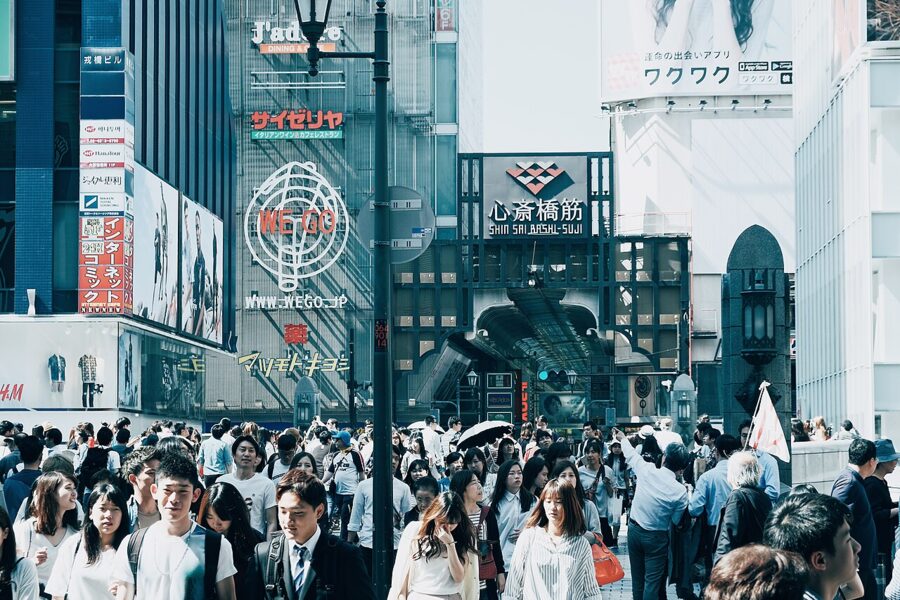
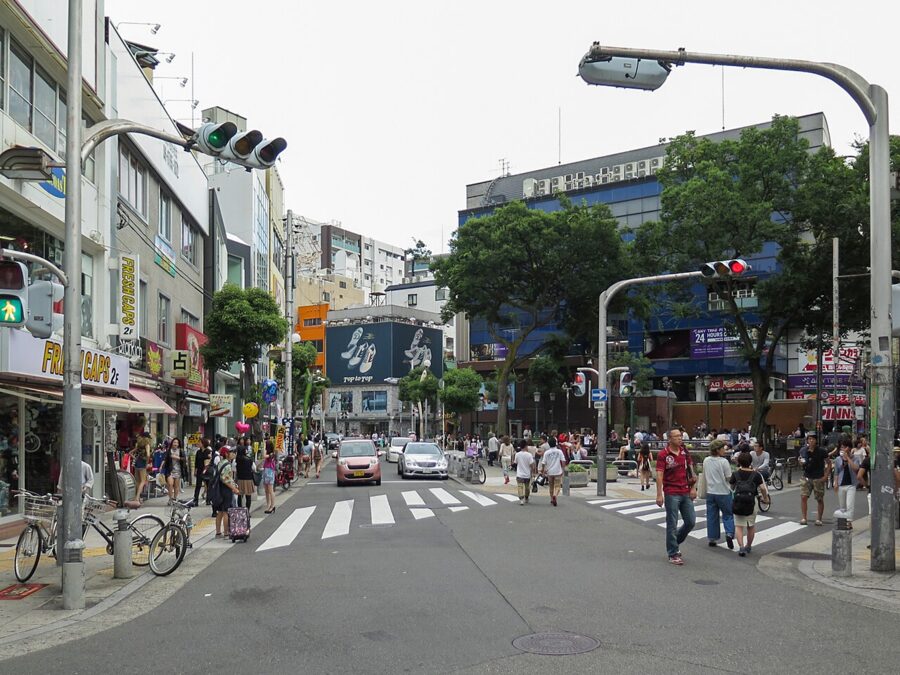
West of the arcade, across Midosuji, Amerikamura (America village, Amemura to locals) has been Osaka’s youth district since a cafe opened beside a triangular park there in 1969 and young designers started gathering around it. Today it is vintage clothing, record shops, streetwear, cheap takoyaki and teenagers sitting on the steps of Triangle Park. If you are over thirty the shops will make you feel it; walk south and west into Horie, where the boutiques and cafes grew up with the people who once hung out in Amemura.

Kuromon Market
Kuromon Ichiba is a covered market about 580 meters long with around 150 shops, a short walk east of Namba at Nipponbashi Station. It is named after the black gate of a temple that stood here when the market began, and for most of the last century it was where Minami’s restaurants bought their fish. In summer that meant hamo (pike conger); in winter, fugu, which a good share of the shops still specialize in.
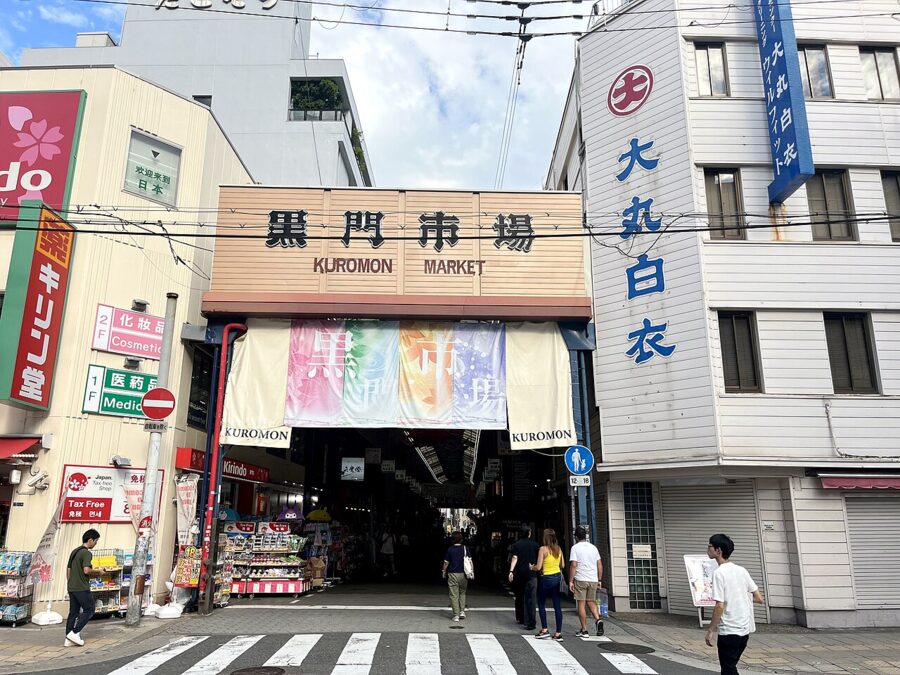
Be clear about what it has become. Kuromon is now mostly a tourist food street, prices are high, and the wagyu skewers and sea urchin on sale are priced for people who will never come back. I’d still go, early on a weekday, for a look and one or two things eaten standing up. For a sit-down seafood meal, there are better options a few blocks away and in any department store basement.
Hozenji Yokocho
Two parallel stone-paved alleys between Dotonbori and Sennichimae, Hozenji Yokocho are what Minami looked like before neon. They are lined with small restaurants under paper lanterns and became famous in the 1940s through Oda Sakunosuke’s novel Meoto Zenzai, which takes its name from a sweet red-bean soup shop by the temple. A fire in 2002 badly damaged the alleys; they were rebuilt at the same narrow width, which is why they feel old but look tidy.
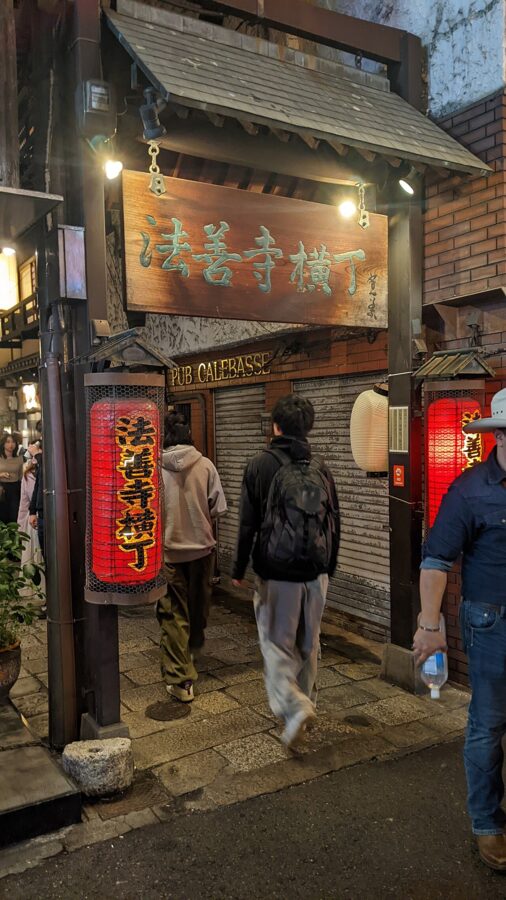

Hozenji temple, founded in 1637, is a small yard at the end of the alley. Its Mizukake Fudo statue is so thickly covered in moss from centuries of worshippers splashing it with water that its features have disappeared. Ladle some water over it yourself; it is expected, and it is free.
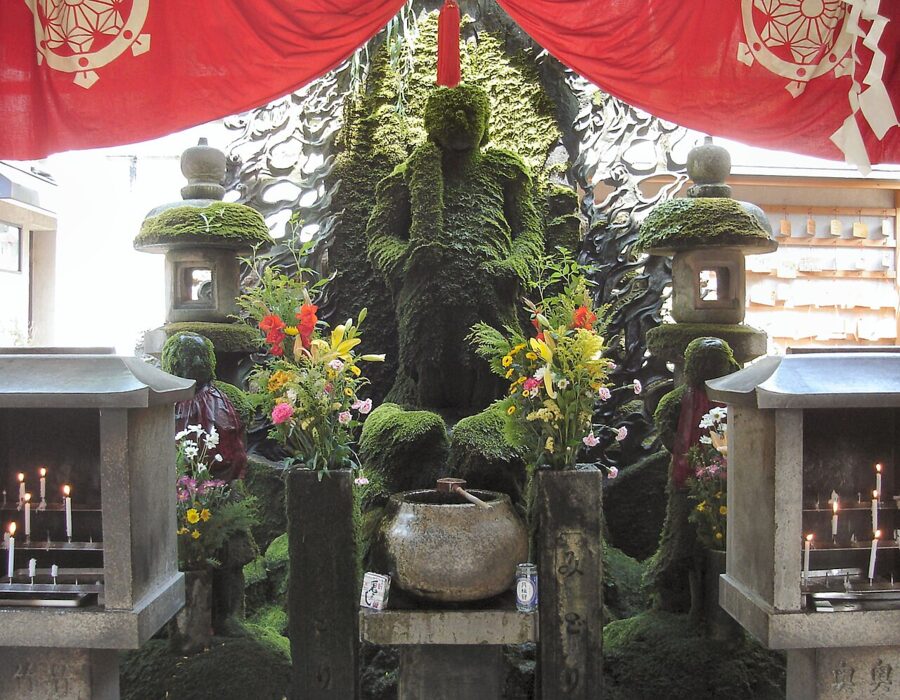

Namba Yasaka Shrine
A short walk west of Namba Station is a small shrine with one very large feature: a stage built in the shape of a giant lion’s head, with its mouth wide open. It went up in 1974 alongside the rebuilt main hall, and the lion is said to swallow bad luck. It takes ten minutes to see and is worth those ten minutes, especially if you are walking from Namba toward Daikokucho.
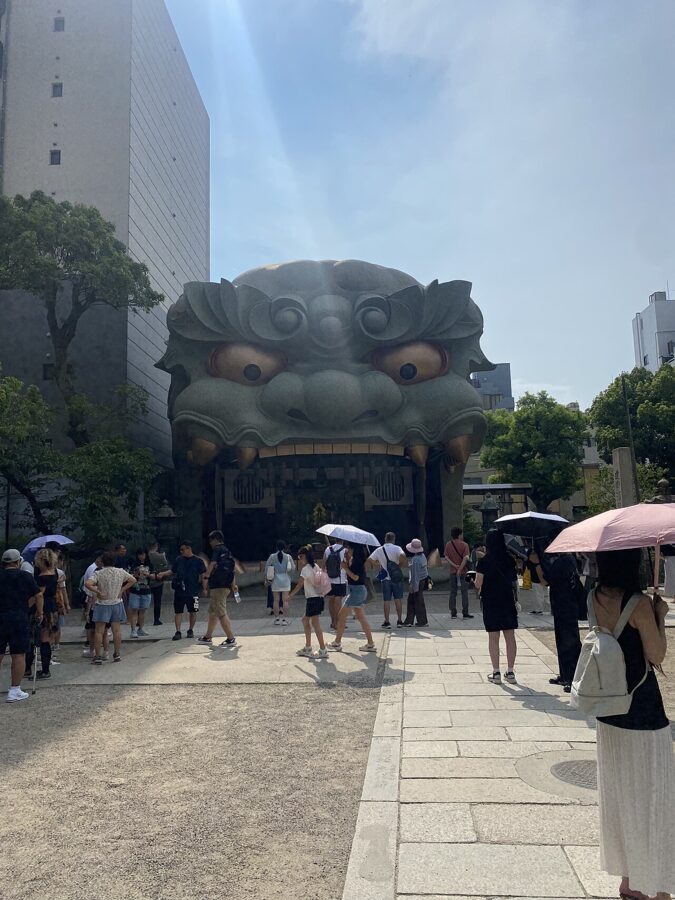

South and east of the center
Shinsekai and Tsutenkaku
Shinsekai, the “New World”, opened in 1912 as an amusement quarter modeled on Paris and Coney Island, with an amusement park called Luna Park and the first Tsutenkaku tower. Both are long gone. The current tower, 108 meters, dates from 1956, and the streets around it are a time capsule of postwar Osaka: kushikatsu restaurants, shogi parlors, smart-ball game halls, old cinemas and fortune tellers, now with a fresh coat of paint for visitors.
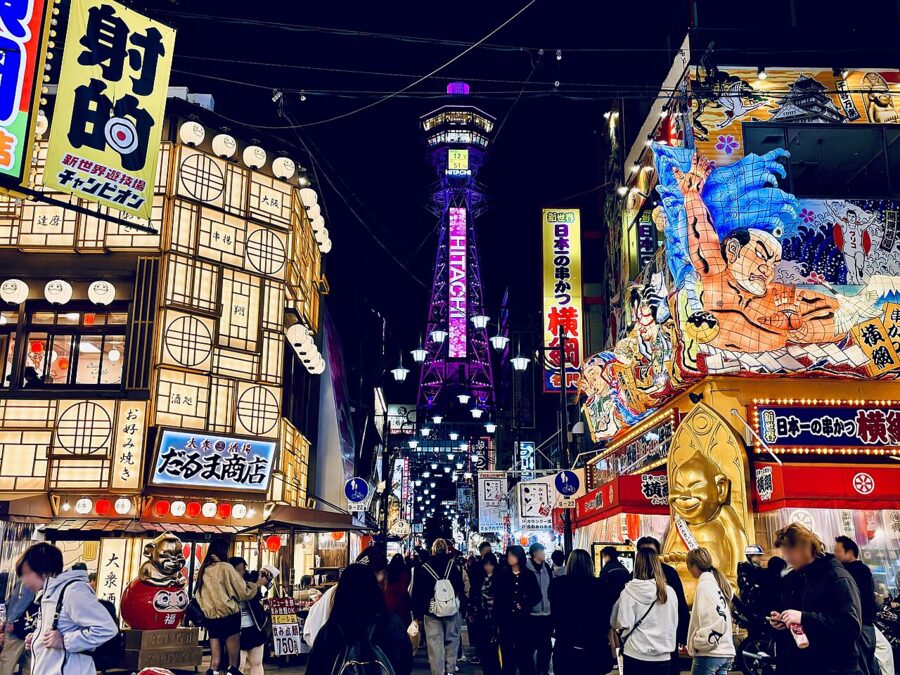
Tsutenkaku’s main observation deck costs ¥1,500 and runs 09:00–21:45, with a time slot booked at the counter. The view is lower and closer than from Harukas, which is the point; you look down on the streets you just walked. There is also a slide that drops you through the tower’s structure (¥1,100) and an outdoor walk on its upper edge with a harness.
Shinsekai is the home of kushikatsu (fried skewers), and it is the best place to eat them; more on that below. It has a reputation as rough, which mostly refers to the area south of the JR tracks around Shin-Imamiya and Kamagasaki rather than to the tourist streets. They are safe in the evening; just do not treat them as a theme park.
Tennoji, Shitennoji and Abeno Harukas
Tennoji is a big railway junction, with JR, the Midosuji and Tanimachi lines and Kintetsu’s Osaka Abenobashi terminal all meeting around one crossroads, and Abeno Harukas towers over it. Completed in March 2014, Harukas is 300 meters tall. Its Harukas 300 observatory on the top floors costs ¥2,000 for adults; the view is behind glass but reaches across the bay toward Kobe and east to the mountains on the Nara border on a clear day.
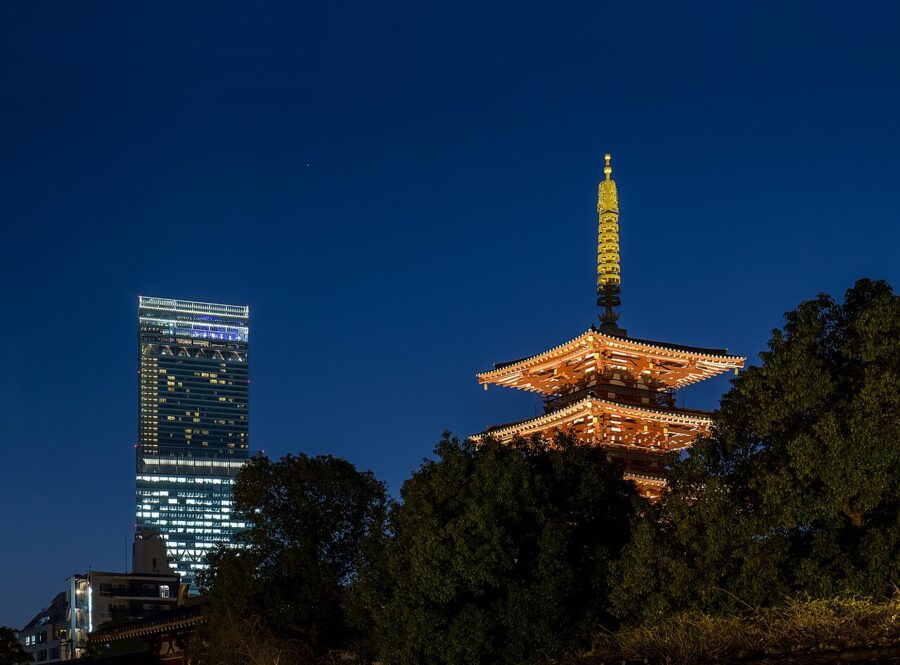

Shitennoji, a short walk north, is by tradition the oldest officially founded Buddhist temple in Japan, dating from 593. The buildings are concrete reconstructions after centuries of fires, wars and typhoons, but the layout is ancient and the precincts are big and calm. Entry to the central complex costs ¥500 and the garden ¥300; the temple opens 08:30–16:30 from April to September and closes at 16:00 the rest of the year. The garden also closes on the 1st to 10th of most months, so check the date if the garden is why you came.
Between Tennoji and Shinsekai is Tennoji Park, with the Keitakuen garden (¥300, closed on Mondays), the zoo and the Osaka City Museum of Fine Arts. The lawn and cafes by the station entrance are a pleasant place to sit; the garden is the quiet part.
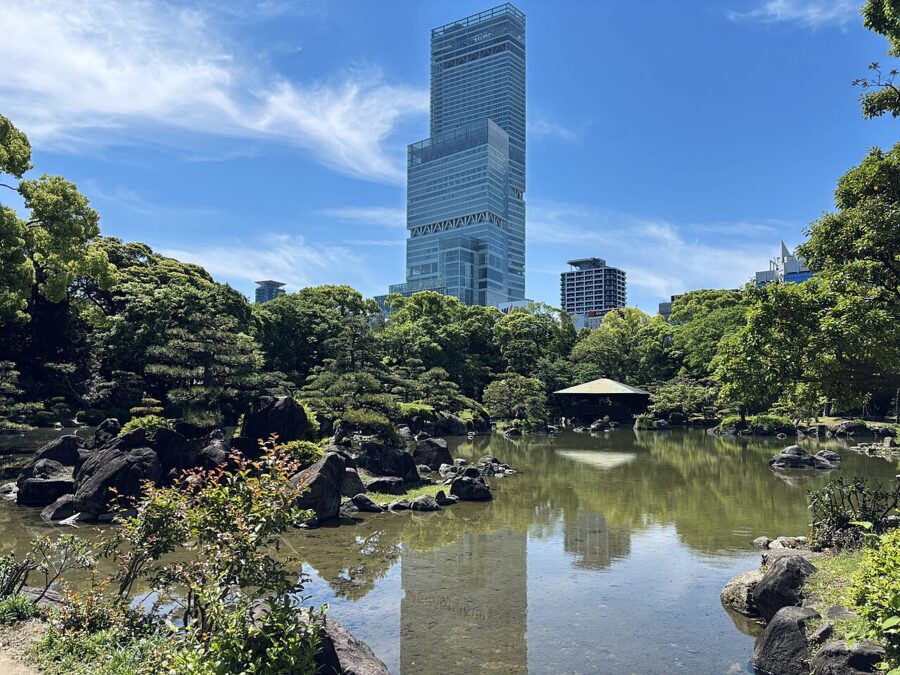
Osaka Castle
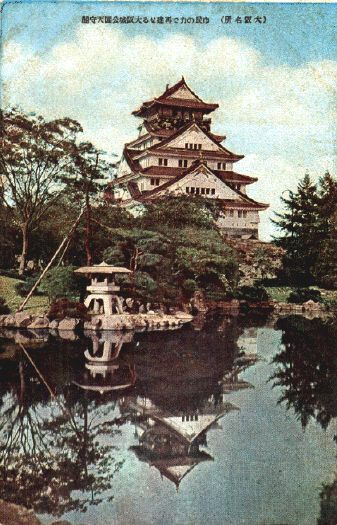
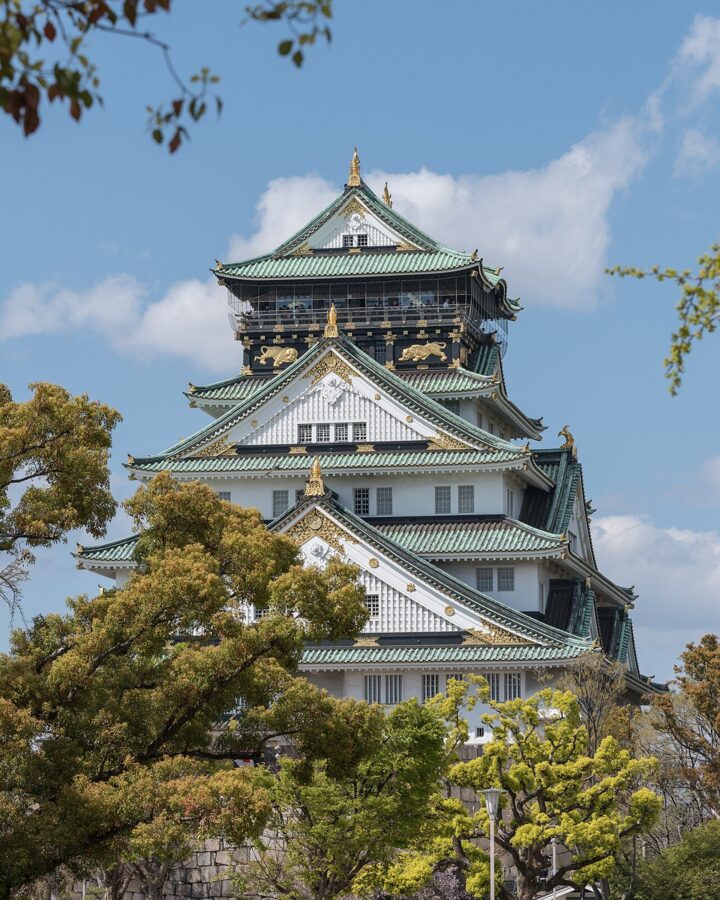
The castle you see is the third main tower on the site. Toyotomi Hideyoshi began the first in 1583; it fell to the Tokugawa in 1615, and the shogunate buried its remains under new walls and earth fill. Their own tower burned in 1665. The current one was rebuilt in 1931 with money raised from the citizens of Osaka, in reinforced concrete and with an elevator, and it is a museum inside rather than a historical interior.
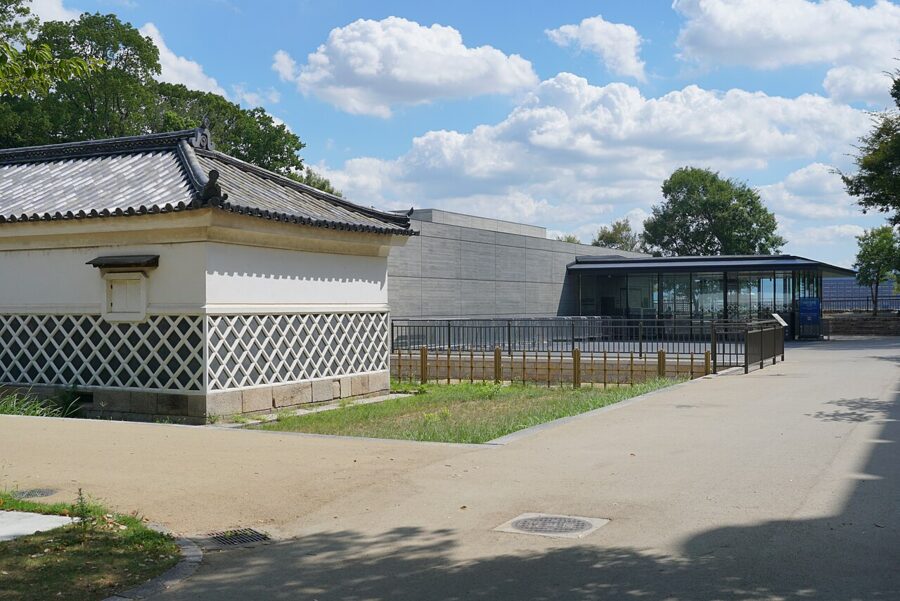
Admission is ¥1,200 for adults and the tower opens 09:00–18:00, last entry 17:30. That ticket now also covers the Toyotomi Stone Wall Museum, opened in 2025, where you go down into a chamber under the castle park to see a section of Hideyoshi’s original wall. It was discovered in 1984 under about six meters of Tokugawa fill. That small underground room is, for me, the most interesting thing at the castle, and most visitors walk past it.

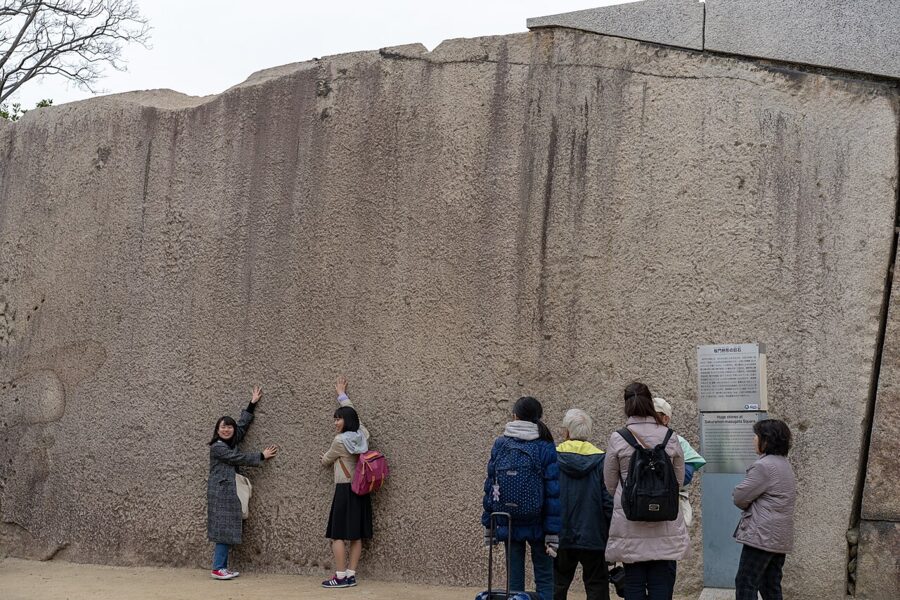
The walls you see above ground are Tokugawa work, begun in 1620, and to my mind they are more impressive than the tower. Walk in through the Sakuramon gate on the south side of the main enclosure and you meet the biggest stone in the castle face on.

Go at opening to beat the queue for the elevator, or late in the afternoon. Tanimachi 4-chome Station is the closest to the tower from the south; Osakajokoen on the JR Loop and Morinomiya on the Chuo and Nagahori Tsurumi-ryokuchi lines serve the east side of the park. The Nishinomaru Garden (¥300, closed on Mondays) is the place to see cherry blossoms against the tower in early April, and charges a little more then.

Tsuruhashi and Korea Town
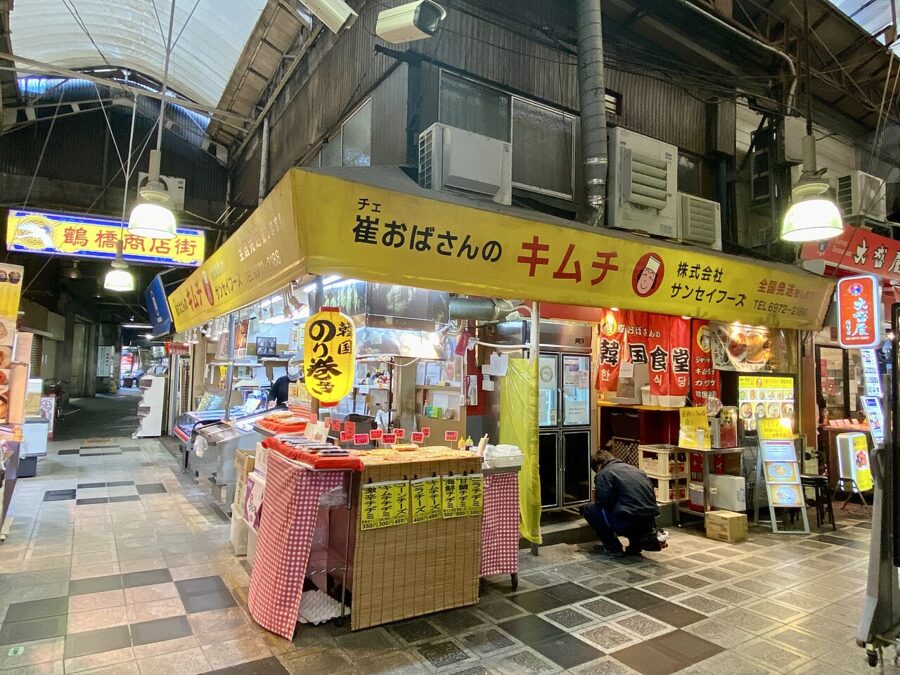
Get off the JR Loop at Tsuruhashi and you smell it before you see it: barbecue smoke from the yakiniku restaurants pressed up against the station. Tsuruhashi’s covered market, a maze of narrow lanes beside and under the tracks, sells kimchi, Korean food, fabric, hanbok and fish, and neighboring Ikuno ward is home to one of the largest Korean communities in Japan. Tsuruhashi is on the JR Loop, the Kintetsu lines and the Sennichimae Line, so it is easy to fit in on the way to or from Nara.

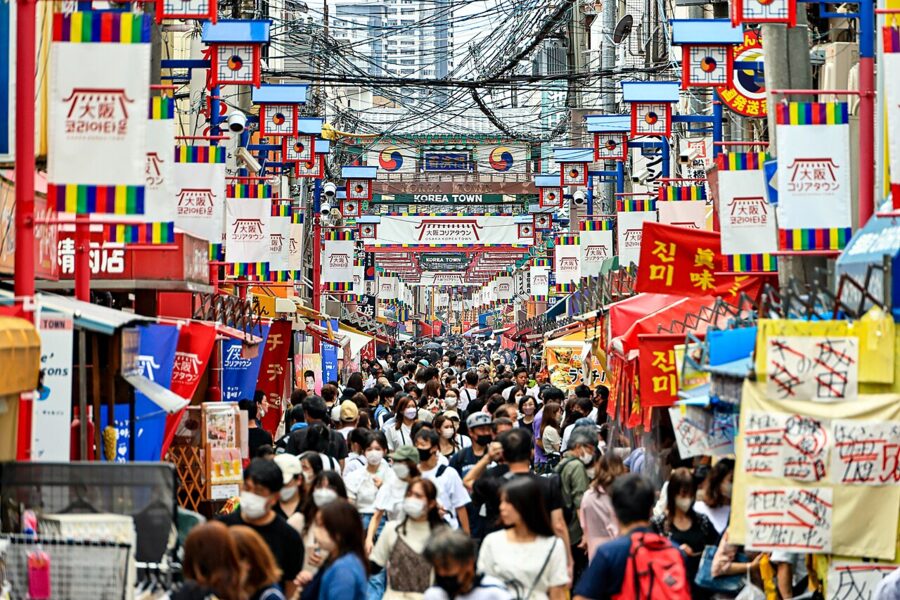
A walk south-east brings you to Osaka Korea Town on Miyuki-dori in Ikuno. Korean families, many from Jeju island, settled in the area from the 1920s, and the shopping street rebranded itself as Korea Town in the 1980s. It has become a K-pop and Korean street food destination for young Japanese visitors, crowded at weekends and more relaxed on weekday mornings.

The bay: Kaiyukan, Tempozan and USJ
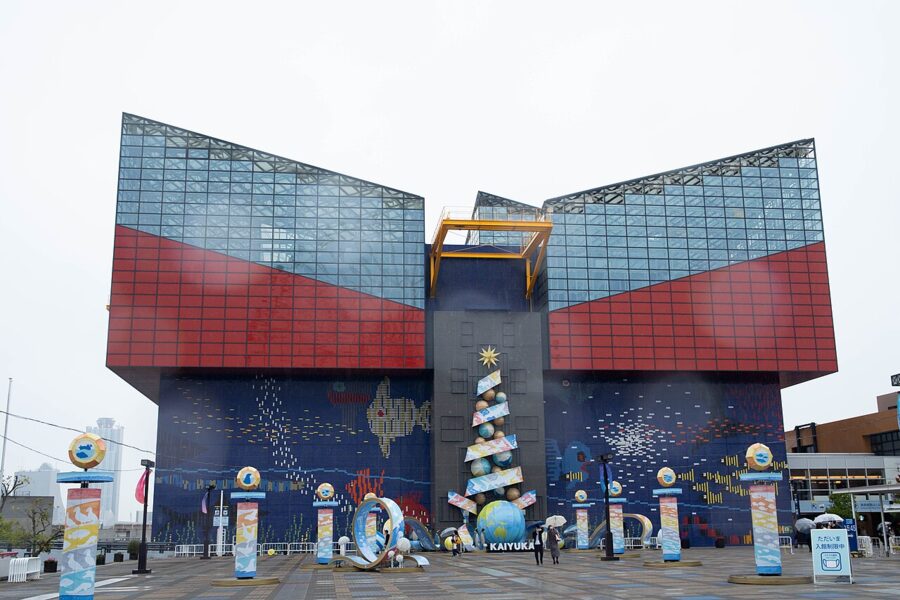
Osaka Aquarium Kaiyukan, at Tempozan on the bay, is one of the best aquariums in Japan and a good reason to come out here even without children. Its design is a spiral down around a central tank that represents the Pacific, with whale sharks circling, and you see the same water from different depths as you descend. Take the Chuo Line to Osakako Station and walk toward the ferris wheel.
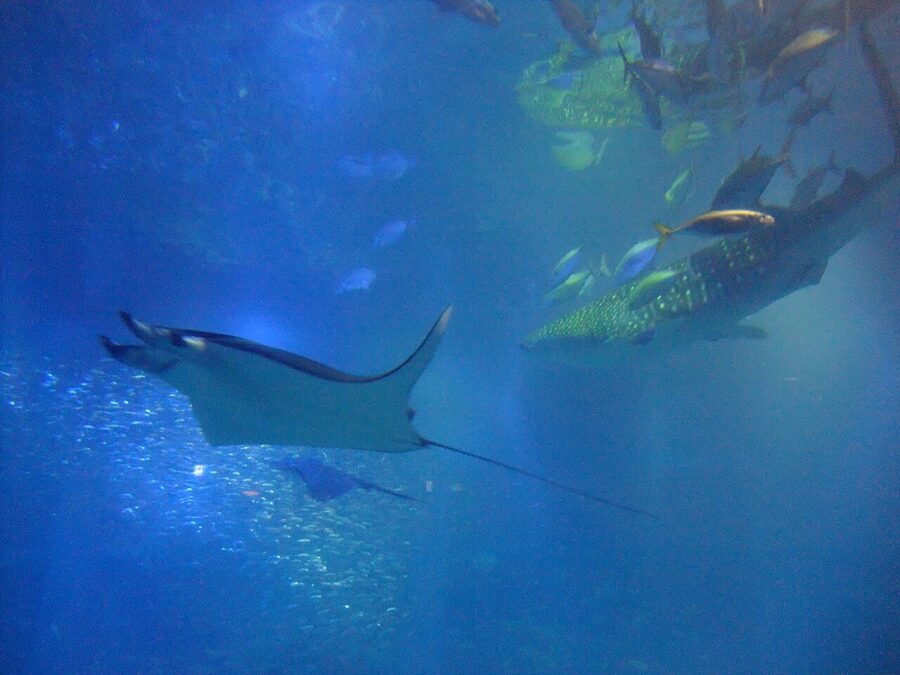
Tickets are priced by date: from November 2026 to January 2027 an adult pays ¥2,700–3,500 depending on the day, and closing time is 20:00. Opening time varies between 08:30 and 10:30, so check the calendar before you go. Book online, avoid weekends, and you’ll have more room at the glass.

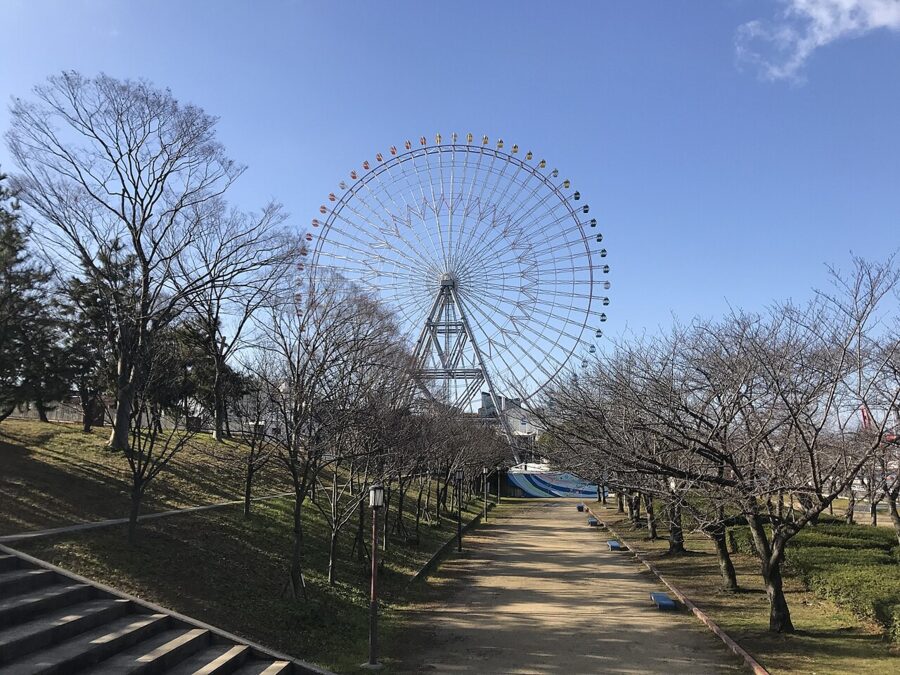
Next door, the Tempozan Giant Ferris Wheel (¥1,000) looks over the port and the bay bridges; it is open 10:00–21:00 on weekdays and until 22:00 at weekends. The Captain Line ferry crosses the harbor from here to the Universal Studios Japan side (¥1,700 return on most days), which is a more enjoyable way to combine the two than the train.

Universal Studios Japan, across the river on the bay, needs only one paragraph here, because if you are going you have already decided. It is reached by the JR Yumesaki Line, with some trains running through from Osaka Station via the Loop and the rest as shuttles from Nishikujo. Buy tickets online before you go, check the park’s calendar for the day’s hours, and be at the gates before opening; the queues for the big rides only get longer as the day goes on.

Eating like the city wants you to
The difference between eating in Osaka and eating in Tokyo is not that Osaka’s food is better (though I’d argue it is) but that it is cheaper, louder and mostly eaten standing up or at a counter. Four dishes define it, and each has a place that does it right.
Takoyaki
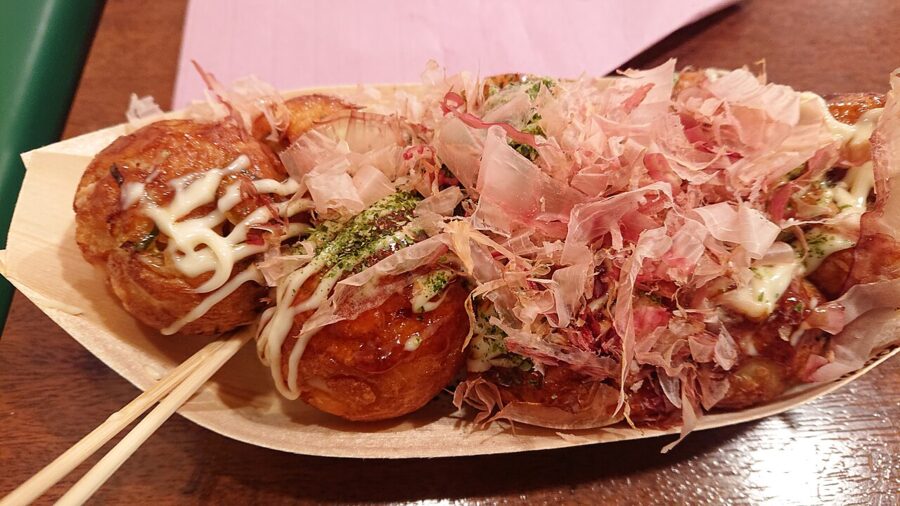
Takoyaki are balls of batter with a piece of octopus inside, cooked in a cast-iron griddle with round cups and turned with picks until they are crisp outside and almost liquid inside. They were invented here: Aizuya, a stall in Nishinari, began adding octopus and egg to an older street snack in 1935 after a customer mentioned that people in Akashi put octopus in theirs. Aizuya’s flavored batter is eaten without sauce; its main shop is near exit 1 of Tamade Station on the Yotsubashi Line (11:00–21:00), and there are branches in the Namba Nannan underground mall and in the KITTE Osaka building at Osaka Station.
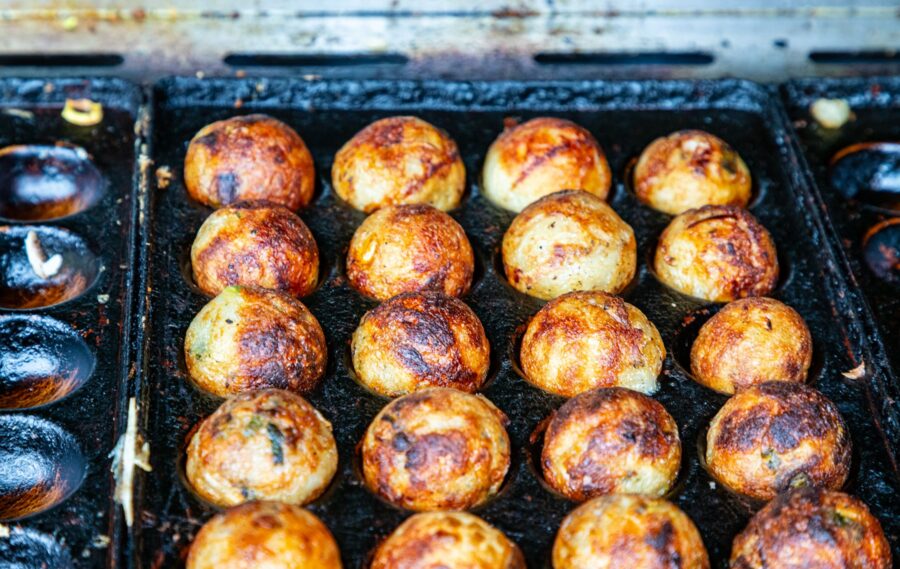
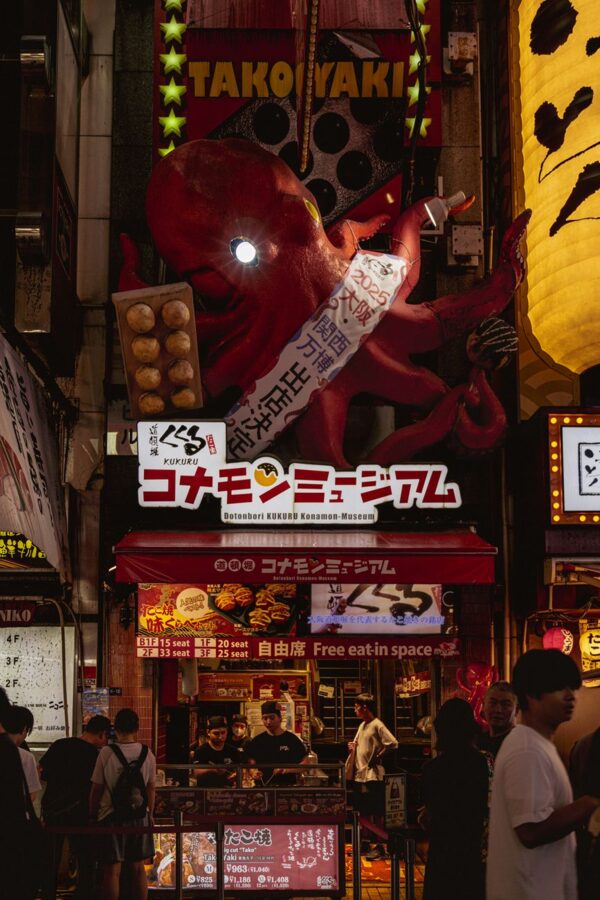
For the classic sauce version, Wanaka’s main shop on Sennichimae, a few minutes from Namba, is the standard, and the queue moves quickly. Kukuru, on Dotonbori itself, makes softer takoyaki finished with a splash of white wine; its Konamon Museum branch opens from 10:30 on weekdays and 09:00 at weekends. Either way, let them cool for a minute. Everyone burns their mouth on the first one anyway.

Okonomiyaki
Okonomiyaki (literally “grilled as you like it”) is a pancake of batter and shredded cabbage, with pork, seafood or both, cooked on a hot plate and finished with sauce and mayonnaise. Osaka style mixes everything into the batter before cooking; Hiroshima style layers it with noodles. It is a meal, not a snack.
Mizuno, on Dotonbori just inside the arcade, has been making it for more than 70 years and is the one I would send anyone to. Its yam-based version (yamaimo-yaki) is light enough to justify the queue. It opens 11:00–22:00 every day, last order 21:00, five minutes from exit 15 of Namba Station on the Midosuji Line. If the line is too long, any okonomiyaki counter in the back streets south of the canal will do the classic pork version for less.
Kushikatsu, and the rules
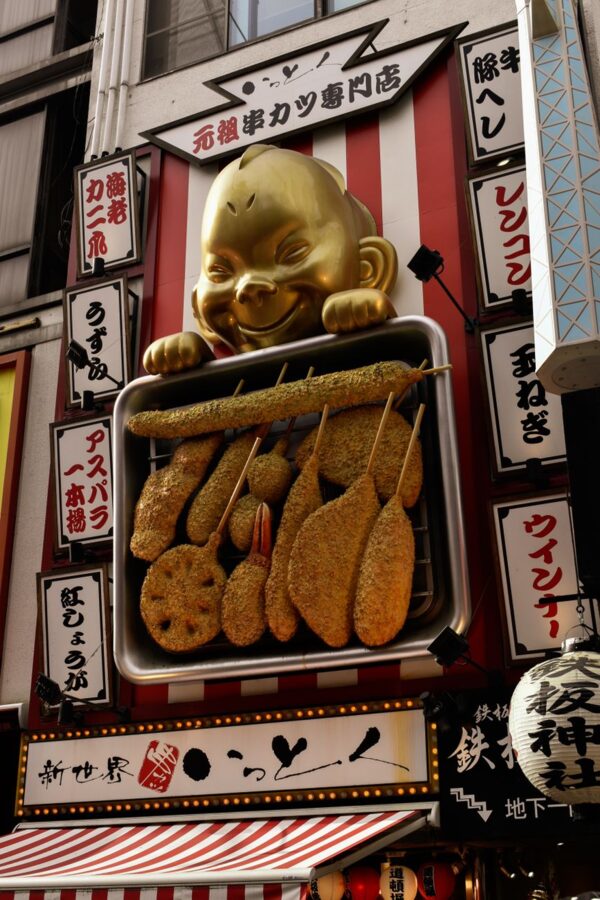
Kushikatsu are skewers of meat, seafood and vegetables, battered, breaded and deep-fried, and eaten in Shinsekai with beer. Kushikatsu Daruma traces its origins to a stall opened in 1929 on the site of the old Luna Park, and its Shinsekai flagship opens 11:00–22:30 on weekdays and from 10:30 at weekends. The chain has branches all over the city now, but eat at least once in Shinsekai.
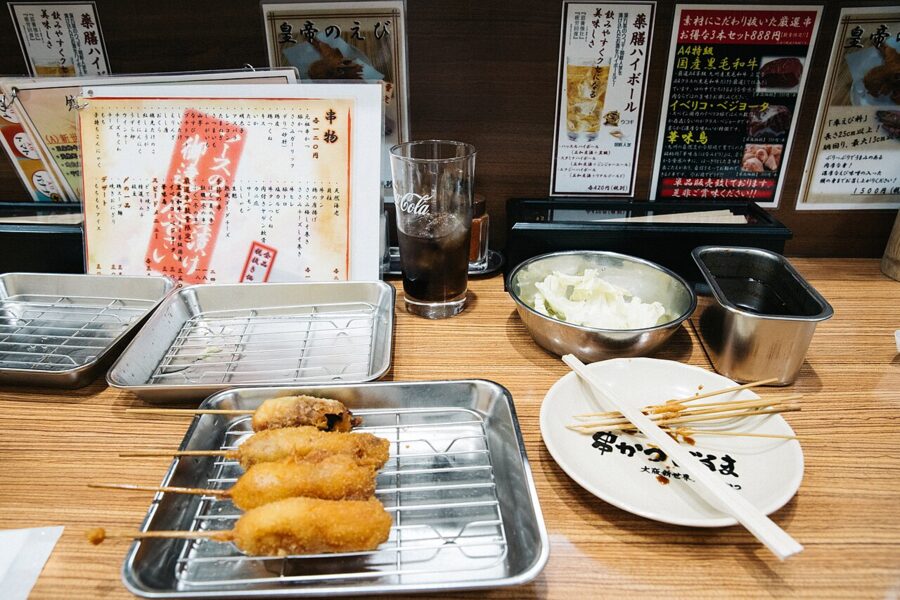

The one rule: no double dipping. The sauce on the counter is shared, so you dip each skewer once, before your first bite. If you want more sauce, use a leaf of the free raw cabbage to scoop it on.
Daruma says it began handing out free cabbage after the war for exactly that reason. Break the rule and nobody will throw you out, but you will be told.
Kitsune udon
Kitsune udon is wheat noodles in a light, clear dashi broth topped with a sheet of sweet simmered fried tofu. It is said to have been invented in Senba, Osaka’s old merchant quarter, at an udon shop founded in 1893, and it shows the city’s taste in broth: clear and pale, built on kelp and bonito, unlike the dark soy-heavy broth of Tokyo.
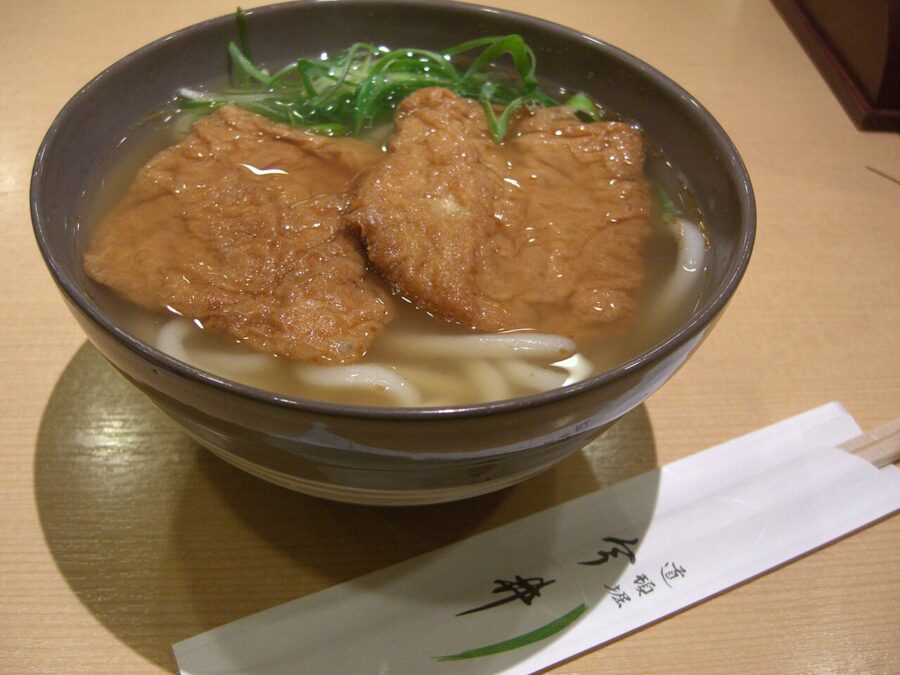

Dotonbori Imai, on the street of the same name, started out as a theater teahouse in 1838 and became a musical instrument shop, before turning to noodles after the wartime air raids destroyed it; its kitsune udon is the one to try. It is quieter and more expensive than a station udon stand, and better. For a quick bowl, the standing udon counters in the stations are cheap and perfectly fine.
Getting around: Metro, JR or private lines?
Osaka has three rail systems layered on top of each other, and choosing the right one saves real time. Osaka Metro runs the subways, and for most trips inside the city it is the answer: the Midosuji Line alone links Shin-Osaka, Umeda, Shinsaibashi, Namba and Tennoji. Single fares run from ¥190 to ¥390 by distance, and you can pay at the gates by touching a contactless Visa, Mastercard, JCB, American Express, Diners Club, Discover or UnionPay card or phone, no registration needed, adult fare only.
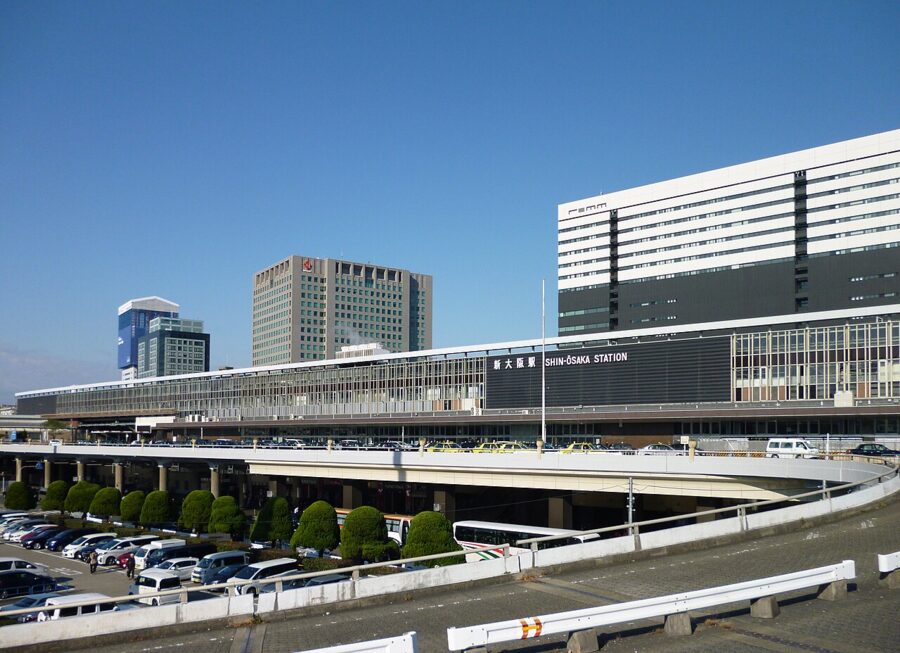
JR West runs the Osaka Loop Line, 19 stations in a ring around the center, along with the lines out to Kyoto, Kobe, Nara and the airport. It is useful for Osaka Castle, Tsuruhashi, Tenma and Universal Studios, but it doesn’t go to Namba or Shinsaibashi. The private railways (Hankyu, Hanshin, Keihan, Kintetsu and Nankai) are mostly for getting out of the city: Hankyu and Keihan to Kyoto, Kintetsu to Nara, Nankai to Kansai Airport and Wakayama, and Hankyu or Hanshin to Kobe.
IC cards and passes
An ICOCA, JR West’s rechargeable IC card, works on all of these and on buses, and in most convenience stores. It costs ¥2,000, including a ¥500 refundable deposit; JR sells a special-design version to foreign visitors at the Kansai Airport station, and iPhone users can add ICOCA to Apple Wallet. Cards from other regions, such as Suica, work in Osaka too.
The Osaka Metro and city bus one-day ticket, sold as a digital ticket in the e METRO app, costs ¥820 on weekdays and ¥620 at weekends and holidays. It pays off from the fourth ¥240 ride on a weekday and the third at weekends, and it also gets you discounts at more than 20 attractions. If you will use both subway and JR in a day, the ONE KANSAI Osaka Smart Access Pass sold in the KANSAI MaaS app covers the Osaka Metro plus the JR Loop and a few connecting JR sections for ¥1,000.
The Osaka Amazing Pass: does it pay?
The Osaka Amazing Pass is a smartphone-only ticket sold through the SURUTTO QRtto app: ¥3,500 for one day, ¥5,000 for two consecutive days, same price for adults and children. It covers the subway, city buses and the private railways within the city (but not JR) plus free entry to about 40 attractions. The day runs from 03:00 to 02:59, so don’t activate it after midnight on your arrival.
The included list is the key. It covers the Osaka Castle main tower (¥1,200), the Umeda Sky Building before 15:00 (¥2,000), the Tombori River Cruise (¥2,000), Tsutenkaku (¥1,500), Shitennoji, the Tempozan wheel and the Captain Line ferry. It does not include Abeno Harukas, the aquarium or Universal Studios.
A day of castle, Sky Building and canal cruise adds up to ¥5,200 in admissions before you have paid for a single train, so it pays. A day of walking and eating with one paid sight does not.
My rule: buy it only for a day when you will visit at least three of the big included sights, and plan that day around the Sky Building’s 15:00 cutoff. On every other day, use an IC card or the Metro one-day pass.
Late trains
Osaka is a late-night city, but its trains are not. The last southbound Midosuji Line train leaves Umeda at 00:08 for Namba and Tennoji, and the last one north to Shin-Osaka leaves at 00:20 (timetable revised in October 2025). Going the other way, the last train north from Namba leaves at 00:10. Miss them and a taxi will cost many times the ¥240 subway fare, so plan your last drink near your hotel, or check the last train on your line before you order another round.
Where to stay
Base yourself by trip, not by price. The four main options are close in time, but each favors a different kind of visit.
Namba and Shinsaibashi are the right choice for a first trip focused on food and the evening. You walk home from dinner, Nankai trains run straight to Kansai Airport from Namba, and Kintetsu runs to Nara. The downside is noise and crowds; ask for a room on a high floor away from the street. I’d base myself here on a first visit.
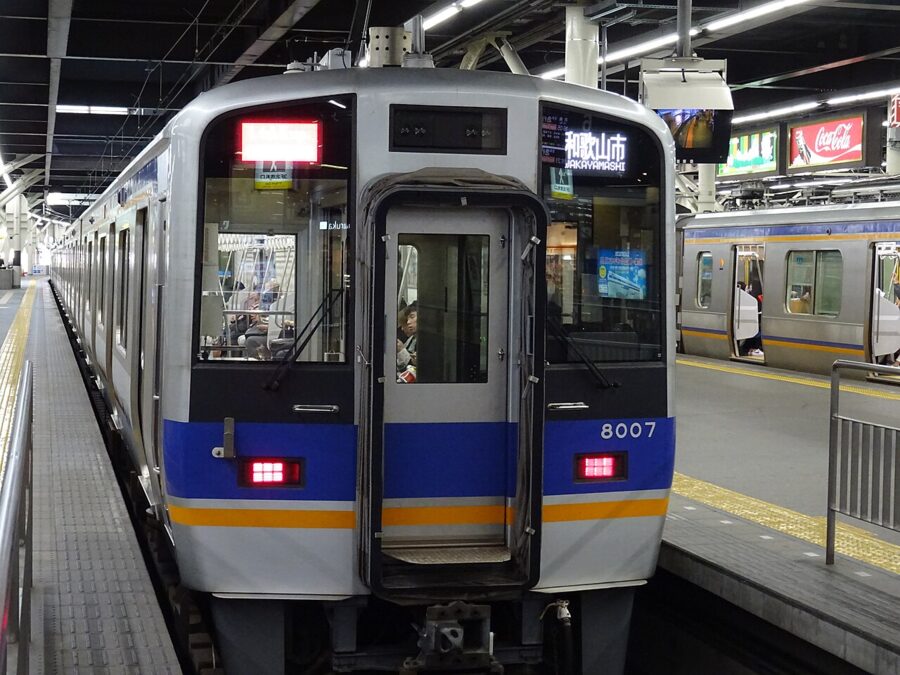

Umeda is better for day trips and for people who like order. JR, Hankyu and Hanshin all leave from here, the Haruka airport express now stops at Osaka Station, and the choice of large hotels is the widest in the city. The trade-off is that Kita goes quiet earlier, and you spend more time in tunnels.

Shin-Osaka makes sense only if you have an early Shinkansen or are using Osaka as a one-night stop on a longer rail trip. It is efficient and dull, with business hotels and very little to do after 20:00.
Tennoji is the value option, with cheaper hotels, direct JR trains to the airport and Nara, the Midosuji Line straight to Namba and Umeda, and Shinsekai on the doorstep. It suits families and anyone staying a week who doesn’t need to be in the middle of the action every night.
Day trips out
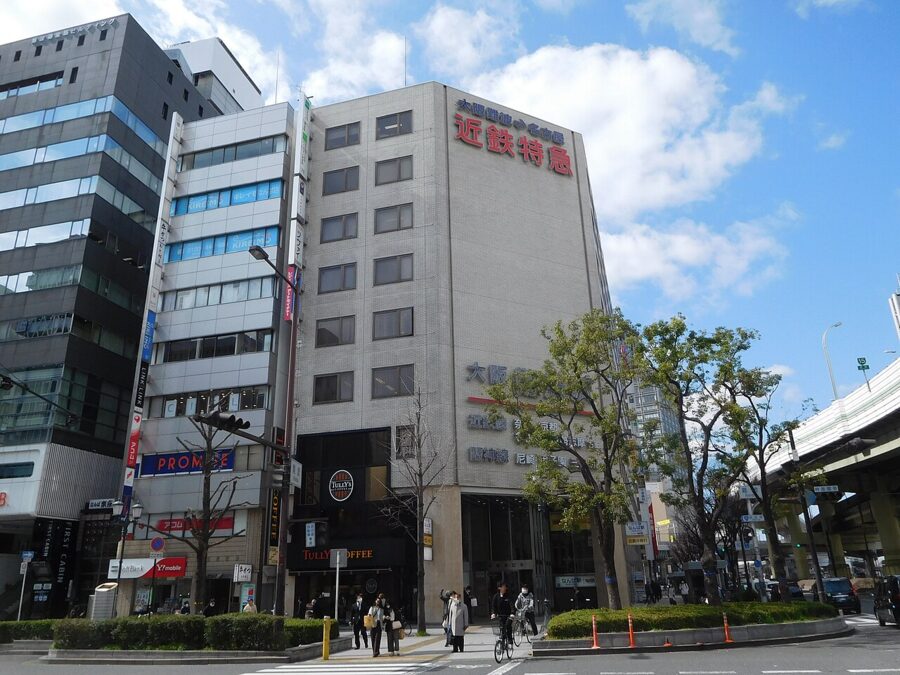
Osaka’s best feature may be how easily you leave it. Kyoto is a short ride by JR Special Rapid from Osaka Station, or a little longer by Hankyu from Osaka-umeda or by Keihan from Yodoyabashi, both of which arrive closer to Gion than JR does. Nara is reached directly by Kintetsu from Osaka-Namba or by JR from Tennoji. Kobe is the easiest of all: JR from Osaka Station to Sannomiya takes 21 minutes for ¥420, with Hankyu and Hanshin a little slower and ¥330 from Osaka-umeda.

Himeji, with the best surviving castle in Japan, is further down the same JR line as Kobe, and the Special Rapid from Osaka Station runs straight there. For anything further, from the onsen towns of the north to the temple mountains of Wakayama, start from Umeda or Namba depending on which railway goes there.
Whatever you choose, come back to Minami for dinner. Take the Midosuji Line four stops south from Umeda, leave Namba by exit 15, and walk five minutes to Mizuno’s queue on Dotonbori. Afterwards, the last train back north leaves Namba at 00:10.